
When travelers think of Peru, Machu Picchu often steals the spotlight. Yet beyond the Andes and cloud forests lies another extraordinary legacy: Peruvian pyramids built thousands of years before the Inca Empire.
Scattered across coastal deserts and fertile valleys, these ancient adobe structures were ceremonial centers, places of power, and hubs of early civilization. From the sacred pyramids of Caral, the oldest city in the Americas, to Lima’s urban Huaca Pucllana and the enigmatic temples of Cahuachi, Peru offers a journey into a lesser-known but equally fascinating past.
In this guide, you’ll discover the most important pyramids in Peru, their history, and how to visit them as part of an unforgettable, tailor-made journey.
While the Incas built awe-inspiring stone structures in the Andes, Peru’s coastal civilizations some predating the Incas by millennia left behind a stunning legacy of adobe pyramids.
These ancient temples were centers of ritual, trade, and power. Today, they offer an extraordinary journey through Peru’s lesser-known history perfect for travelers seeking authentic and enriching experiences.
Peru’s Pyramids Beyond the Inca Empire
Peru’s Pyramids Beyond the Inca Empire
While the Incas are celebrated for their awe-inspiring stone architecture high in the Andes, Peru’s coastal civilizations some predating the Incas by millennia left behind an equally remarkable legacy of adobe pyramids.
These ancient temples were centers of ritual, trade, astronomy, and political authority. Today, they invite travelers to experience a deeper layer of Peru’s history, ideal for those seeking authentic, enriching, and culturally immersive journeys beyond the traditional tourist route.
1. The Pyramids of Caral: Cradle of American Civilization
Location: Supe Valley, 200 km north of Lima
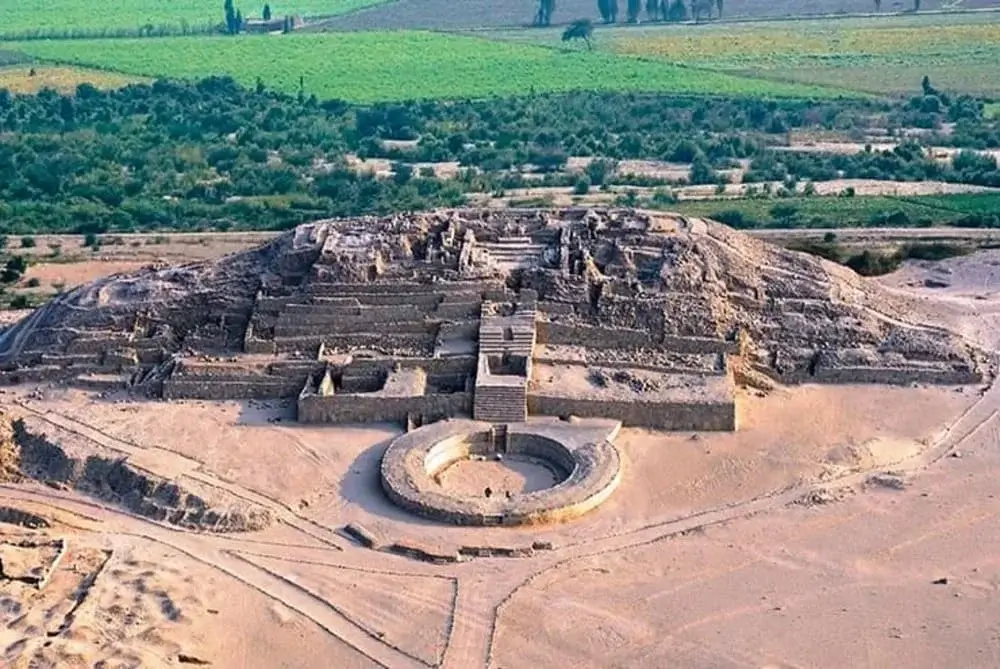
Dating back more than 5,000 years, Caral is widely recognized as the oldest known city in the Americas. Its six monumental pyramids rise dramatically from the desert landscape, revealing a highly sophisticated society that flourished long before the Inca Empire.
Remarkably, Caral developed without evidence of warfare, suggesting a civilization rooted in trade, astronomy, music, and ritual practices. The pyramids are carefully aligned with celestial events, highlighting their spiritual significance and advanced urban planning.
Highlights:
- UNESCO World Heritage Site
- Monumental architecture with sunken plazas
- Peaceful atmosphere away from tourist crowds
Travel Tip:
Visit Caral on a guided day trip from Lima to uncover the secrets of one of the world’s oldest urban centers.
2. The Mysterious Pyramids of Cahuachi: Sacred Desert Temples
Location: Nazca Desert, Southern Peru
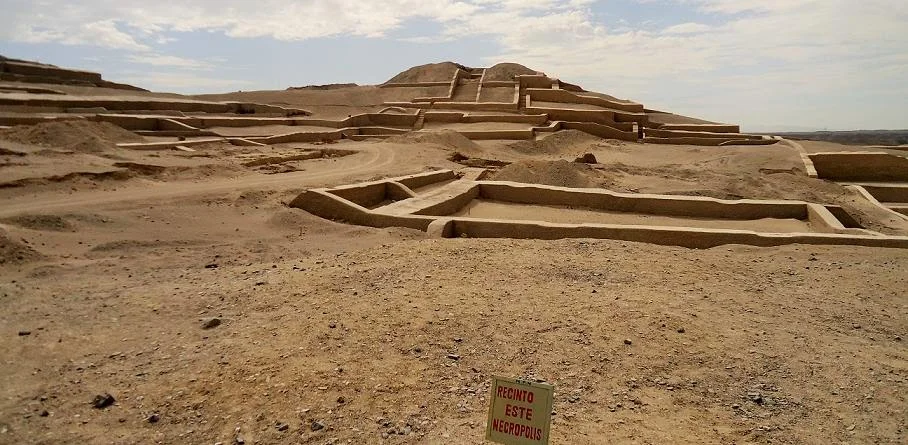
Cahuachi was the ceremonial and religious heart of the Nazca culture (100 BCE – 500 CE). This vast complex of adobe pyramids and plazas once hosted large-scale rituals believed to be closely linked to water, fertility, and the surrounding desert landscape.
With more than 40 pyramid mounds, Cahuachi remains one of Peru’s most intriguing archaeological sites. Ongoing excavations continue to reveal its importance and deep connection to the nearby Nazca Lines, one of the world’s greatest archaeological mysteries.
Highlights:
- Over 40 pyramid mounds
- Archaeological site still under excavation
- Nearby Nazca Lines viewing towers
Travel Tip:
Combine a visit to Cahuachi with a Nazca Lines overflight for a complete desert archaeology experience.
3. Huaca Pucllana: Lima’s Ancient Pyramid in the City
Location: Miraflores, Lima
Huaca Pucllana rises dramatically in the middle of Lima’s modern Miraflores district a powerful reminder of Peru’s layered history.
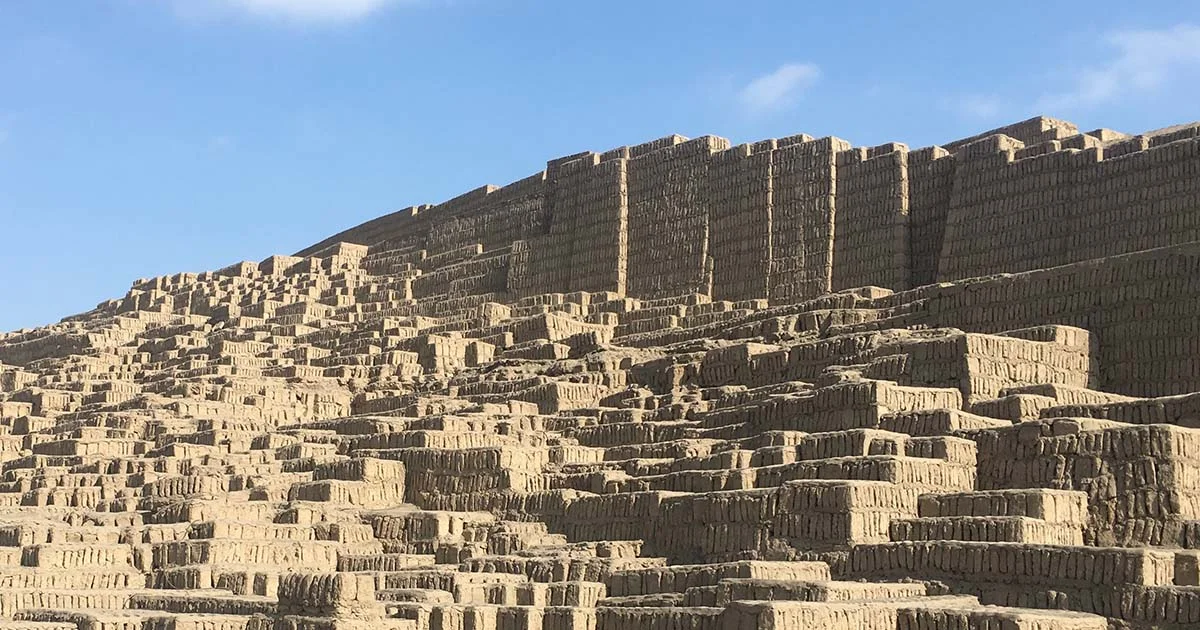
Constructed using the tapial technique vertical adobe bricks placed like books on a shelf Huaca Pucllana demonstrates advanced engineering designed to withstand earthquakes. Archaeological discoveries reveal that the site was used for ritual offerings and elite ceremonies, offering insight into the spiritual beliefs of ancient coastal societies.
Highlights:
- Evening tours with atmospheric lighting
- On-site museum explaining construction techniques
- Fine dining at Huaca Pucllana Restaurant overlooking the ruins
Travel Tip:
Book a sunset tour followed by a gourmet dinner for a memorable night in Lima.
5. Other Must-See Pyramids in Peru
Huaca Rajada – Sipán (Lambayeque)
Famous for the discovery of the Lord of Sipán, one of the most significant archaeological finds in South America.
Túcume Pyramids (Lambayeque)
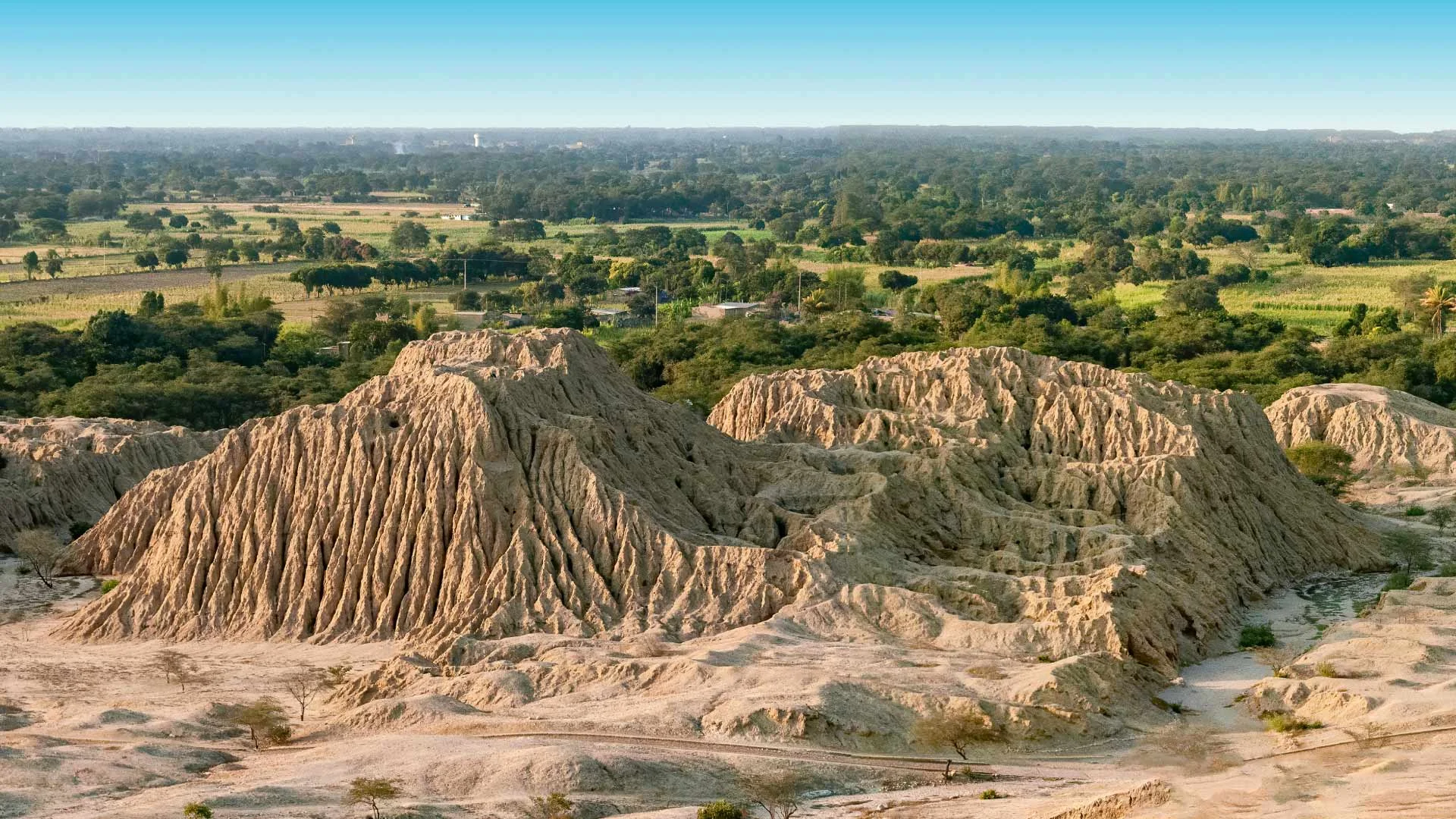
Known as the “Valley of the Pyramids,” Túcume features 26 massive adobe pyramids built by the Lambayeque culture and later used by the Chimú and Inca civilizations. The site offers panoramic views and deep insight into the religious traditions of northern Peru.
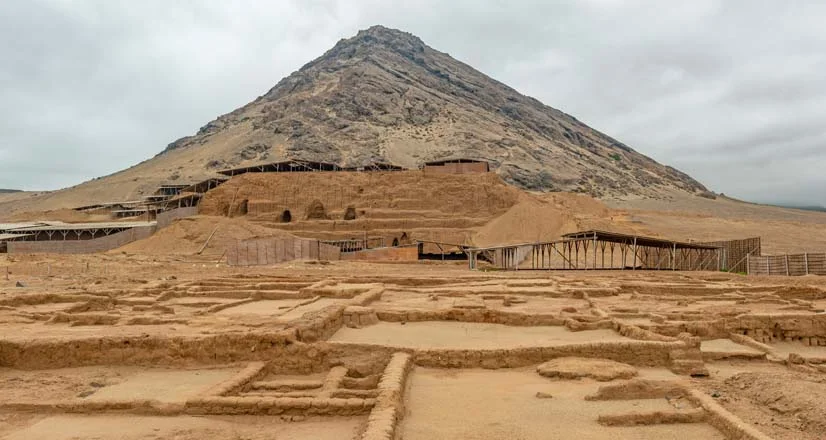
Huaca del Sol & Huaca de la Luna (La Libertad)
Located near Trujillo, these monumental Moche pyramids are renowned for their vivid murals and intricate friezes depicting gods, warriors, and ceremonial scenes. They provide one of the most detailed visual records of ancient Andean belief systems.
Local Legends and Superstitions
Stories about huacas (holy sites) abound in Peruvian folklore. Many pyramids, according to the locals, are guarded by ancient spirits who are guardians of knowledge that has been forgotten.
Some common superstitions:
- Never remove stones or artifacts bad luck is certain to follow.
- Whistling near a pyramid may awaken spirits.
- Offer a respectful silence when entering sacred sites.
These stories add a mystical dimension to visiting Peru’s pyramids, reminding travelers that these are not just archaeological sites, but living symbols of cultural memory.
How to Visit Peru’s Pyramids with Andean Travel Experience
Exploring Peru’s pyramids offers an unforgettable journey through time. At Andean Travel Experience, we craft personalized itineraries that bring these ancient wonders to life.
Recommended Experiences:
- Private archaeological tours with expert guides
- Luxury travel packages including Caral and Nazca
- Family-friendly cultural adventures with interactive learning
- Gastronomic experiences paired with site visits
FAQs: Everything You Need to Know About Peruvian Inca & Pre-Inca Pyramids
Who built the pyramids in Peru?
Peru’s pyramids were built by several civilizations, including the Caral, Nazca, Moche, Lambayeque, Lima, and Inca cultures. Many predate the Inca Empire by thousands of years and were primarily used for religious, ceremonial, and administrative purposes.
What are the most important pyramids to visit in Peru?
Some of the most remarkable and accessible sites are:
- Caral (Supe Valley) – The oldest civilization in the Americas.
- Cahuachi (Nazca) – A massive ceremonial center in the desert.
- Huaca Pucllana (Lima) – An adobe pyramid in the heart of Miraflores.
- Túcume (Lambayeque) – The famous “Valley of the Pyramids.”
- Huaca de la Luna & Huaca del Sol (Trujillo) – Moche pyramids with stunning murals.
How do I get to the pyramids from Lima?
- Caral: ~3.5 hours by road (ideal for a full-day trip).
- Huaca Pucllana: Located directly in Miraflores.
- Cahuachi: 7-hour drive to Nazca + local tour.
- Túcume: Flight to Chiclayo (1.5 h) + 30–40 minutes by road.
Do I need a guide to visit the pyramids?
Not mandatory, but highly recommended because:
- Most sites have minimal signage.
- Guides provide context, history, and archaeological insight.
- They help you navigate restricted or fragile areas safely.
How much does it cost to visit the pyramids in Peru?
Entrance fees vary by site:
- Regional archaeological sites: typically S/ 10 to S/ 30.
- Huaca Pucllana: slightly higher due to its urban location.
- Caral: affordable ticket + transportation from Lima.
Private, luxury, or customized tours vary depending on inclusions.
How much time do I need to explore each pyramid?
- Caral: 2–3 hours
- Cahuachi: 1.5–2 hours
- Huaca Pucllana: 1 hour
- Túcume: 2–3 hours (including the museum)
- Huaca de la Luna: 2 hours
A full-day itinerary often combines several sites.
What is the best time of the year to visit the pyramids?
You can visit year-round, but:
- Caral & Cahuachi: Best from April to November (dry season).
- Huaca Pucllana: Anytime.
- Túcume: Avoid heavy rains from January to March.
Why are Peruvian pyramids different from those in Egypt or Mexico?
Because they were built mainly with adobe, mud, and layered platforms.
Unlike Egyptian tombs, Peru’s pyramids were:
- Ceremonial centers
- Administrative hubs
- Astronomical observatories
- Community gathering places
- They were living cultural complexes, not burial monuments.
Are the pyramids safe to visit?
Yes. Major archaeological sites are safe, monitored, and well-marked.
Just follow staff instructions and avoid stepping into restricted or fragile areas.
More than just old ruins, Peru's pyramids are living reminders of pre-Inca civilizations that formed the Americas.
These holy locations have tales to be unearthed, whether you're an adventurer, an archaeologist, or a family seeking a meaningful vacation.
Are you prepared to travel beyond Machu Picchu in Peru?
At Andean Travel Experience, we design private, tailor-made journeys that connect you with Peru’s most ancient civilizations comfortably, authentically, and at your own pace.
Contact us today to create your customized Peruvian journey, get in touch with us right now.