
There is a side of Peru that many travelers never see.
Beyond the iconic landscapes of Lima, Cusco and Machu Picchu lies Chachapoyas, a remarkable destination in the Amazonas region of northern Peru where cloud forests, dramatic waterfalls and ancient archaeological sites come together.
Here, the remains of the Chachapoya civilization are surrounded by green mountains, misty forests and remote valleys. The experience is very different from Peru's better-known tourist routes: quieter, deeply cultural and ideal for travelers looking for authentic experiences away from the crowds.
From the monumental fortress of Kuélap to the spectacular Gocta Waterfall, the sarcophagi of Karajía, the mausoleums of Revash and the archaeological treasures preserved in Leymebamba, Chachapoyas offers an extraordinary combination of history, nature and adventure.
For travelers interested in discovering a less-explored side of Peru, Chachapoyas deserves a place on the itinerary.
Where Is Chachapoyas?
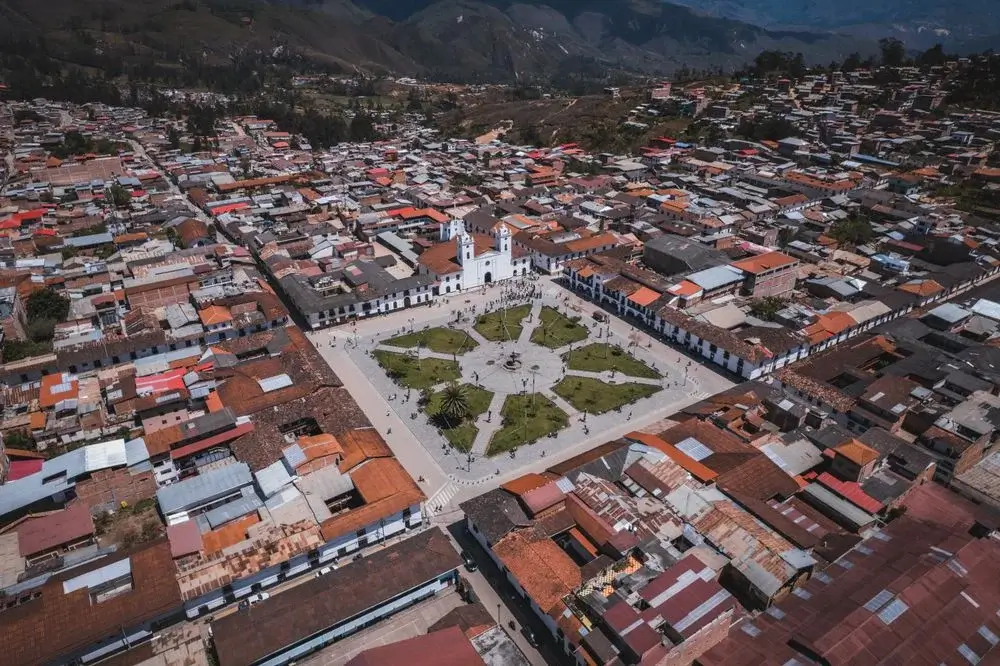
Chachapoyas is the capital of the Amazonas region in northern Peru, located in the eastern Andes.
Although Amazonas is often associated with the Amazon rainforest, Chachapoyas is geographically and environmentally different from the lowland jungle. The surrounding landscape includes Andean mountains, cloud forests, deep valleys and high-altitude ecosystems.
This unusual geography helped create the distinctive environment in which the Chachapoya civilization developed.
The city also serves as an excellent base for exploring some of the region's most important archaeological and natural attractions.
Why Visit Chachapoyas?
Chachapoyas is particularly appealing to travelers who want to combine culture, nature and active experiences.
Unlike destinations where one major attraction dominates the itinerary, the Chachapoyas area offers several experiences that can be combined into a longer journey.
Reasons to visit Chachapoyas:
- Explore the ancient Kuélap archaeological complex
- Hike through cloud forest to Gocta Waterfall
- Discover the mysterious sarcophagi of Karajía
- Visit the painted mausoleums of Revash
- Learn about Chachapoya history at Leymebamba Museum
- Explore the caves of Quiocta
- Discover traditional communities and landscapes
- Experience northern Peru away from the busiest tourist routes
- Combine archaeology with trekking and nature
- Extend a Peru itinerary beyond the classic Lima–Cusco–Machu Picchu route
PROMPERÚ identifies a five-day itinerary as a useful framework for exploring the principal attractions around Chachapoyas, including Kuélap, Gocta, Revash, Leymebamba and Karajía.
Why Visit Chachapoyas?
Chachapoyas is particularly appealing to travelers who want to combine culture, nature and active experiences.
Unlike destinations where one major attraction dominates the itinerary, the Chachapoyas area offers several experiences that can be combined into a longer journey.
Reasons to visit Chachapoyas:
- Explore the ancient Kuélap archaeological complex
- Hike through cloud forest to Gocta Waterfall
- Discover the mysterious sarcophagi of Karajía
- Visit the painted mausoleums of Revash
- Learn about Chachapoya history at Leymebamba Museum
- Explore the caves of Quiocta
- Discover traditional communities and landscapes
- Experience northern Peru away from the busiest tourist routes
- Combine archaeology with trekking and nature
- Extend a Peru itinerary beyond the classic Lima–Cusco–Machu Picchu route
PROMPERÚ identifies a five-day itinerary as a useful framework for exploring the principal attractions around Chachapoyas, including Kuélap, Gocta, Revash, Leymebamba and Karajía
The Chachapoya: The People of the Cloud Forest
To understand Chachapoyas, it is important to understand the civilization that gave the region its identity.
The Chachapoya developed in the eastern Andes of what is now northern Peru. Their archaeological legacy includes monumental settlements, circular architecture and sophisticated funerary traditions.
Their relationship with the landscape is one of the most fascinating aspects of the region.
Many Chachapoya archaeological sites were built in dramatic locations: on cliffs, mountain slopes and difficult-to-access areas overlooking valleys.
Their funerary architecture is particularly remarkable.
Two of the best-known examples are Karajía's sarcophagi and the mausoleums of Revash, giving travelers the opportunity to understand a civilization whose archaeological remains are deeply connected to the surrounding landscape.
Travel Tip
Because access conditions and visitor regulations can change as conservation work continues, it is best to verify the current circuit and ticket requirements before traveling.
Why Gocta is special
Gocta is more than a waterfall viewpoint.
The route offers travelers the chance to experience:
- Cloud forest landscapes
- Mountain scenery
- Local communities
- Hiking
- Birdwatching
- Native flora
- Rural traditions
Gocta was also recognized in the Green Destinations Top 100 Stories 2024, highlighting sustainability and environmental initiatives associated with the destination.
For travelers who enjoy nature and active experiences, it is one of the strongest reasons to add Chachapoyas to a Peru itinerary.
3. Discover the Sarcophagi of Karajía
One of the most intriguing archaeological experiences in the region is Karajía.
Here, visitors can see anthropomorphic funerary sarcophagi known as Purunmachus, positioned on a cliff overlooking the surrounding landscape.
The site belongs to the Chachapoya cultural tradition and dates to the Late Intermediate Period, approximately 1100–1470 AD, according to the Ministry of Culture's tourism inventory.
The location itself makes the experience memorable.
Rather than being displayed inside a museum, the sarcophagi remain associated with the dramatic landscape where they were created.
This is one of the places where archaeology and nature become inseparable.
4. Explore the Mausoleums of Revash
Another extraordinary Chachapoya funerary site is Revash.
The mausoleums are built along limestone cliffs and feature rectangular structures with painted surfaces and distinctive architectural details.
The Ministry of Foreign Trade and Tourism identifies Revash as a Chachapoya archaeological cemetery dating to approximately 1100–1470 AD and recognized as Cultural Heritage of the Nation.
The site offers a fascinating insight into Chachapoya funerary traditions while also providing spectacular views of the surrounding Andean landscape.
Karajía or Revash?
If your itinerary allows, visit both.
They illustrate different funerary traditions and provide a more complete understanding of Chachapoya culture.
5. Visit Leymebamba Museum
For travelers who want to go beyond simply seeing archaeological sites, Leymebamba Museum is an essential stop.
Located in the town of Leymebamba, the museum houses an important collection of archaeological objects associated with the Chachapoya and Inca cultures.
According to the MINCETUR tourism inventory, the museum holds approximately 2,300 archaeological pieces.
The collection includes:
- Mummies
- Ceramics
- Textiles
- Quipus
- Funerary objects
- Archaeological artifacts
The museum is particularly important because of the discoveries associated with the nearby Laguna de los Cóndores, also known as Laguna de las Momias.
More than 200 mummies were recovered from the archaeological site and are now preserved as part of the region's archaeological heritage.
6. Venture into Quiocta Cave
For travelers looking for a different type of adventure, Quiocta Cave offers an underground experience.
Located in the province of Luya, the cave is known for its impressive limestone formations.
It is often combined with a visit to Karajía, making the two attractions a convenient cultural and adventure-focused day trip from Chachapoyas.
The combination is especially attractive for travelers who want to experience more than archaeological ruins.
7. Experience the Landscapes Around Chachapoyas
One of the biggest attractions of Chachapoyas is not a single monument.
It is the landscape itself.
The region is characterized by:
- Cloud forests
- Deep valleys
- Mountain viewpoints
- Waterfalls
- Traditional agricultural areas
- Archaeological sites
- Small Andean communities
Places such as Huancas and the Sonche Canyon provide opportunities to experience the region beyond its major archaeological attractions. PROMPERÚ highlights the Sonche Canyon and Huancas among the destinations around Chachapoyas.
For a private journey, these experiences can be incorporated according to your interests, physical condition and available time.
Chachapoyas Travel Guide
How Many Days Do You Need in Chachapoyas?
For travelers who want to experience the main highlights without rushing, 4 to 5 days is a good starting point.
A five-day route can include:
| Day | Experience |
|---|---|
| Day 1 | Chachapoyas, Huancas & local experiences |
| Day 2 | Kuélap |
| Day 3 | Gocta Waterfall |
| Day 4 | Revash & Leymebamba |
| Day 5 | Karajía & Quiocta |
This follows the general attraction structure recommended by PROMPERÚ for exploring the Chachapoyas area.
For more adventurous travelers, the itinerary can be extended to include longer trekking experiences such as the Laguna de los Cóndores route.
When Is the Best Time to Visit Chachapoyas?
Chachapoyas can be visited throughout the year, but weather conditions vary considerably because of its mountainous and cloud-forest environment.
Generally, May to November is a favorable period for travelers looking for relatively better conditions for outdoor activities.
The rainy season is generally more pronounced from December to April. However, this does not mean that the destination closes during these months. For example, MINCETUR notes that Gocta can still be visited during the rainy season, when its water flow can be particularly impressive.
Best time depending on your interests
For hiking:
May–November can offer more favorable conditions.
For lush landscapes and waterfalls:
The wetter months can provide greener scenery and stronger water flow.
For archaeology and cultural experiences:
Chachapoyas can be visited throughout the year.
For travelers seeking flexibility:
A private itinerary allows the order of activities to be adjusted according to weather conditions.
How to Get to Chachapoyas
Chachapoyas is considerably less connected than Peru's major tourist destinations, which is part of what makes the journey feel more remote.
Travelers can reach the region through a combination of domestic flights and overland transportation, depending on the route and current transport schedules.
For a customized Peru itinerary, Chachapoyas can be connected with other destinations in northern Peru or incorporated as a separate extension.
Because transportation schedules and road conditions can change, it is advisable to plan transfers in advance rather than relying on last-minute connections.
This is one of the reasons a private travel specialist can make a significant difference in northern Peru.
Chachapoyas vs. Machu Picchu: Should You Visit Both?
Absolutely.
Chachapoyas should not be considered a replacement for Machu Picchu.
They offer different experiences.
| Machu Picchu | Chachapoyas |
|---|---|
| Iconic Inca sanctuary | Chachapoya archaeological heritage |
| Internationally famous | Less-visited |
| High demand | More intimate |
| Inca history | Chachapoya and Inca history |
| Dramatic mountain setting | Cloud forests and waterfalls |
| Major bucket-list destination | Off-the-beaten-path experience |
For travelers with enough time, combining Machu Picchu and Chachapoyas creates a much broader perspective of Peru's ancient civilizations and landscapes.
Why Chachapoyas Is Ideal for a Private Peru Journey
Chachapoyas is particularly well suited to private and tailor-made travel.
Its attractions are spread across different valleys and communities, and many experiences involve hiking, private transportation and local guides.
A personalized itinerary allows you to decide:
- How much time to spend at each archaeological site
- Which hikes fit your interests
- Where to stay
- How active your days should be
- Which cultural experiences to include
- How Chachapoyas connects with the rest of your Peru journey
Rather than simply checking attractions off a list, the goal is to create a journey that feels coherent and personal.
What Makes Chachapoyas Different?
There is something special about traveling through a destination where archaeology, nature and local life remain closely connected.
In Chachapoyas, you do not simply walk through an archaeological site.
You travel through mountains where ancient communities built their settlements.
You do not simply visit a waterfall.
You hike through a cloud forest to reach it.
You do not simply see a museum collection.
You begin to understand the people who lived in these valleys centuries ago.
That combination makes Chachapoyas one of Peru's most compelling destinations for travelers who want to go beyond the classic itinerary.
Ready to explore Northern Peru?
At Andean Travel Experience, we design private, tailor-made journeys for travelers who want to discover Peru with comfort, flexibility and expert local support.
Tell us what you would like to experience, and we can create a personalized Chachapoyas itinerary that fits naturally into your Peru journey.
→ Plan Your Private Peru Journey