
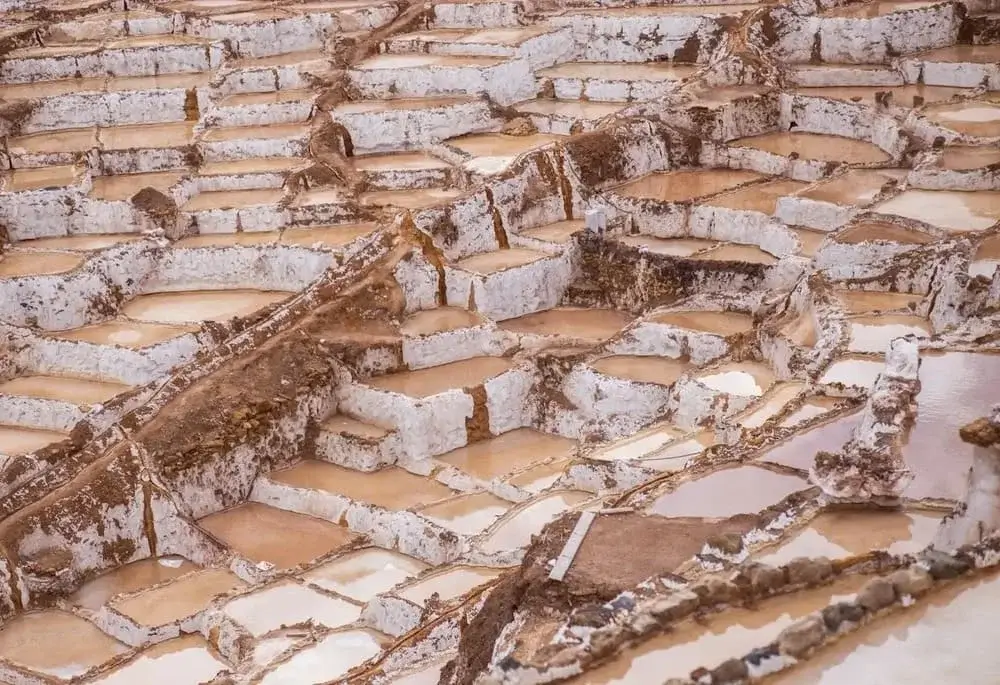
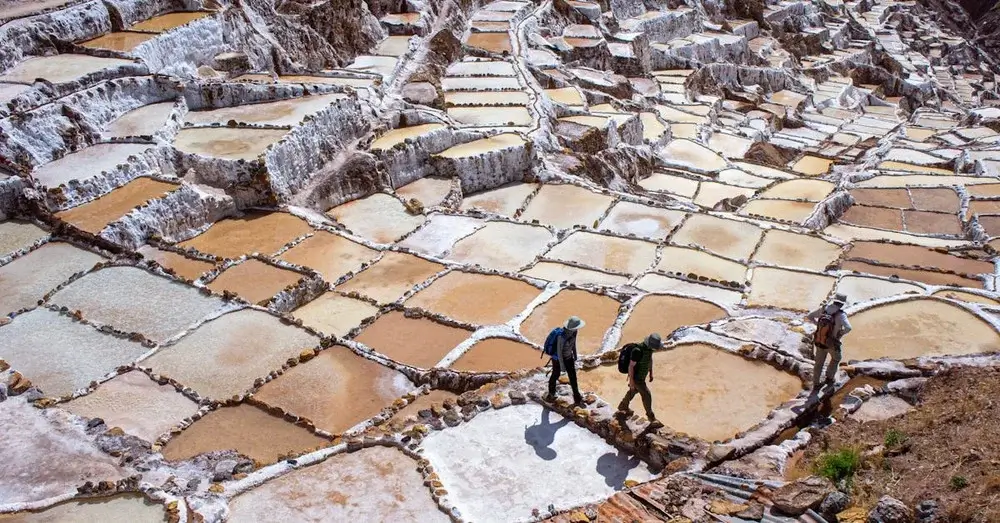
Hidden in the dramatic landscapes of Peru’s Sacred Valley, the Maras Salt Mines known locally as Salineras de Maras form one of the most remarkable cultural landscapes in the Andes. Thousands of shallow white salt pools cascade down a mountainside, creating a breathtaking pattern that contrasts with the rugged Andean terrain.
For centuries, these terraces have been carefully maintained by local families who harvest mineral-rich salt using traditional techniques passed down through generations. Visiting the Maras Salt Mines offers travelers a rare opportunity to witness a living tradition where nature, history, and culture intersect.
Located about 50 kilometers from Cusco, the salt pans are one of the most fascinating stops in the Sacred Valley, combining spectacular scenery with a story that stretches back to pre-Inca times.
Whether you are a history enthusiast, a cultural traveler, or simply seeking one of Peru’s most unique landscapes, the Maras Salt Mines provide an unforgettable window into Andean heritage.
The History of the Maras Salt Mines
The Maras Salt Mines are believed to date back to pre-Inca civilizations, though the exact origin remains uncertain. Archaeological and historical studies indicate that the terraces were already in use before the expansion of the Inca Empire.
What is known is that the Incas integrated the salt mines into their economic system, recognizing the value of salt as both a dietary necessity and a trade commodity across the Andes.
Today, the salt terraces are managed collectively by local families from the nearby community of Maras. Each family typically maintains a group of ponds where salt is harvested through a process of natural evaporation.
This continuity of traditional management has allowed the site to remain a living cultural landscape rather than a purely archaeological attraction.
How the Maras Salt Pans Work
The operation of the Maras Salt Mines is surprisingly simple yet highly effective.
A natural underground saltwater spring emerges from the mountain above the terraces. This mineral-rich water flows through narrow channels into thousands of shallow pools carved into the hillside.
The process works as follows:
- Saltwater fills each terrace through small channels.
- Sun and wind evaporate the water over several days.
- Salt crystals form on the surface.
- Workers collect the salt by hand using traditional tools.
The harvested salt is then dried, processed, and sold locally. In recent years, gourmet pink salt from Maras has gained popularity among chefs and culinary enthusiasts.
Why the Maras Salt Mines Are Unique
Several factors make the Maras Salt Mines one of Peru’s most extraordinary cultural sites:
1. Thousands of Terraces: The complex includes over 3,000 salt pools covering the hillside.
2. Continuous Traditional Use: Unlike many historic sites, Maras is still actively used by local families.
3. Natural Saltwater Source: The salt comes from a natural subterranean spring, not from the sea.
4. Striking Landscape: The white terraces create a visual contrast with the brown mountains and green valleys of the Sacred Valley.
These elements combine to make the Maras Salt Mines both a working agricultural site and a spectacular travel destination.
Where Are the Maras Salt Mines Located?
The Maras Salt Mines are located in the Sacred Valley of the Incas, in southern Peru.
Distance references:
- Cusco: about 50 km (31 miles)
- Ollantaytambo: about 25 km (15 miles)
- Moray Inca terraces: about 7 km away
Because of this location, the salt mines are commonly visited as part of a Sacred Valley itinerary.
How to Visit the Maras Salt Mines
Travelers typically reach the Maras Salt Mines by:
- Private guided tours
- Sacred Valley day tours
- Combined tours with Moray
A guided visit often provides valuable insights into the history and functioning of the terraces while ensuring a smoother experience.
Luxury travel itineraries frequently include Maras, Moray, and traditional Andean villages as part of a curated Sacred Valley exploration.
Best Time to Visit Maras Salt Mines
The Maras Salt Mines can be visited year-round, but conditions vary depending on the season.
Dry Season (May – October)
- Clear skies
- Excellent visibility
- Ideal for photography
Rainy Season (November – April)
- Lush landscapes
- Occasional rain
- Some ponds may appear darker due to moisture
Morning visits are often recommended for softer lighting and fewer visitors.
Cultural Importance for Local Communities
For generations, the Maras Salt Mines have supported local livelihoods. Families inherit the right to manage specific salt ponds, and the harvesting process remains a community-based activity.
The site is also an example of sustainable resource management, where traditional practices continue to coexist with modern tourism.
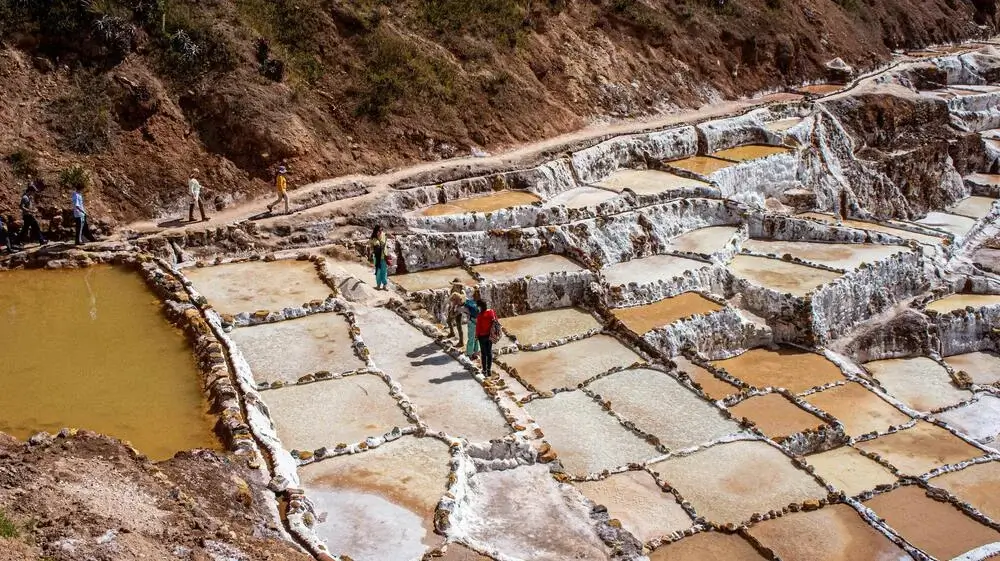
Visitors are encouraged to respect the site by staying on designated paths and supporting local products.
What to Bring When Visiting Maras
To enjoy your visit comfortably, consider bringing:
- Comfortable walking shoes
- Sun protection (hat, sunscreen)
- Water
- A camera for photography
- Cash for entrance tickets or local products
Combine Maras with Other Sacred Valley Destinations
Many travelers combine the Maras Salt Mines with other nearby highlights:
- Moray Agricultural Terraces: Circular Inca terraces believed to have been used for agricultural experimentation.
- Ollantaytambo: One of the best-preserved Inca towns and a gateway to Machu Picchu.
- Chinchero: A traditional Andean village known for its textile weaving traditions.
These destinations together provide a deeper understanding of Inca engineering, culture, and Andean traditions.
Frequently Asked Questions
How old are the Maras Salt Mines?
They are believed to date back to pre-Inca times, though the exact origin is not fully documented.
How many salt pools are there?
There are more than 3,000 individual terraces.
Is the Maras salt edible?
Yes. The salt harvested here is processed and sold locally and internationally.
Can visitors walk inside the salt terraces?
Access rules may vary. Visitors usually explore the site from designated pathways to protect the terraces.
How long does a visit take?
Most visits last 30–60 minutes, often as part of a larger Sacred Valley tour.
Key Takeaways
- The Maras Salt Mines are one of the most unique cultural landscapes in Peru.
- The terraces rely on a natural saltwater spring and evaporation process.
- The site has been continuously used for centuries by local communities.
- Visiting Maras offers both spectacular scenery and insight into Andean traditions.
“At Maras, the landscape itself tells the story of centuries of Andean ingenuity.”
The Maras Salt Mines are far more than a scenic viewpoint. They represent a centuries-old relationship between people, landscape, and tradition in the Andes.
Standing above the shimmering terraces, visitors witness not only a breathtaking panorama but also a cultural practice that has endured across generations.
For travelers exploring the Sacred Valley, a visit to Maras provides a deeper appreciation of the ingenuity and resilience that define Andean culture.
Ready to experience the Sacred Valley beyond the ordinary?
At Andean Travel Experience, we design private, tailor-made journeys that connect travelers with Peru’s most extraordinary landscapes and traditions. Explore Maras, Moray, and hidden Andean villages with expert guides and carefully curated experiences.
Start planning your journey today and discover Peru in a deeper, more meaningful way.