The Threads That Carry the Andes
In the highlands of Peru, weaving is more than craftsmanship it is memory woven into fabric.
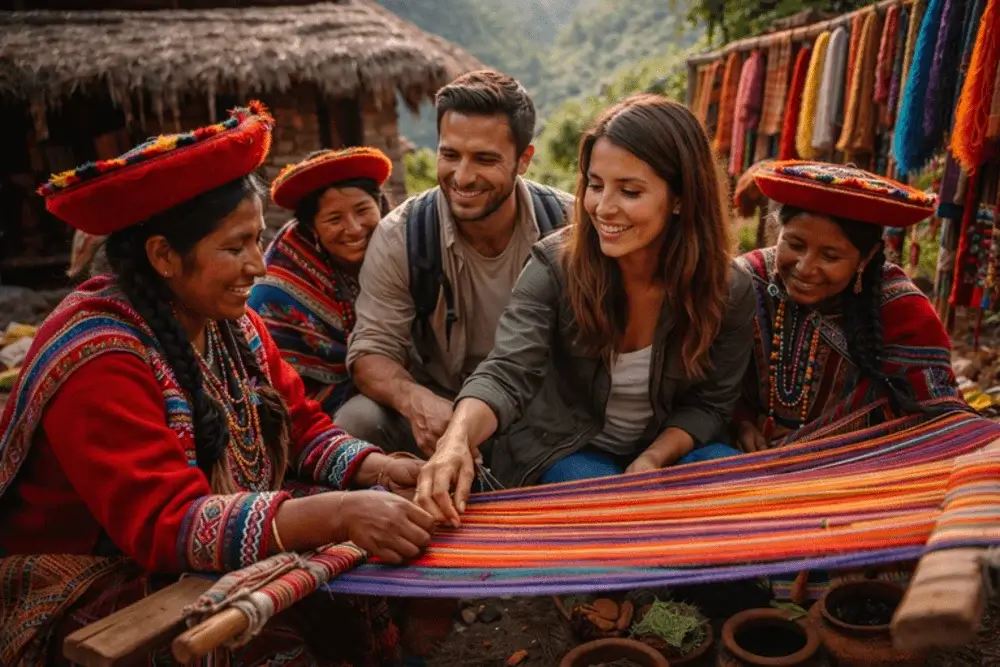
Long before written language reached the Andes, Andean communities preserved stories, status, astronomy, and identity through textiles. Today, in villages such as Chinchero and Umasbamba, master weavers continue traditions that have survived for centuries, using techniques passed from generation to generation.
For travelers seeking authentic luxury experiences in Peru, discovering the world of Peruvian textiles offers far more than a shopping opportunity. It opens a door into one of the oldest living artistic traditions on Earth.
At Andean Travel Experience, we believe the most meaningful journeys are those that connect travelers directly with culture, heritage, and the people preserving them.
Planning your trip? Explore our Sacred Valley & Cusco private tour — private, tailor-made and designed by our Cusco-based team.
Why Peruvian Textiles Are Considered Living Heritage
A Tradition Older Than the Inca Empire
Textile traditions in Peru predate the Inca civilization by thousands of years. Ancient cultures such as the Paracas and Nazca were already producing remarkably sophisticated fabrics long before Machu Picchu existed.
In Andean society, textiles historically held greater value than gold or silver. Clothing reflected:
- Social rank
- Geographic identity
- Spiritual beliefs
- Community traditions
- Ceremonial importance
Even today, many Quechua communities continue using ancestral weaving methods almost unchanged from pre-Hispanic times.
The Cultural Importance of Weaving in the Andes
Weaving is deeply connected to daily life in the Andes.
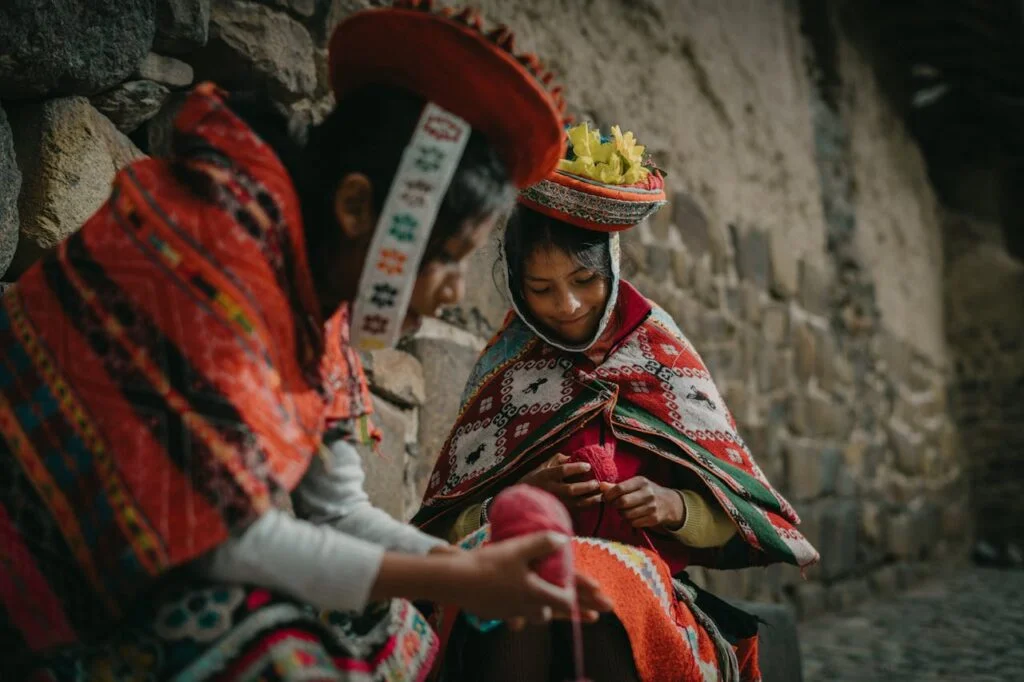
Women often begin learning to spin and weave as children, memorizing patterns and techniques through observation rather than written instruction. Every textile becomes a reflection of family lineage, local symbolism, and cultural identity.
For luxury travelers interested in meaningful cultural immersion, visiting traditional weaving communities creates a far deeper understanding of Peru beyond the classic tourist routes.
Interested in authentic cultural encounters in the Sacred Valley? Explore private experiences designed around local communities and living traditions.
The “Inca Internet”: The Language Hidden in Andean Textiles
Pallays: The Geometric Code of the Andes
Traditional Andean textile patterns are known as pallays.
These geometric motifs are not merely decorative. They function as a symbolic language representing:
- Mountains
- Rivers
- Agricultural cycles
- Animals
- Constellations
- Spiritual beliefs
Each community develops distinct visual identities through its weaving patterns, making textiles a form of cultural storytelling.
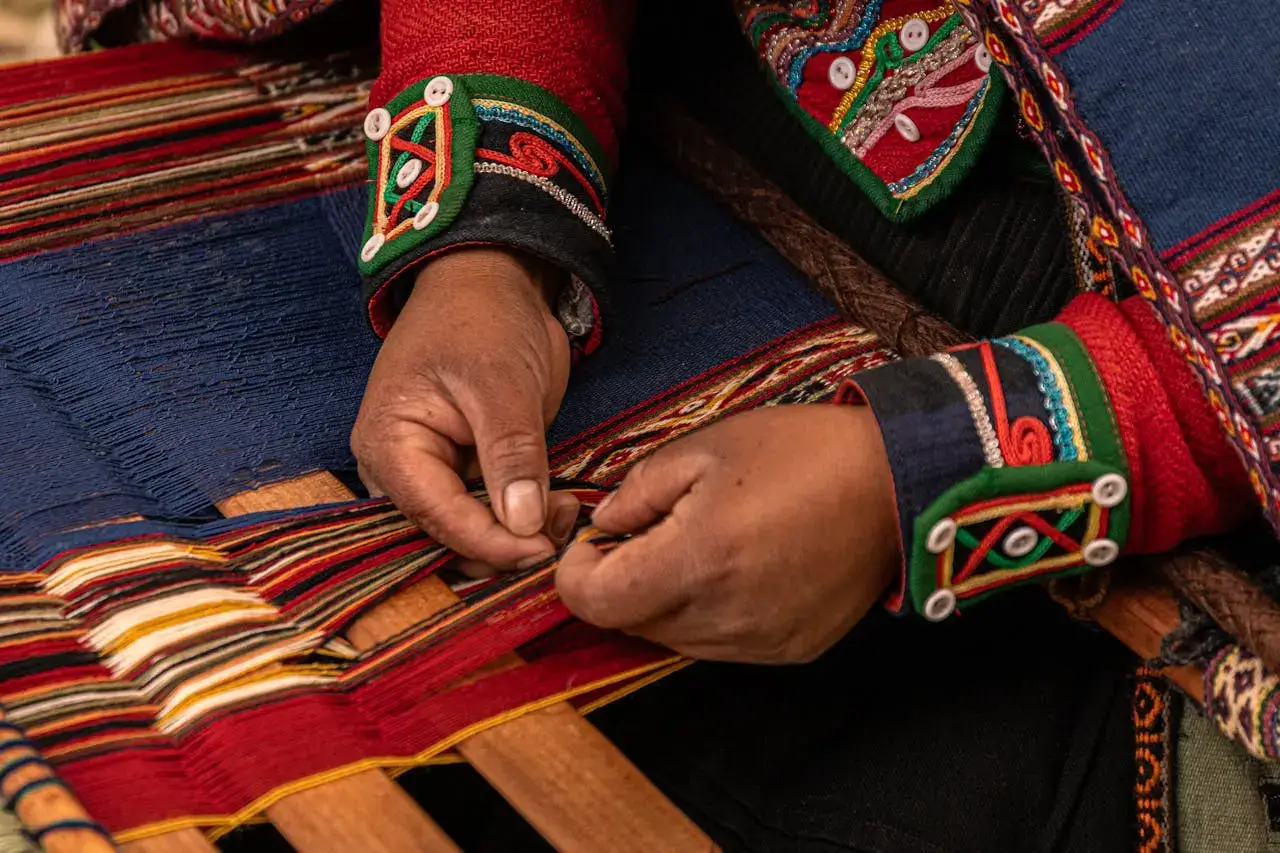
What fascinates many visitors is the extraordinary mathematical precision involved in handweaving. Master artisans create symmetrical designs entirely from memory using traditional backstrap looms without sketches, templates, or machines.
The Remarkable Mathematics Behind the Loom
Traditional weaving requires continuous calculation and rhythm.
Weavers control:
- Thread tension
- Symmetry
- Alignment
- Color sequencing
- Geometric repetition
The result is an organic precision impossible to fully reproduce mechanically.
In many ways, Andean weaving represents an ancestral form of engineering combining art, mathematics, and memory into a single process.
Tocapus: The Secret Symbols of the Inca Elite
One of the most intriguing aspects of Inca textiles is the use of tocapus.
These square-shaped abstract symbols often appeared in royal garments and are believed to have represented:
- Noble lineage
- Political identity
- Military status
- Geographic origin
Historians continue studying whether tocapus functioned as a sophisticated visual communication system within the Inca Empire.
For culturally curious travelers, understanding these symbols transforms a textile from a souvenir into a historical narrative woven by hand.
Our tailor-made Sacred Valley journeys include exclusive visits to weaving communities where travelers learn the meaning behind traditional Andean symbolism directly from local artisans.
The Kitchen of Colors: Natural Dyeing Traditions in Peru
Ancient Sustainability Before Modern Fashion
Long before sustainability became a global trend, Andean communities were creating environmentally responsible textiles using entirely natural ingredients.
The traditional dyeing process combines:
- Native plants
- Roots
- Flowers
- Minerals
- Insects
- Salt
- Mountain water
Today, these ancestral practices align perfectly with the growing global movement toward slow luxury and ethical travel.
Cochineal: The Insect That Changed the Fashion World
One of Peru’s most famous natural dyes comes from a tiny insect called cochineal, found on prickly pear cactus.
This insect produces carminic acid, responsible for vibrant crimson and red pigments historically exported to Europe during colonial times. In fact, cochineal became one of the most valuable exports from the Americas in the 16th century.
What makes the process extraordinary is its chemistry.
By changing the pH balance during preparation, artisans can create entirely different colors:
| Natural Additive | Resulting Color |
|---|---|
| Lemon juice | Bright pink |
| Maras salt | Deep violet |
| Mineral-rich water | Burgundy |
| Natural mordants | Orange and earthy reds |
Watching this transformation during a weaving demonstration feels almost magical.
Native Plants Used in Traditional Andean Dyeing
Chillca
Used to produce rich green tones inspired by Andean valleys and agricultural landscapes.
Kimsak’uchu
A native plant associated with deep blue shades reminiscent of high-altitude skies.
Molle
Produces subtle purples, grays, and earthy tones commonly seen in traditional textiles.
Saqta: The Natural Shampoo of the Andes
Before spinning alpaca wool, artisans traditionally wash the fibers using saqta, a natural Andean root with cleansing properties.
This ancient method removes oils and impurities without industrial chemicals, preserving both the softness of the fiber and the environment.
Alpaca vs. Acrylic: How to Identify Authentic Peruvian Textiles
Why Authenticity Matters
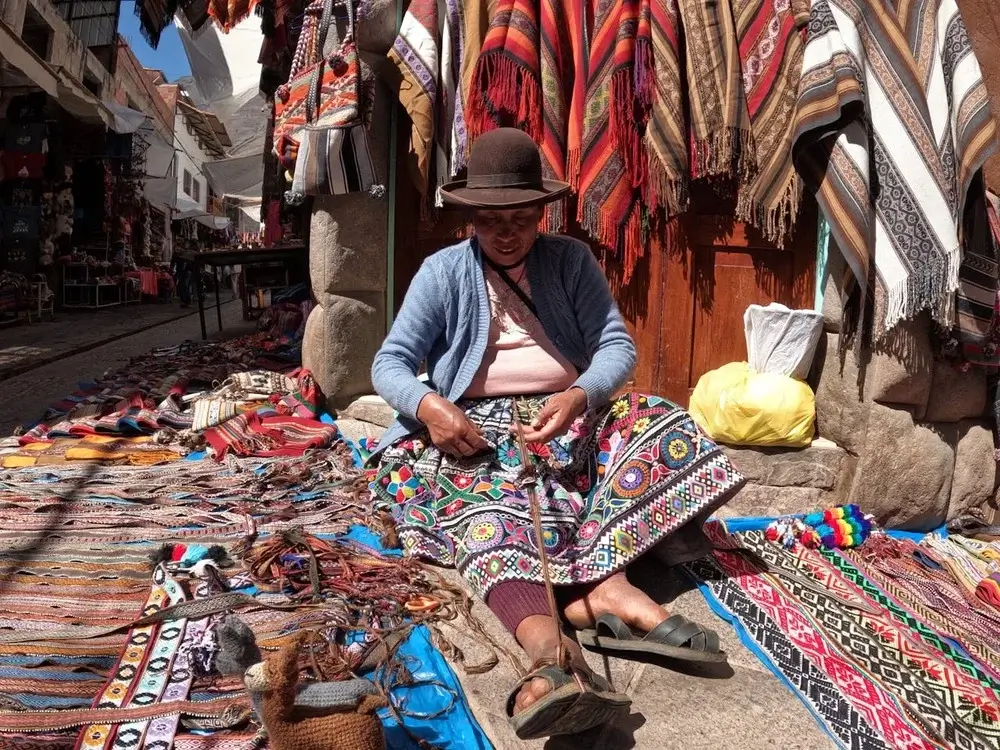
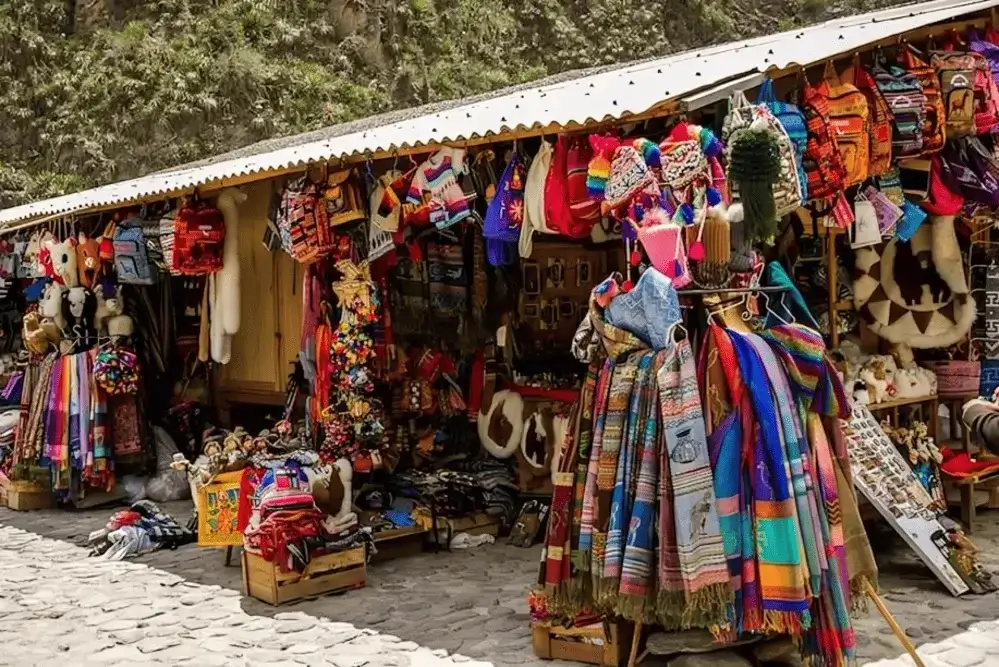
One of the biggest concerns travelers face when shopping for textiles in Peru is distinguishing genuine handmade alpaca products from industrial imitations.
Understanding the difference helps travelers make ethical and informed purchases while directly supporting artisan communities.
1. The Touch Test
Authentic alpaca fiber has unique physical characteristics.
Genuine Alpaca
- Feels slightly cool initially
- Has noticeable weight and density
- Drapes elegantly
- Breathable and soft
- Naturally temperature regulating
Synthetic Acrylic
- Feels instantly warm
- Extremely lightweight
- Artificially fluffy
- Often generates static
- Less breathable
High-quality alpaca should feel refined rather than overly soft or synthetic.
2. Integrated Edges
Authentic handwoven textiles feature structurally integrated edges woven directly into the fabric itself.
Factory-made products often:
- Cut edges mechanically
- Add stitched finishing afterward
- Lack structural continuity
This small detail is one of the clearest signs of authentic craftsmanship.
3. The Rooq’i Bone Tool
Traditional weavers often use a carved llama bone tool called the Rooq’i to compact and align fibers during weaving.
This manual process creates a density and precision impossible for industrial machines to imitate naturally.
For visitors attending weaving demonstrations in Chinchero or Patacancha, the use of the Rooq’i becomes a fascinating detail that reveals the complexity behind Andean textiles.
Discover Peru beyond the markets through private cultural experiences that connect you directly with artisan families and ethical weaving cooperatives.
Chinchero: The Heart of Peru’s Textile Renaissance
A Living Weaving Tradition in the Sacred Valley
Located high in the Sacred Valley near Cusco, Chinchero has become one of Peru’s most important textile preservation centers.
Unlike commercial souvenir markets, many weaving cooperatives in Chinchero focus on:
- Cultural preservation
- Ethical tourism
- Direct artisan support
- Traditional dyeing methods
- Handmade production
Travelers visiting Chinchero can witness every stage of the textile process:
- Alpaca fiber preparation
- Spinning with the puchka
- Natural dyeing
- Backstrap loom weaving
- Symbol interpretation
These experiences create genuine cultural connection while supporting local communities economically.
Why Luxury Travelers Are Seeking Textile Experiences
Modern luxury travelers increasingly prioritize:
- Authenticity
- Sustainability
- Human connection
- Cultural immersion
- Ethical craftsmanship
Textile experiences in Peru offer all of these elements within a deeply personal and visually extraordinary setting.
For many travelers, meeting the artisans behind the textiles becomes one of the most memorable moments of their journey through Peru.
Ethical Luxury Travel and the Future of Andean Craftsmanship
Supporting Living Traditions Through Responsible Tourism
Tourism plays an important role in preserving traditional weaving knowledge.
When travelers purchase directly from artisans or visit community-owned weaving centers, they help:
- Sustain local economies
- Preserve ancestral techniques
- Encourage younger generations to continue weaving traditions
- Protect cultural identity
Ethical travel creates a direct bridge between visitors and communities, transforming tourism into meaningful cultural exchange.
At Andean Travel Experience, we believe luxury travel should not only inspire travelers it should also positively impact the communities that make these experiences possible.
More Than a Textile, A Story Woven by Hand
Peruvian textiles are not simply beautiful objects.
They are living archives of memory, mathematics, identity, sustainability, and artistry preserved across centuries in the Andes.
Behind every woven pattern lies a story of resilience and cultural continuity. Behind every naturally dyed thread stands a family preserving ancestral knowledge in a rapidly changing world.
For travelers seeking authentic luxury experiences in Peru, discovering the world of Andean textiles offers a rare opportunity to connect deeply with the soul of the Andes.
Plan Your Cultural Journey Through Peru
At Andean Travel Experience, we design tailor-made luxury journeys that connect travelers with Peru’s most authentic cultural traditions from private weaving experiences in Chinchero to immersive encounters across the Sacred Valley and beyond.
Discover Peru through its stories, its people, and the threads that continue to preserve its ancient identity.
Contact us today to begin designing your personalized cultural journey through Peru.