There is one drink almost every traveler knows before arriving in Peru: coca tea.
Yet ask a local guide in Cusco, a family in the Sacred Valley, or a traditional cook in Arequipa what they prepare after a hearty meal, and another name often comes up first: Muña tea.
Fresh, aromatic, and deeply rooted in Andean traditions, Muña (Minthostachys mollis) has been appreciated for centuries as one of Peru's most treasured native herbs. While international visitors are just beginning to discover it, Peruvians have long enjoyed its refreshing flavor and its traditional role in everyday wellness.
More than a simple herbal infusion, Muña represents the close relationship between Andean communities and the mountains that sustain them. Every cup tells a story of biodiversity, ancestral knowledge, and a slower way of experiencing Peru.
Whether you're planning a journey through Cusco, the Sacred Valley, Arequipa, or the Colca Canyon, discovering Muña is another way to experience Peru through its flavors, traditions, and people.
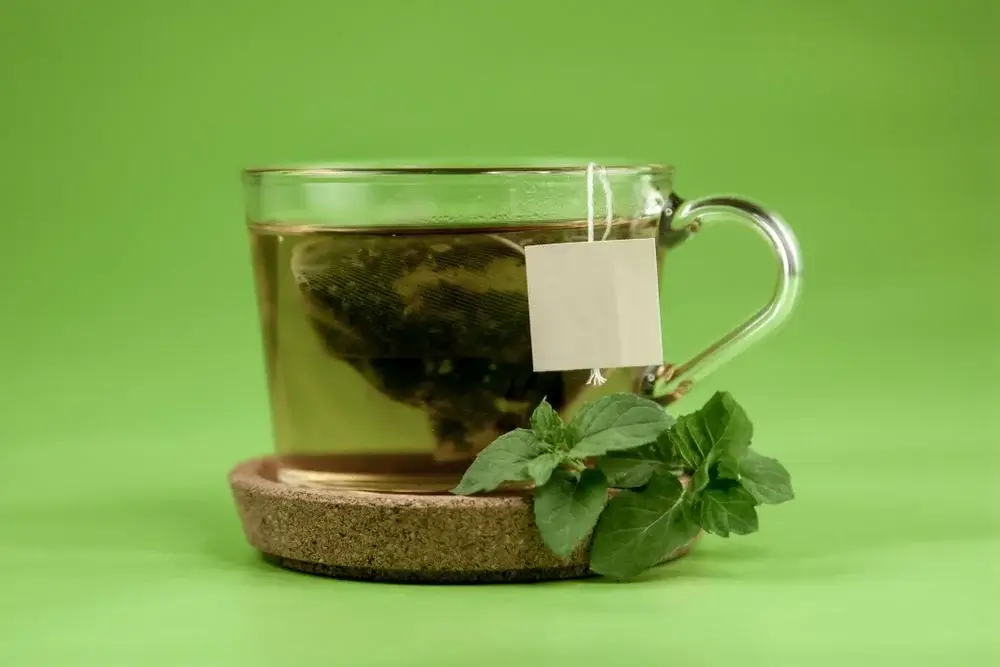
What Is Muña Tea?
An aromatic herb that has grown in the Andes for centuries
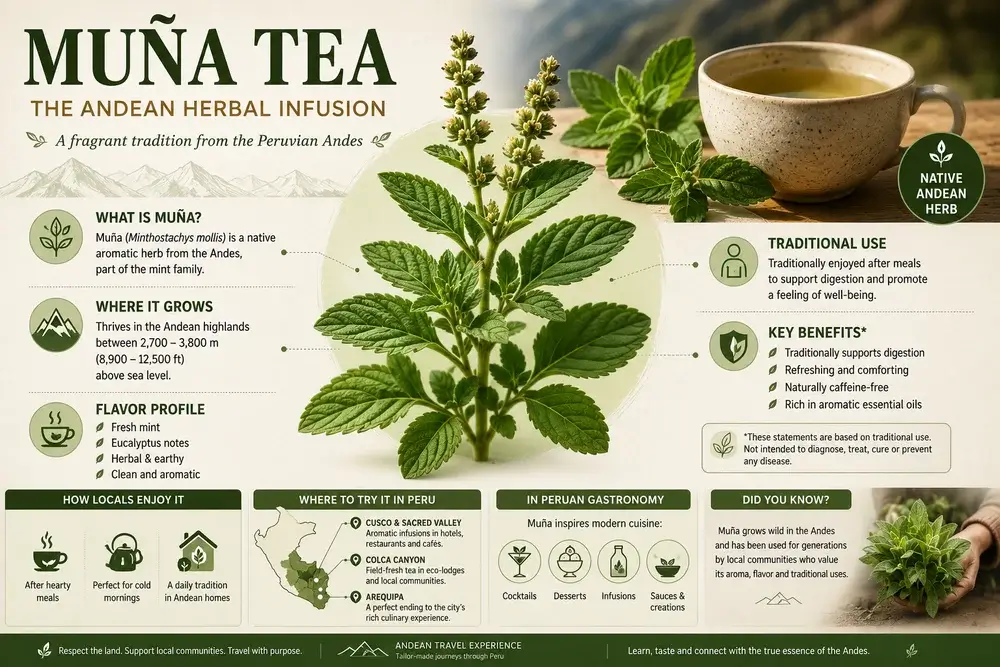
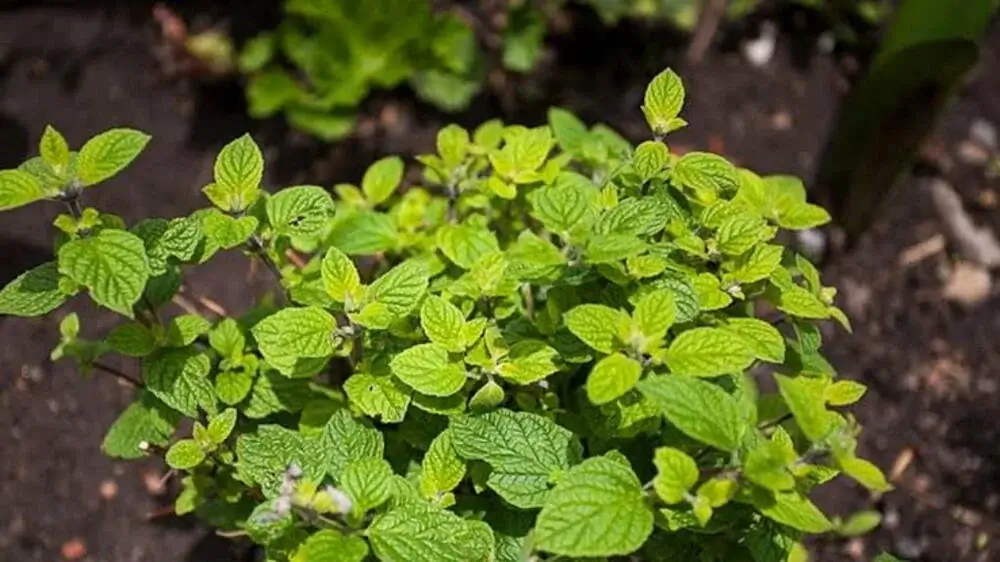
Muña is a native aromatic shrub scientifically known as Minthostachys mollis. It belongs to the mint family (Lamiaceae) and grows naturally throughout the high Andes of Peru, Bolivia, Ecuador, and parts of Colombia.
Its leaves release an intense fragrance that combines notes of:
- Mint
- Eucalyptus
- Wild herbs
- Mountain pine
- Oregano-like essential oils
Because of its refreshing aroma, Muña is sometimes called Andean mint, although it is a completely different species from peppermint.
For generations, local families have prepared Muña as an herbal tea after meals and during colder months, making it one of the most beloved traditional infusions in the Peruvian Andes.
Travel Tip: If you stay in boutique hotels throughout Cusco or the Sacred Valley, you'll often find complimentary Muña tea available alongside coca tea.
Where Does Muña Grow in Peru?
A plant that thrives at high elevations
Muña naturally grows between approximately 2,700 and 3,800 meters (8,900–12,500 ft) above sea level.
Its preferred environment includes:
| Region | Typical Habitat |
|---|---|
| Cusco | Sacred Valley hillsides and surrounding mountains |
| Arequipa | Highlands near Colca Canyon |
| Puno | High Andean grasslands |
| Ayacucho | Mountain valleys |
| Apurímac | Rocky slopes and agricultural terraces |
Unlike cultivated herbs found in commercial farms, wild Muña often grows naturally among native vegetation and rocky landscapes.
Its intense aroma comes from essential oils that help protect the plant from harsh mountain conditions.
Exploring Peru's landscapes becomes even more meaningful when you discover the native plants that have shaped local traditions for centuries.
The History of Muña in the Andes
An ancestral herb passed down through generations
Long before European contact, Andean civilizations had developed extensive knowledge of native plants.
Although written records from the Inca period are limited, colonial chroniclers documented the widespread use of aromatic herbs throughout the Andes for culinary, domestic, and traditional wellness purposes.
Muña has remained part of everyday life for centuries because it is:
- Easy to grow naturally
- Highly aromatic
- Versatile in cooking
- Appreciated as a traditional herbal infusion
Today, many rural communities continue harvesting Muña using knowledge passed from parents to children.
Rather than existing only as folklore, this living tradition continues in homes, local markets, and countryside kitchens across southern Peru.
Why Do Peruvians Drink Muña Tea?
A traditional herbal infusion enjoyed after meals
Across the Peruvian Andes, Muña tea is commonly enjoyed after lunch or dinner.
Many Peruvians traditionally believe it helps support comfortable digestion after hearty meals, especially those featuring potatoes, corn, beans, or roasted meats.
It is also appreciated because of its refreshing aroma.
Traditionally, Muña has been enjoyed:
- After large family meals
- During cold mornings
- While visiting high-altitude communities
- As part of everyday home cooking
- During long journeys through the mountains
While Muña has a long history in traditional Andean wellness practices, scientific research into its health effects is still evolving. It should not be considered a substitute for professional medical advice or treatment.
One of the joys of traveling through Peru is discovering everyday traditions that locals have cherished for generations.
What Does Muña Tea Taste Like?
Fresh, herbal, and surprisingly complex
Many visitors expect Muña to taste exactly like peppermint.
Instead, its flavor is more layered.
Most people notice:
- Fresh mint
- Herbal notes
- Gentle eucalyptus
- Slight earthiness
- A clean, cooling finish
Because of this complexity, Muña pairs beautifully with traditional Andean cuisine.
It is especially enjoyable after meals featuring:
- Alpaca
- Trout
- Quinoa
- Roasted potatoes
- Local cheeses
Unlike many herbal teas, Muña has a naturally vibrant aroma without needing added sugar.
Muña Tea vs. Coca Tea
Two iconic Andean herbal infusions
Both drinks are part of Andean culture, but they serve different traditional roles.
| Muña Tea | Coca Tea |
|---|---|
| Made from Minthostachys mollis | Made from coca leaves |
| Refreshing herbal aroma | Mild grassy flavor |
| Traditionally enjoyed after meals | Traditionally consumed in high-altitude regions |
| Naturally caffeine-free | Contains naturally occurring coca alkaloids |
| Popular in local homes and restaurants | Widely offered to international visitors |
Rather than replacing one another, many travelers enjoy experiencing both as part of Peru's rich culinary heritage.
Muña in Modern Peruvian Gastronomy
From traditional kitchens to contemporary cuisine
Peru's internationally acclaimed culinary scene has embraced native ingredients in creative ways.
Today, chefs and mixologists increasingly experiment with Muña to add fresh herbal complexity to modern dishes and beverages.
You may find Muña featured in:
- Signature herbal cocktails
- House-made syrups
- Artisan ice cream
- Botanical desserts
- Infused olive oils
- Gourmet herbal infusions
This reflects a broader movement within Peruvian gastronomy: celebrating native biodiversity while honoring traditional knowledge.
For food lovers, tasting Muña becomes another way of understanding Peru's extraordinary culinary identity.
Our tailor-made culinary journeys introduce you to local flavors beyond the famous classics, connecting you with Peru's remarkable edible heritage.
Where Can You Try Authentic Muña Tea?
The best regions to experience this Andean tradition
Although Muña is available throughout much of Peru, several destinations offer especially authentic experiences.
Cusco
Many boutique hotels, traditional cafés, and local restaurants serve freshly brewed Muña.
Its crisp aroma is especially welcome after exploring the city's historic streets.
Sacred Valley
Surrounded by fertile agricultural landscapes, the Sacred Valley offers opportunities to discover native herbs alongside local farmers and traditional communities.
Arequipa
Known for its outstanding gastronomy, Arequipa combines traditional herbal knowledge with one of Peru's richest culinary cultures.
Many restaurants offer Muña after regional specialties.
Colca Canyon
The fresh mountain air and rural landscapes make Muña a natural companion after a day of hiking or sightseeing.
Several lodges prepare infusions using locally sourced herbs
Sustainable Harvesting and Respect for Andean Biodiversity
Protecting a valuable native plant
Like many native species, Muña deserves responsible harvesting.
When collected sustainably, wild populations continue regenerating naturally while supporting local livelihoods.
Responsible travelers can help by:
- Purchasing herbs from local producers
- Supporting community markets
- Respecting protected natural areas
- Avoiding excessive wild harvesting
- Choosing responsible tourism operators
Sustainable tourism helps preserve not only biodiversity but also the traditional knowledge surrounding Peru's native plants.
Every thoughtful travel decision contributes to protecting Peru's remarkable natural and cultural heritage.
Frequently Asked Questions About Muña Tea
Is Muña the same as peppermint?
No. Although both belong to the mint family, Muña is a different species native to the Andes with its own distinctive aroma and flavor.
Does Muña contain caffeine?
No. Muña is naturally caffeine-free.
Can I buy Muña tea in Peru?
Yes. It is commonly sold in local markets, specialty shops, and many supermarkets, especially in Andean regions.
Can I bring Muña home?
Packaged commercial herbal teas are generally easier to transport internationally than fresh plants. Always check your country's customs regulations before traveling.
Is Muña only found in Peru?
No. It also grows naturally in other Andean countries, but it remains deeply connected to Peruvian culinary and cultural traditions.
Can Muña help with altitude sickness?
Muña has traditionally been enjoyed in high-altitude regions and many locals appreciate it as part of their daily routine. However, there is no conclusive scientific evidence that Muña prevents or treats altitude sickness. Travelers should follow medical guidance for altitude acclimatization.
Experience Peru Through Its Native Flavors
Luxury travel is not only about exceptional hotels or exclusive experiences.
It is also about discovering the small traditions that reveal the soul of a destination.
Sharing a warm cup of freshly brewed Muña while overlooking the Sacred Valley, enjoying it after a memorable meal in Arequipa, or sipping it beside the dramatic landscapes of Colca Canyon creates moments that remain long after the journey ends.
These authentic encounters transform a vacation into a deeper connection with Peru's landscapes, biodiversity, and living heritage.
If you're looking for a tailor-made journey that combines culture, gastronomy, wellness, and meaningful local experiences, our travel specialists can design a private itinerary that reflects your interests and travel style.
Plan Your Private Journey Through Peru
At Andean Travel Experience, we believe the most memorable trips are built around authentic moments that cannot be found in guidebooks.
From tasting native herbal infusions in the Andes to exploring ancient archaeological sites, meeting local artisans, and enjoying Peru's world-renowned cuisine, we create personalized experiences designed around you.
Contact our Travel Designers today and begin planning a private journey through Cusco, the Sacred Valley, Arequipa, Colca Canyon, and beyond where every experience is crafted with authenticity, comfort, and unforgettable attention to detail.