
Most visitors treat Chinchero as a 45-minute stop. They watch a quick weaving demonstration, take a photo of the colonial church, and move on.
Discerning travelers who slow down discover something entirely different: a living highland community where centuries-old textile traditions, Inca agricultural genius, and refined natural beauty still shape daily life.
At 3,762 meters (12,343 feet), Chinchero sits higher than Cusco. It is known locally as the “birthplace of the rainbow,” the founding home of the Center for Traditional Textiles of Cusco, and one of the most authentic cultural destinations in the Sacred Valley.
This guide shows you why Chinchero deserves far more than a brief visit and how to experience it at a private, elevated level.
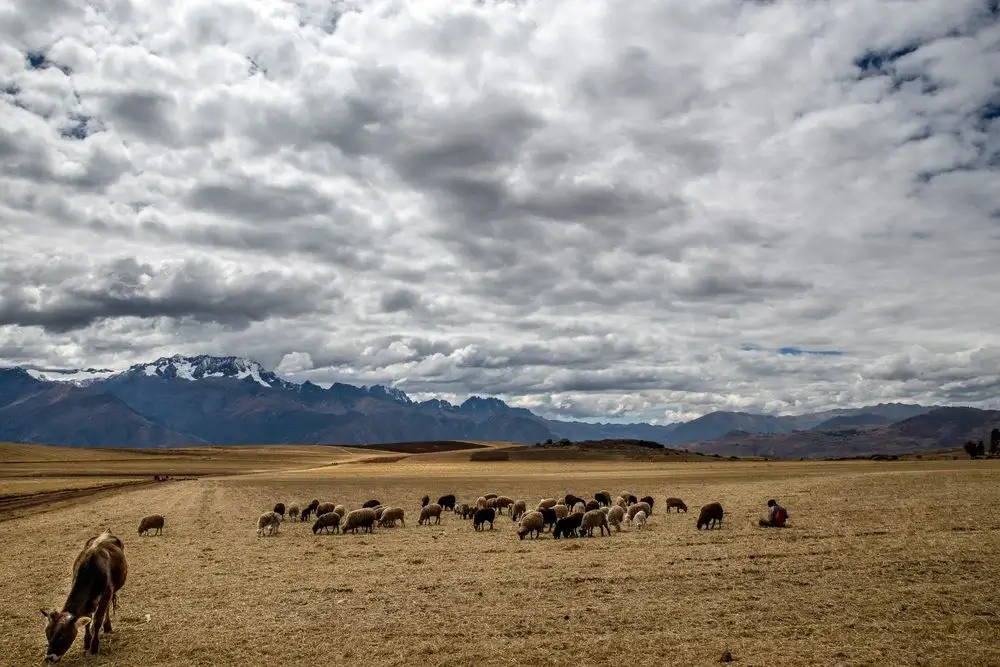
Why Chinchero Deserves More Than a Brief Visit
Chinchero offers a rare combination that few places in the Sacred Valley deliver with the same integrity:
- A living textile tradition practiced by master weavers who recovered natural dyeing techniques that were nearly lost
- Expansive Inca agricultural terraces still used for high-altitude farming
- The calm waters and open landscapes of Laguna Piuray, free from the crowds found at more famous sites
For travelers who value authenticity, cultural continuity, and experiences that support local communities, Chinchero is both strategic and deeply rewarding. It rewards those who arrive with time, curiosity, and respect for altitude.
A private visit transforms the experience from a photo stop into a meaningful encounter with living Andean culture.
The Living Textile Tradition: Threads of History and Identity
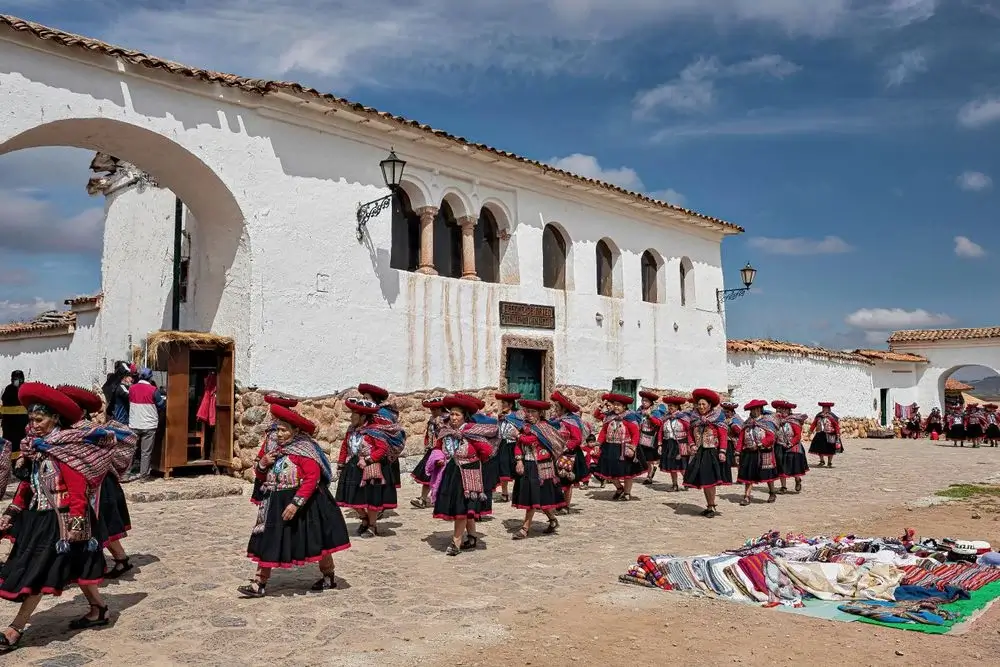
Chinchero is widely recognized as one of the most important weaving centers in the Cusco region. In the 1960s and 1970s, a group of local Quechua women began working to recover designs and techniques that were disappearing under the pressure of synthetic dyes and commercial tourism. In 1996 that effort formalized as the Center for Traditional Textiles of Cusco (CTTC), founded with the leadership of Nilda Callañaupa Álvarez, a master weaver from Chinchero.
Today the community continues to teach spinning, natural dyeing, and backstrap-loom weaving to new generations. Visitors who take the time can observe and sometimes participate in the complete process:
- Washing fiber with natural plant-based soaps
- Spinning alpaca and sheep wool by hand using a drop spindle
- Dyeing with cochineal for deep reds and crimsons, ch’illka leaves for greens, indigo for blues, and local flowers and plants for yellows and other tones
- Weaving complex geometric patterns known as pallay on traditional backstrap looms
These patterns are not merely decorative. They carry cultural meaning rivers, lagoons, animals, dualities of life and landscape that form part of the Andean worldview. Many weavers still create textiles that are worn daily, not only produced for visitors.
A private visit allows space for conversation, observation of dye baths, and a deeper understanding of the symbolism woven into each piece. Purchasing textiles directly from the weavers or established community associations ensures authenticity and channels income back to the artisans and their families.
Inca Agricultural Genius: Terraces, Tubers, and Highland Farming
Long before it became known for textiles, Chinchero served as a significant Inca agricultural and residential center. Historical research identifies it as a royal estate of Túpac Inca Yupanqui in the late 15th century. The extensive terracing, fine stonework, water channels, and ceremonial spaces that remain today reflect sophisticated highland engineering designed to transform steep slopes into productive land.
The surrounding plain continues to be cultivated with Andean tubers potatoes, olluco, and oca alongside grains adapted to altitude. While the greatest concentration of Peru’s extraordinary potato diversity is protected in nearby biocultural reserves, Chinchero’s fields form part of the same living agricultural tradition. Local farmers still select and maintain varieties suited to cold nights and thin soils.
Walking these terraces with a knowledgeable guide reveals how the Incas managed microclimates, soil fertility, and water. The connection between landscape and table remains immediate. Ingredients that appear on the menus of Peru’s most acclaimed restaurants still grow in these high fields.
Laguna Piuray and Hidden Layers of Landscape
Just a short distance from the town lies Laguna Piuray, a calm highland lake that once formed part of the water systems supplying Cusco. At approximately 3,435 meters, its shores offer open views of cultivated fields and distant snow peaks, including Salkantay and Verónica.
The lagoon supports low-impact activities that pair beautifully with cultural visits:
- Stand-up paddleboarding or kayaking on still water
- Private gourmet picnics by the shore
- Birdwatching and gentle walks
- Quiet time away from the busier corridors of the Sacred Valley
In the town itself, the colonial Church of Our Lady of Monserrat rises on the foundations of Inca stonework that once belonged to the palace complex of Túpac Yupanqui. The juxtaposition of finely fitted polygonal masonry and Andean baroque architecture is one of the most eloquent expressions of cultural layering in the region.
Together, the lagoon and the historic core of Chinchero offer a sense of space and serenity that many travelers find restorative after the intensity of Cusco or the more visited sites of the valley.
How to Visit Chinchero Comfortably: Altitude and Smart Itinerary Design
Because Chinchero sits higher than Cusco (3,762 m versus approximately 3,399 m), altitude awareness is essential. Travelers arriving directly from sea level often feel the difference more strongly here than in lower parts of the Sacred Valley.
A thoughtful sequence improves both comfort and enjoyment:
- Begin in lower areas such as Urubamba or Ollantaytambo
- Allow proper rest, hydration, and gradual activity
- Visit Chinchero once your body has begun to adjust
Private travel provides the flexibility to adjust pace according to how you feel on any given day. Light activity, warm layers, and adequate water make a significant difference at this elevation.
Recommended Private Experiences in Chinchero
| Experience | Ideal For | Duration | Focus |
|---|---|---|---|
| Private Weaving Masterclass | Culture & craft lovers | 2–3 hours | Hands-on time with master weavers |
| Terraces + Textile Visit | History & authenticity | Half day | Inca agriculture + living textile tradition |
| Laguna Piuray + Private Picnic | Nature & quiet luxury | Half day | Landscape, water activities, refined outdoor time |
| Full Cultural Day | Deep immersion | Full day | Weaving, terraces, lagoon & local flavors |
Frequently Asked Questions About Chinchero
Is Chinchero worth visiting?
Yes. For travelers who value authentic culture over rushed photo stops, Chinchero is one of the strongest living textile and agricultural destinations in the Sacred Valley.
How high is Chinchero?
3,762 meters (12,343 feet) above sea level higher than Cusco.
How long should I spend in Chinchero?
A private half-day allows meaningful depth. A full day is ideal if you wish to combine textiles, terraces, and time at Laguna Piuray.
Can I buy authentic textiles in Chinchero?
Yes. Purchasing directly from weavers’ associations or through established community networks ensures authenticity and supports the artisans.
Is Chinchero suitable for first-time visitors to high altitude?
With proper sequencing and a private pace, yes. It is best visited after some initial acclimatization in lower parts of the Sacred Valley.
Plan Your Private Chinchero Experience
Chinchero rewards those who arrive with time, curiosity, and the right local connections. Whether you seek a focused encounter with master weavers, a refined day that includes the calm of Laguna Piuray, or a seamless place for Chinchero within a longer Sacred Valley and Cusco itinerary, the difference lies in thoughtful design and genuine partnerships.
Our local travel designers specialize in private, high-quality journeys that respect both the traveler’s comfort and the communities we visit. Every itinerary is created around your interests, preferred pace, and the desire for authentic connection.
Ready to experience Chinchero the way it deserves to be experienced?
Share your preferred travel dates and interests with us. We will design a private itinerary tailored to you.