
Most visitors arrive in Peru convinced the story starts with the Incas. Machu Picchu, the Sacred Valley, the imperial roads these images fill guidebooks and social feeds. Yet five thousand years of human ingenuity came first. Long before Tawantinsuyu rose, sophisticated societies mastered extreme altitudes, engineered vast hydraulic systems, and domesticated the crops that still define Peru’s celebrated kitchens.
Southern Peru holds the clearest chapters of this earlier history. The Wari, the Tiwanaku cultural sphere, and the Collagua and Cabana peoples of the Colca transformed the Andes into a living laboratory of agriculture. Their terraces, canals, and crop knowledge remain visible and edible today. Understanding them changes how you experience Arequipa, the Colca Canyon, and Cusco.
The Empire Before the Empire: How the Wari and Tiwanaku Shaped the Andes
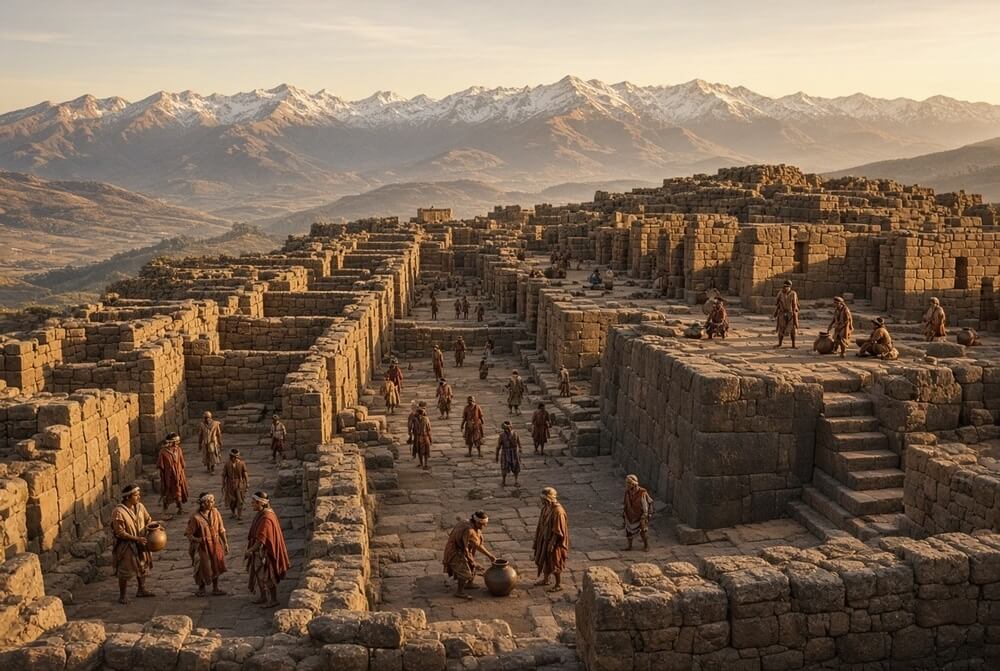
Between roughly 600 and 1000 CE, the Wari built the first true Andean empire. Centered near modern Ayacucho, they established provincial centers, road networks, and agricultural systems that stretched across much of highland and coastal Peru. In the Cusco region their largest known installation, Pikillacta, still stands as a rigidly planned administrative city of compounds, storage facilities, and elite residences.
Wari influence was not uniform. Archaeological surveys show strong presence near key sites and more selective colonization elsewhere a “mosaic of control.” Yet their methods of terracing, canal irrigation, and regional administration left patterns the later Incas would expand. Many of the roads and agricultural techniques the Incas refined had Wari precedents.
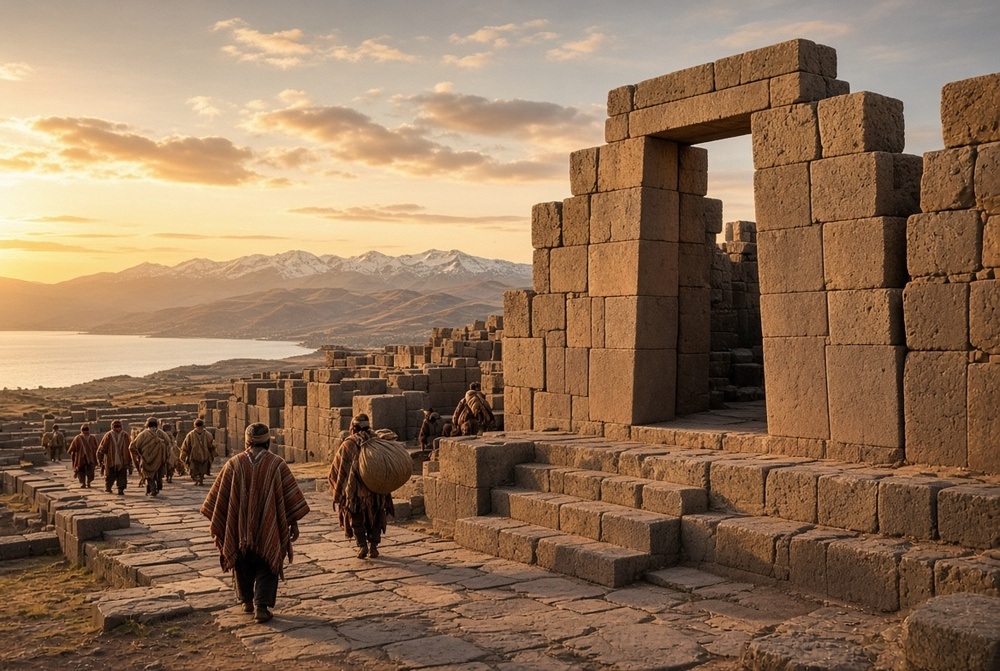
At the same time, the Tiwanaku sphere radiated from the southern shores of Lake Titicaca. Between approximately 500 and 1000 CE it shaped highland Bolivia, northern Chile, and parts of southern Peru through trade, ideology, and colonization. Raised-field agriculture and the intensive cultivation of quinoa and tubers were central to its success. Shared artistic motifs and agricultural knowledge flowed between the Wari and Tiwanaku worlds, creating a Middle Horizon foundation that later powers inherited.
By the time the Incas consolidated power in the 15th century, they entered a landscape already deeply transformed.
Private mornings at Pikillacta with a specialist archaeologist reveal these pre-Inca layers before the Sacred Valley crowds arrive. Ask us how to include exclusive access in your itinerary.
The Hydro-Agricultural Mastermind: Pre-Inca Terraces of the Colca Valley
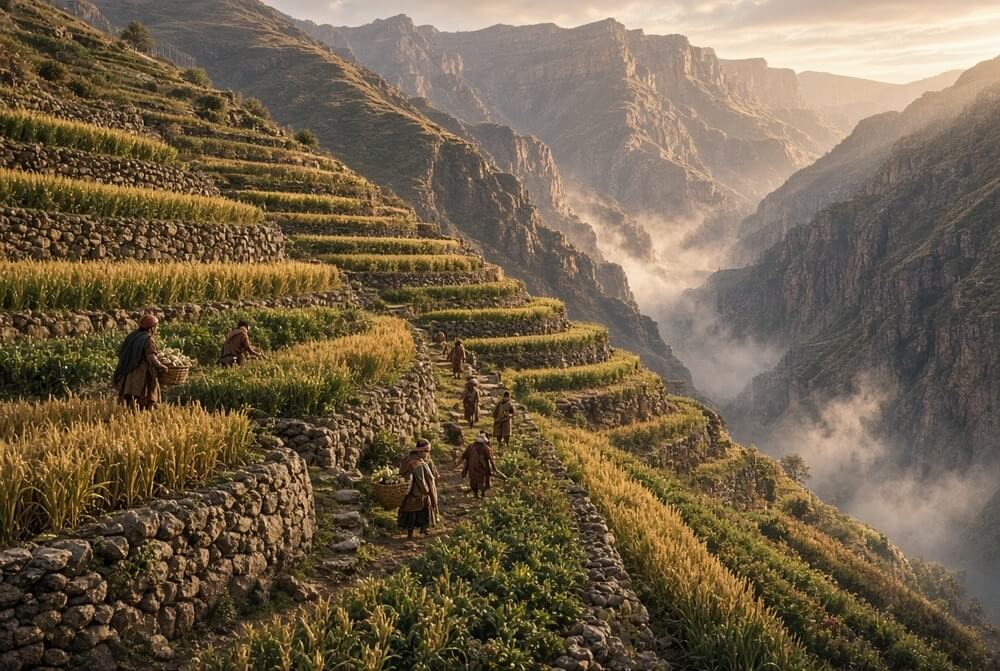
Nowhere is this inheritance more dramatic than in the Colca Canyon. Centuries before the Incas, the Collagua and Cabana peoples sculpted thousands of hectares of agricultural terraces into the canyon walls. The Collagua, primarily Aymara-speaking herders, occupied the upper valley; the Cabana, Quechua-speaking maize farmers, the lower reaches. Their ethnic boundaries were largely respected by later Inca and Spanish administrators.
These andenes are precision instruments. Stone retaining walls absorb daytime heat and release it at night, protecting crops from frost. Carefully engineered canals move water across steep gradients. The systems create multiple microclimates within a single vertical transect, allowing quinoa, native potatoes, kiwicha (amaranth), maize, and aromatic herbs to thrive at different elevations. Evidence indicates terracing in the Colca began at least two millennia ago and was substantially expanded in the centuries before Inca arrival. Many canals and terraces remain in productive use today.
Living History: Traditional Crops That Survived the Fall of Empires
The same fields continue to supply markets and restaurants in Arequipa and Cusco. Quinoa, once a highland staple refined over centuries, now appears on tasting menus worldwide. Thousands of native potato varieties products of millennia of selection under extreme conditions still grow on these slopes. Freeze-drying techniques that produce ch’uño are pre-Inca in origin and still inform modern high-altitude cuisine.
This is not museum agriculture. It is a working system that links ancient engineering to contemporary tables.
Walking active Collagua terraces with a local guide, then tasting the harvest in a private setting, turns history into something you can savor. We design these experiences with care.
Tasted Through Time: How Ancient Civilizations Created Peru’s Modern Food Renaissance
Walk into a thoughtful restaurant in Arequipa or the Sacred Valley and you are tasting the living legacy of pre-Inca bio-engineers. The staggering diversity of Andean crops did not appear overnight. It is the result of continuous selection, terracing, and water management that began long before the Incas.
Contemporary chefs do not invent this biodiversity; they inherit it. Native potatoes grown on ancient terraces, quinoa harvested from pre-Inca fields, aromatic herbs of the Colca, and reinterpretations of ancestral preservation methods appear on the most interesting menus. The connection is direct: the microclimates and crop resilience created by Collagua, Cabana, Wari, and related societies still feed the kitchens that have placed Peruvian cuisine among the world’s finest.
A private tasting that pairs exclusive site access with dishes built around these ingredients is not novelty. It is continuity history made edible.
Our Private Culinary & Lost Heritage journeys combine guided access to pre-Inca sites with private menus that showcase ancient ingredients reimagined by skilled Peruvian chefs. Let us craft one around your interests.
Unlocking the Lost Sanctuaries: How to Experience Southern Peru in Complete Luxury
Arequipa & the Colca CanyonBegin in the White City, then move into the canyon at a pace that respects altitude. Private visits to working terraces and lesser-visited Collagua sites can be arranged with specialist guides. Evenings unfold in carefully chosen eco-luxury lodges offering thermal baths, canyon views, and the quiet necessary for genuine acclimatization. The rhythm is unhurried: archaeology and landscape by day, refined high-altitude cuisine and clear Andean skies by night.
Cusco’s Pre-Inca LayersBefore the better-known Inca sites, a private morning at Pikillacta with an archaeologist reveals the Wari city that once dominated the region. Other locations around Cusco still show clear pre-Inca foundations beneath later construction. Experiencing these layers first restores chronological depth and changes how one later reads the imperial monuments.
Designing Your Bespoke Journey: From Forgotten Empires to Five-Star Comfort
A well-designed itinerary uses Arequipa and the Colca as the natural acclimatization corridor while immersing travelers in the pre-Inca story. From there the route continues to Cusco and the Sacred Valley without the fatigue that comes from flying directly into high altitude. Luxury transport, dedicated expert guides, private site access, and carefully timed culinary experiences turn a checklist of ruins into a coherent narrative of continuity from ancient engineering to the plates in front of you.
This is travel that respects both the depth of history and the comfort of the present. It is also travel that supports the communities still maintaining these living landscapes.
True exploration lies beyond the crowded tourist trails.
Let our local Travel Designers curate your private, seamless journey through Peru’s most enigmatic lost civilizations, complete with luxury transport, dedicated expert guides, and fine dining that honors the ancient pantry.
Contact us today for a custom itinerary.We are ready when you are.