
Hidden behind high volcanic stone walls in the heart of Arequipa, the Santa Catalina Monastery is not merely a historical attraction it is an immersive journey into Peru’s colonial past. Often described as a city within a city, this extraordinary religious complex invites travelers to step into a world shaped by faith, silence, and architectural beauty.
For discerning travelers seeking depth, authenticity, and cultural richness, Santa Catalina offers far more than a traditional sightseeing stop. Its vivid colors, peaceful courtyards, and labyrinthine streets tell a story of devotion, social history, and resilience one that unfolds slowly and rewards those who take the time to explore it thoughtfully.
At Andean Travel Experience, we believe Santa Catalina is best discovered as part of a curated journey through southern Peru, where history, architecture, and local insight come together seamlessly.
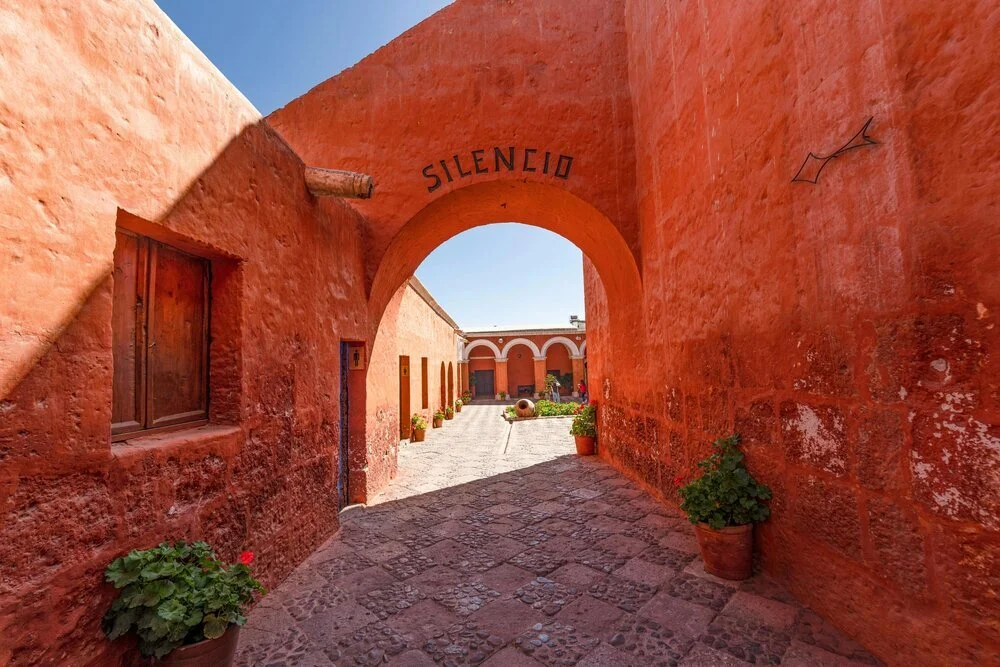
Why Santa Catalina Monastery Is a Must-Visit in Arequipa
Santa Catalina Monastery stands out as one of the most atmospheric and historically rich sites in Peru. Unlike many colonial landmarks, it is not experienced in minutes it is lived as you walk its streets.
Why travelers love it:
- A rare example of a fully enclosed religious city
- Over 20,000 square meters of preserved colonial architecture
- Built entirely from sillar, Arequipa’s iconic volcanic stone
- Ideal for cultural travelers, photographers, and families alike
- A calm, reflective counterpoint to the city’s vibrant streets
A Brief History of Santa Catalina Monastery
Founded in 1579, the Monastery of Santa Catalina de Siena was established during the early colonial period, less than four decades after the Spanish arrival in the region.
For centuries, it functioned as a cloistered convent primarily for women from prominent families. Entry required a dowry, and living conditions varied depending on what a family could afford a reflection of colonial-era social structures.
While a small portion of the monastery remains in use today by a religious community, much of the complex has been carefully restored and opened to the public, allowing visitors to gain insight into a way of life once hidden behind its walls.
Architecture & Urban Design: A City Within a City
Santa Catalina is often described as a miniature city, and for good reason. Its layout mirrors the urban design of early colonial Arequipa.
Architectural highlights include:
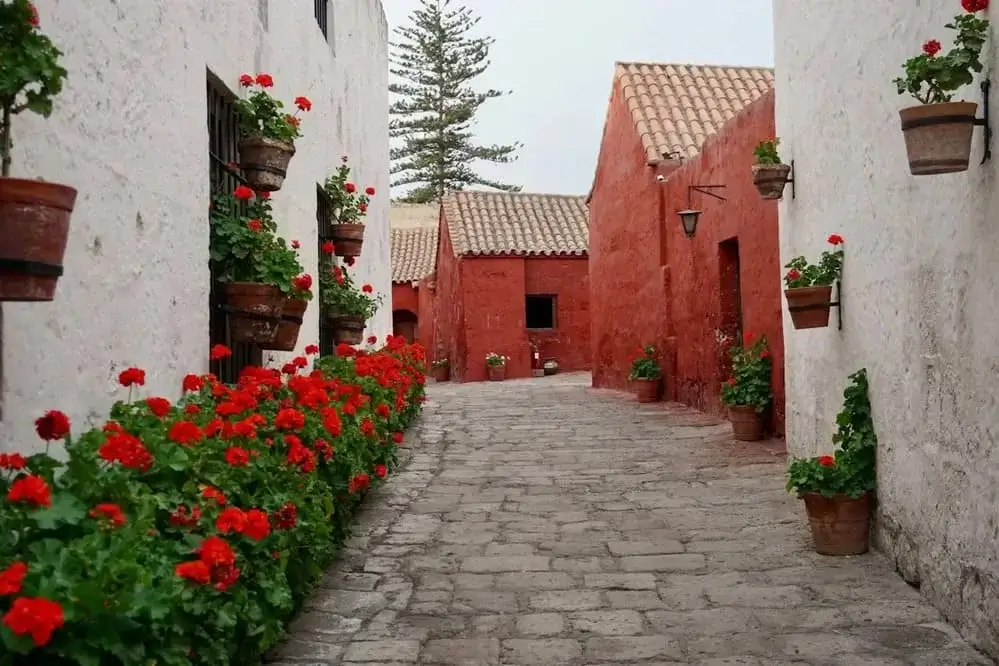
- Narrow streets named like city roads
- Residential cells resembling private homes
- Open plazas and inner courtyards
- Cloisters organized around communal life
- Chapels, kitchens, gardens, and work areas
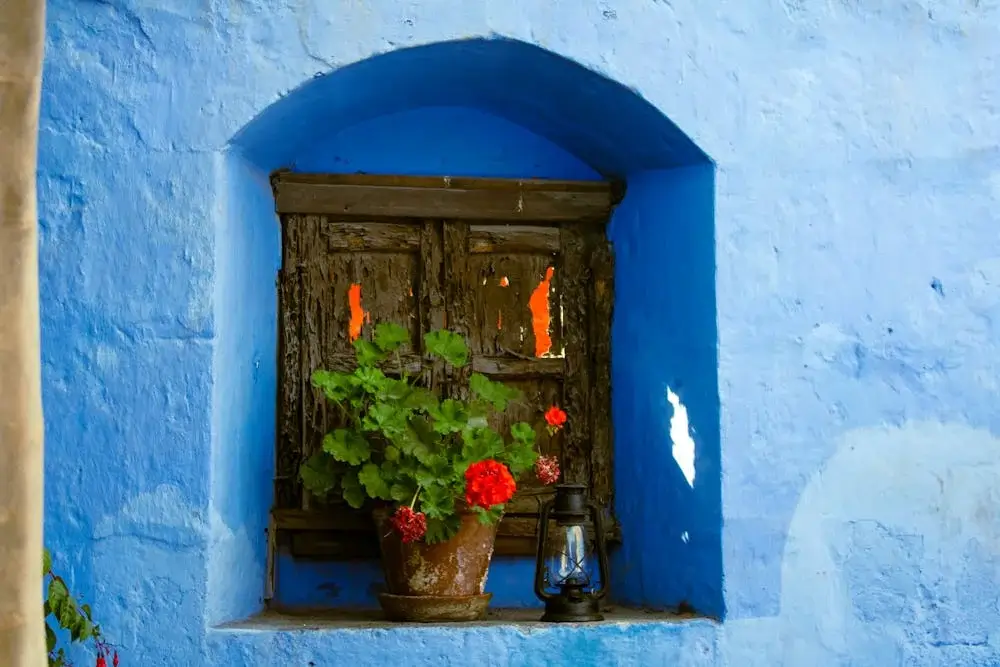
The bold reds, blues, and whites of the walls contrast beautifully with the soft light of Arequipa, creating one of the most visually striking environments in southern Peru.
“Walking through Santa Catalina feels less like visiting a monument and more like discovering a forgotten town.”
Daily Life Inside the Monastery
Life within Santa Catalina was structured, quiet, and largely isolated from the outside world. The monastery was designed to be self-sufficient, providing everything needed for daily living within its walls.
Historical records indicate that residents followed strict routines of prayer and work, with limited contact beyond the monastery. Communication with the outside world was highly regulated, reinforcing the sense of enclosure and devotion that defined life here.
This context adds depth to the visitor experience today, allowing travelers to better understand how space, architecture, and routine shaped everyday life.
Exploring the Cloisters and Key Spaces
Visitors exploring independently or with a guide often focus on the monastery’s most significant cloisters:
- The Novice Cloister: An area traditionally associated with early religious formation, designed for reflection and learning.
- The Orange Cloister: Named for the orange trees at its center, this space highlights communal living and remembrance.
- The Great Cloister: One of the most impressive sections, bordered by religious spaces and artwork, showcasing colonial-era artistic traditions.
Each area contributes to a layered understanding of how the monastery functioned as both a spiritual and social environment.
Restoration, Preservation & Cultural Significance
Santa Catalina has endured centuries of seismic activity, a defining feature of Arequipa’s geography. Major restoration efforts in the 20th century stabilized the structure and preserved key architectural and artistic elements.
Today, the monastery is recognized not only as a tourist attraction but as an important example of Viceroyal architecture, reflecting multiple periods of construction and stylistic evolution.
Its preservation allows visitors to engage with Peru’s colonial history in a tangible and respectful way.
Practical Visitor Information
- Location: Historic Center of Arequipa
- Recommended Visit Duration: 2–3 hours
- Entrance Fee: Approximately 40 soles (subject to change)
- Guided Tours: Available on-site in multiple languages
We recommend visiting earlier in the day or during quieter hours for a more contemplative experience.
How to Experience Santa Catalina with Andean Travel Experience
At Andean Travel Experience, we integrate Santa Catalina Monastery into privately guided, tailor-made itineraries, pairing it with:
- Historic walking tours of Arequipa
- Culinary experiences featuring regional cuisine
- Extensions to Colca Canyon or the Sacred Valley
- Family-friendly or slow-travel cultural routes
Our local expertise ensures deeper context, seamless logistics, and meaningful connections with Peru’s living heritage.
Frequently Asked Questions about Santa Catalina Monastery (FAQs)
Is Santa Catalina Monastery suitable for families?
Yes. Its open spaces, vibrant colors, and clear pathways make it engaging for travelers of all ages.
How long should I plan for my visit?
Most travelers spend between two and three hours exploring comfortably.
Can it be combined with other Arequipa highlights?
Absolutely. It pairs well with city tours, museums, and gastronomy experiences.
The Santa Catalina Monastery is more than a historical landmark it is a living testament to Arequipa’s cultural depth, architectural elegance, and spiritual heritage. Walking through its peaceful streets and cloisters offers a rare opportunity to slow down, reflect, and connect with a chapter of Peru’s history that remains beautifully preserved.
For travelers who value meaningful experiences over rushed sightseeing, Santa Catalina provides a moment of calm, discovery, and inspiration. Whether you are exploring Arequipa for the first time or returning with a deeper curiosity for Peru’s past, this remarkable monastery deserves a place in a thoughtfully curated itinerary.
At Andean Travel Experience, we believe that places like Santa Catalina are best experienced with local insight, seamless planning, and a personalized approach transforming a visit into a truly memorable journey through the White City personalized Tour.