
Peru is a country that celebrates life with intensity, creativity, and deep-rooted tradition and nowhere is this more visible than during carnival season. Every year, as summer reaches its peak, cities, villages, and rural communities across the country come alive with music, dance, ritual, and shared joy. Carnivals in Peru are not a single event, but a mosaic of regional celebrations, each shaped by local history, geography, and cultural identity.
For travelers seeking more than sightseein those who value authentic encounters, cultural immersion, and meaningful experiences Peruvian carnivals offer a rare opportunity to witness living traditions in their most vibrant form. This guide explores the origins, regional expressions, and travel inspiration behind Peru’s carnivals, helping you understand where to go, what to expect, and how to experience them responsibly and deeply.
“Carnival in Peru is not staged for visitors it is lived by communities. To experience it is to be welcomed, not entertained.” — Andean Travel Experience
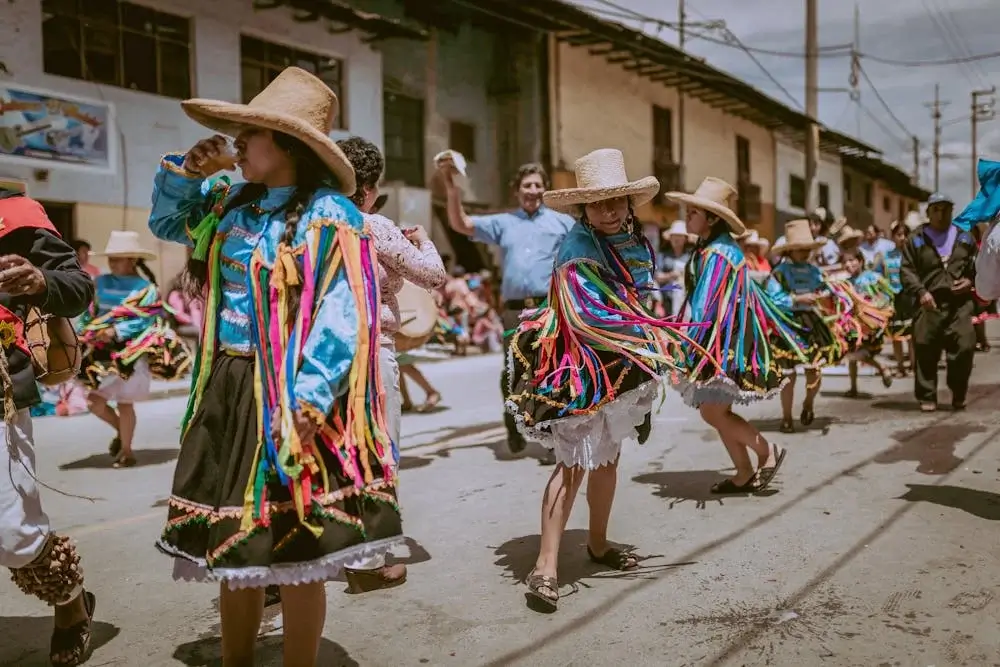
What Are Carnivals in Peru?
Carnivals in Peru are annual celebrations that take place before the beginning of Lent, following the Catholic calendar, while incorporating Andean, Amazonian, Afro-Peruvian, and European influences. Over time, these festivities have evolved into deeply local expressions of identity, community, and spirituality.
Although water games, parades, and music are common elements, each region interprets carnival differently, blending religious symbolism with ancestral rituals connected to agriculture, fertility, and renewal.
Rather than a single national celebration, carnivals in Peru are best understood as a collection of regional cultural festivals, unified by joy but distinguished by tradition.
The Cultural Meaning of Carnival Season
At its core, carnival represents renewal, abundance, and collective celebration. In Andean communities, it often coincides with the agricultural calendar, honoring the land, water, and Pachamama (Mother Earth). On the coast and in urban centers, it becomes a space for social interaction, creativity, and humor.
Carnival is also a moment when:
Social hierarchies soften
Communities gather across generations
Music and dance serve as living history
This blend of ritual and festivity makes Peruvian carnivals both meaningful and deeply human.
When Are Carnivals Celebrated in Peru?
Carnival dates vary each year, as they depend on the Catholic liturgical calendar. Generally:
Carnival season takes place between February and early March
Main celebrations occur in the days leading up to Ash Wednesday
Some regions extend festivities for several weeks, incorporating local traditions such as compadres, comadres, and kacharpari
Travelers should always confirm dates locally, as specific events and rituals differ by region and community.
The Best Regions to Experience Carnivals in Peru
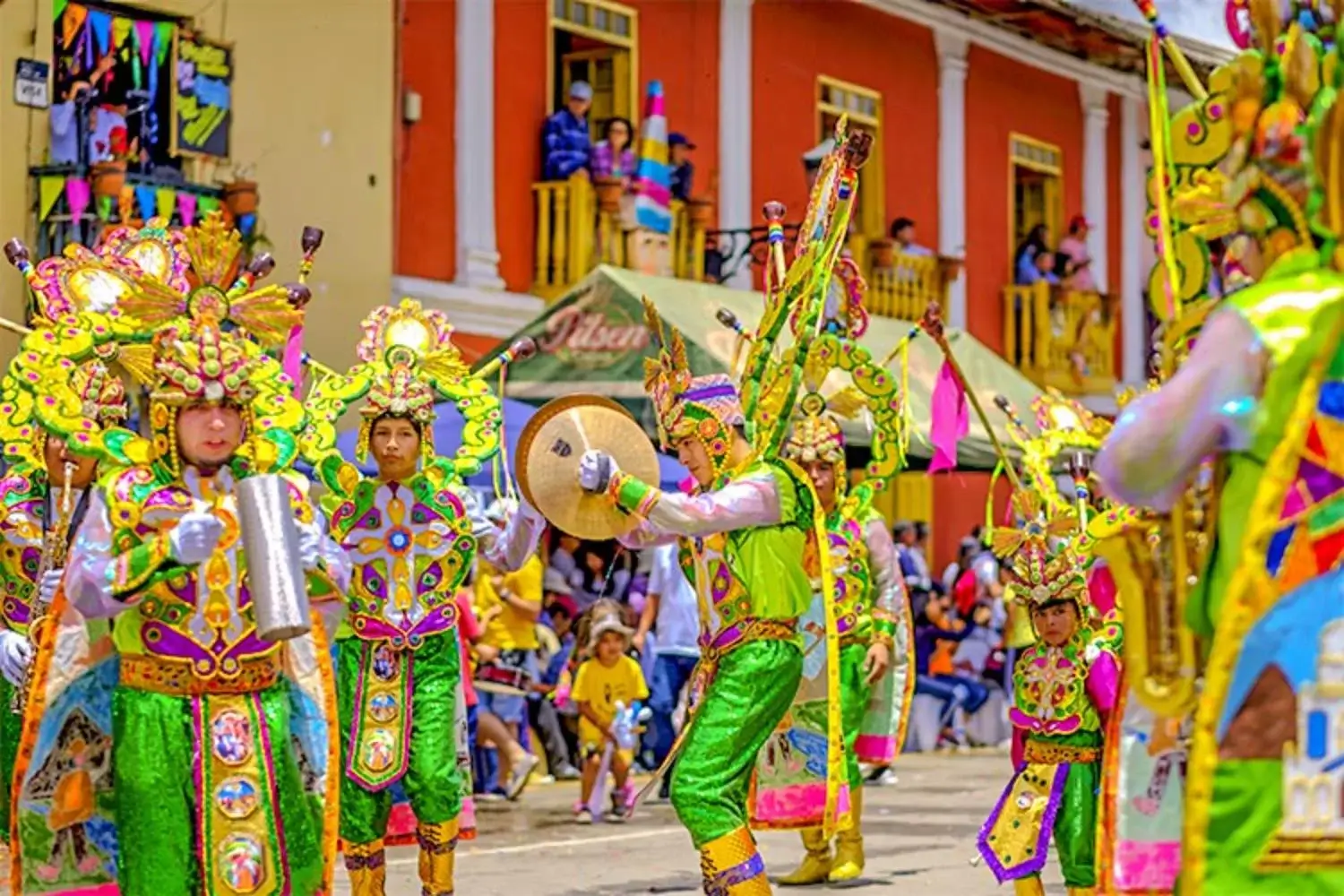
Cajamarca: The Capital of Peruvian Carnival
Often referred to as the heart of carnival celebrations in Peru, Cajamarca is known for its elaborate parades, musical competitions, and symbolic carnival characters. Community participation is at the center of the experience, making it ideal for travelers seeking authenticity.
What makes it special
Large-scale comparsas (dance troupes)
Traditional music and satire
Strong local identity and participation
Puno: Carnival and Spiritual Expression
In the southern highlands, carnival blends seamlessly with religious devotion and ancestral belief systems. Celebrations in Puno are closely linked to regional dance traditions and spiritual symbolism.
What makes it special
Folkloric dances rooted in Andean cosmology
Community-based performances
Cultural depth and continuity
Cusco: Andean Worldview in Celebration
Carnival in Cusco reflects the Andean values of reciprocity, gratitude, and unity. Rituals such as the yunza (decorated tree cutting) symbolize abundance and shared responsibility.
What makes it special
Neighborhood-based celebrations
Rituals connected to nature
Strong sense of communal identity
Ayacucho: Tradition, Music, and Memory
Ayacucho’s carnival is one of the most culturally expressive in Peru, marked by music in Quechua, traditional costumes, and a strong sense of historical continuity.
What makes it special
High number of participating troupes
Deep-rooted musical traditions
Cultural resilience expressed through celebration
Iconic Traditions and Rituals of Peruvian Carnivals
Yunza or Cortamonte
A communal ritual involving a decorated tree filled with gifts. Participants dance around it until it is cut, symbolizing abundance and collective joy.
Water Games
Playful water traditions symbolize cleansing, renewal, and unity. Participation varies by region and context.
Music and Dance
From Andean instruments like the quena and charango to regional rhythms, music is the backbone of carnival celebrations.
Gastronomy
Carnival is also a culinary season, with regional dishes prepared specifically for communal gatherings and shared meals.
Why Experience Carnivals with Andean Travel Experience
Experiencing carnival responsibly requires local knowledge, cultural sensitivity, and thoughtful planning. At Andean Travel Experience, we design journeys that allow travelers to engage meaningfully while respecting local customs.
Our approach includes:
Carefully selected destinations and communities
Cultural context provided by local experts
Balanced itineraries that combine celebration with reflection
“Luxury is not excess it is access, understanding, and authenticity.”
Practical Tips for Travelers
Expect variability: no two carnivals are the same
Dress comfortably and respectfully
Secure personal belongings during public events
Observe first, participate second
Follow local guidance at all times
Responsible Travel and Cultural Respect
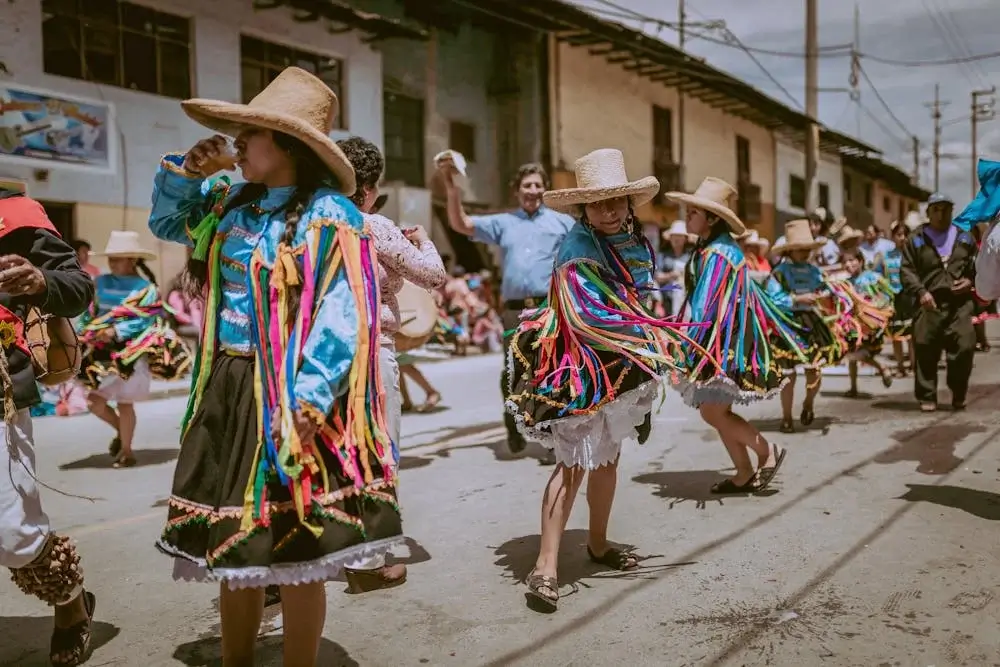
Carnivals are not performances they are community celebrations. Respectful travel ensures these traditions remain vibrant for future generations.
Key principles
Ask before photographing people
Support local artisans and businesses
Avoid disruptive behavior
Travel with intention and humility
Key Takeaways
Carnivals in Peru reflect the country’s cultural diversity
Each region offers a unique interpretation
Timing and traditions vary locally
Cultural respect enhances the experience
Thoughtful travel creates meaningful connections
Frequently Asked Questions (FAQs)
Are carnivals suitable for families?
Yes, many celebrations are family-oriented, though activities vary by location.
Do I need to book in advance?
Yes. Carnival season coincides with high travel demand in Peru.
Can travelers participate in traditions?
In many cases, yes when invited and done respectfully.
Are carnival dates the same every year?
No. Dates change annually based on the liturgical calendar and local customs.
Carnival season is one of the most sought-after times to travel in Peru, and availability is limited due to high demand and local festivities. Planning ahead ensures access to the most meaningful experiences and the best accommodations.
Let us design your personalized carnival journey in Peru.
Whether you’re traveling as a couple, family, or small private group, our specialists are ready to craft an experience that reflects your interests, travel style, and sense of adventure.