
There comes a moment in every carefully planned journey to Peru when the classic question appears with new urgency: Do you experience Machu Picchu from its contemplative terraces and temples, or do you climb the steep green peak that rises behind it in every iconic photograph?
For travelers who value both physical achievement and refined pleasure, this choice shapes the entire day — the energy you carry, the photographs you return with, and the quality of the multi-course dinner waiting in Cusco that evening.
At Andean Travel Experience we design private journeys for guests who refuse to compromise. This comprehensive guide gathers the precise, field-tested knowledge our travel designers use each season so you can decide with clarity and confidence.
Understanding the 2026 Circuit System at Machu Picchu
Since June 2024 the Historic Sanctuary has operated under a structured three-circuit system with ten defined one-way routes. The system remains fully in force throughout 2026.
Your Machu Picchu ticket is personal, linked to your passport number, and locked to a specific circuit, route and entry hour. Rangers verify these details at multiple control points. There is no free roaming and almost no flexibility once you enter.
The three main circuits:
- Circuit 1 – Panoramic Focuses on elevated viewpoints and the classic postcard angle. Includes the option of climbing Machu Picchu Mountain (Route 1-A).
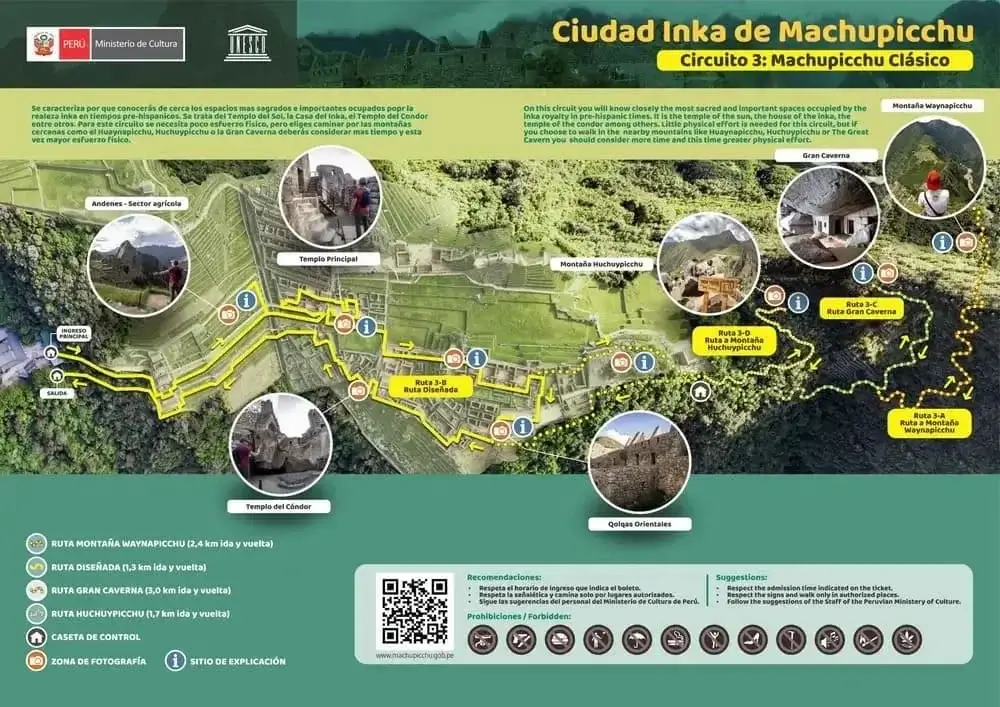
- Circuit 2 – Classic The most complete single-ticket experience for most first-time visitors. Combines the iconic viewpoint with substantial exploration of plazas, temples and terraces.
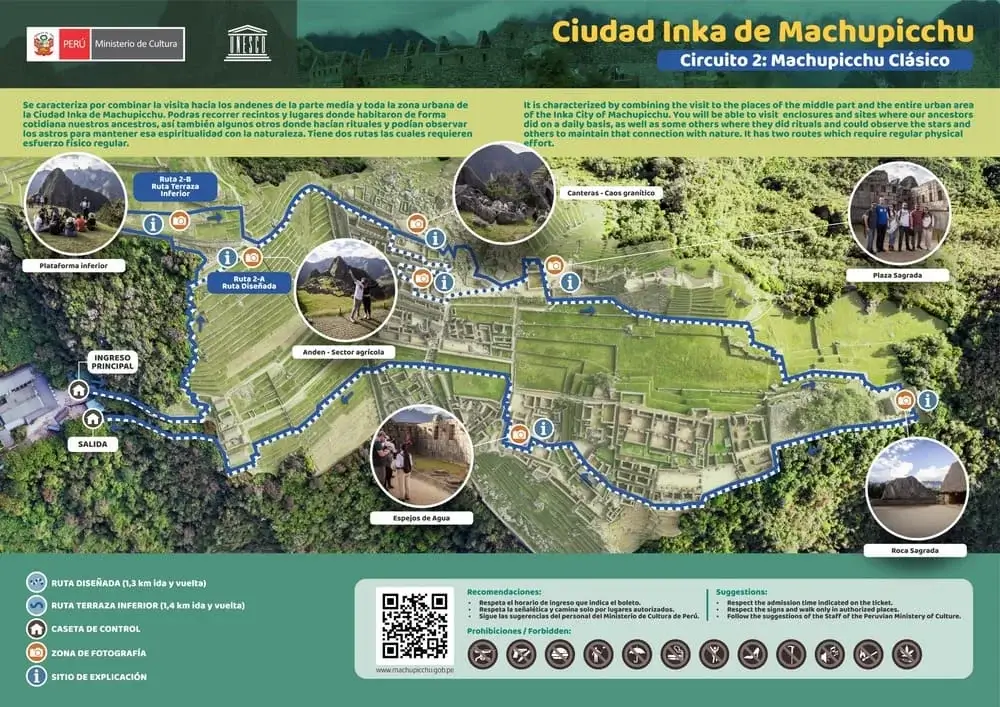
- Circuit 3 – Royalty Centers on the lower royal and temple sector. This is the only circuit that includes Huayna Picchu (Route 3-A).
Daily capacity stands at 4,500 visitors on regular days and rises to 5,600 on designated high-season dates. Huayna Picchu itself is limited to approximately 350–400 climbers per day. These permits routinely sell out three to six months in advance.
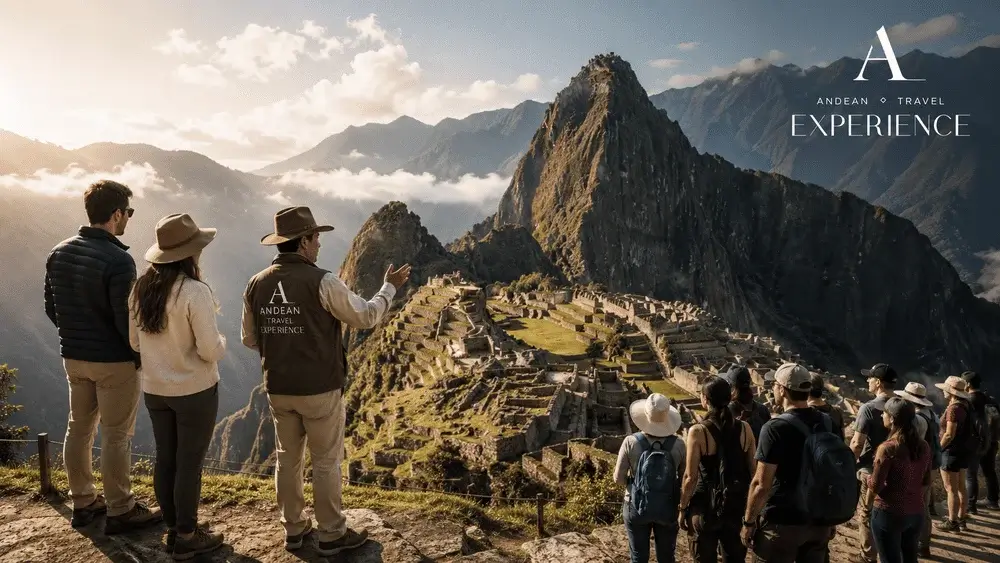
A private guide transforms the visit from a logistical exercise into a living story and ensures you move smoothly through the one-way flow.
Our designers monitor real-time availability and secure the exact circuit and time slot that match your priorities long before the most sought-after dates disappear.
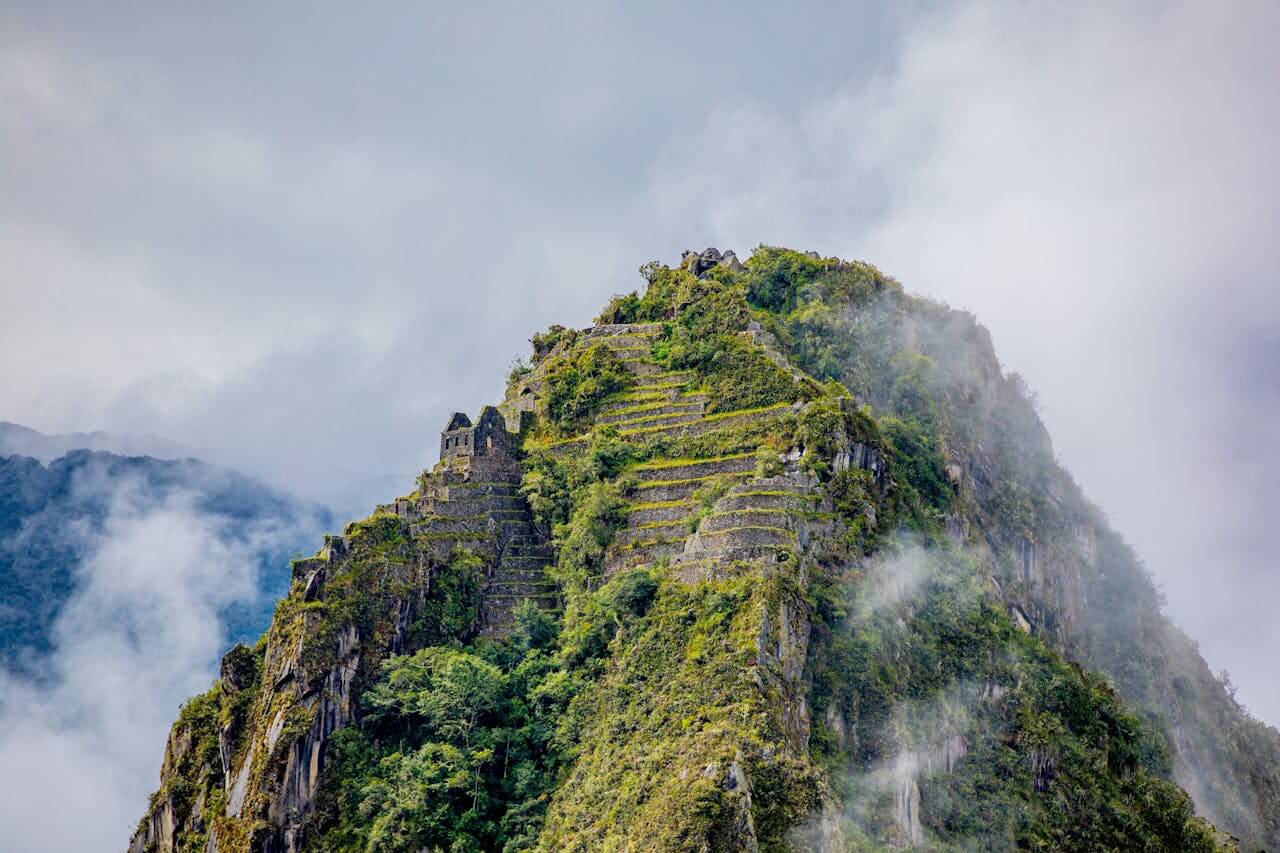
Huayna Picchu in Depth: The Vertical Experience
Known as the “Young Peak,” Huayna Picchu rises to roughly 2,720 meters behind the citadel. The trail gains about 260–290 meters on original Inca stone stairs that are steep, narrow and, in places, exposed. Safety cables assist on the more dramatic sections. Round-trip hiking time is typically 1.5 to 2.5 hours depending on fitness, congestion and time spent at the summit.
What to expect on the climb:
- Continuous steep stone steps, some of them very narrow
- Occasional sections with significant drop-offs
- A short tunnel near the top
- Limited space at the summit itself
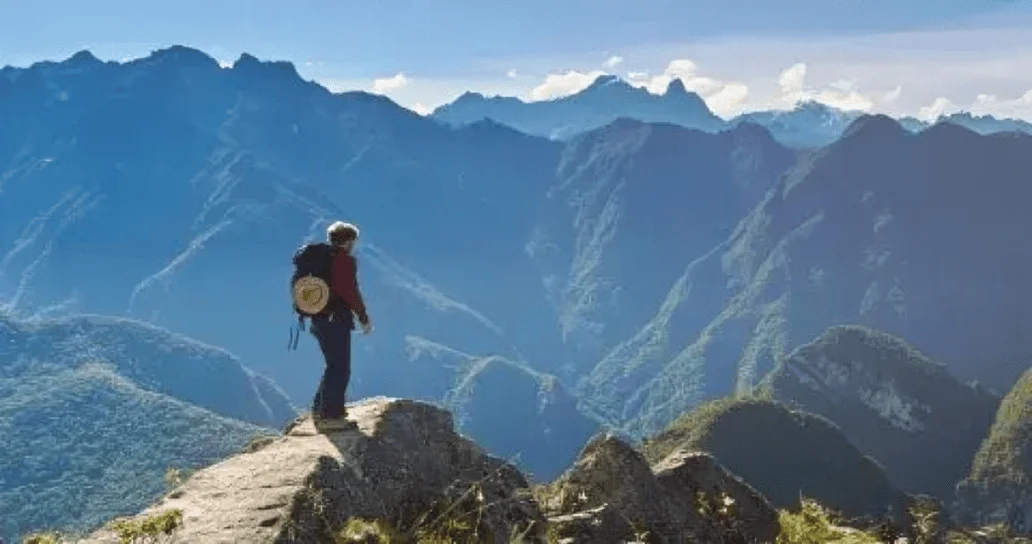
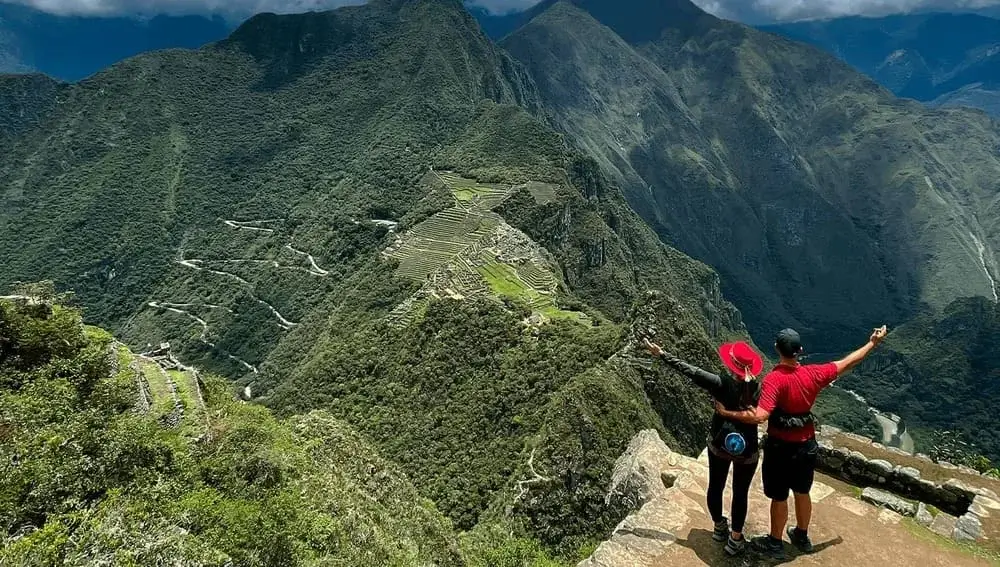
- Extraordinary overhead views looking straight down onto the entire urban sector
This climb suits confident, well-acclimatized hikers who are comfortable with heights and steep terrain. Age restrictions generally apply (commonly 18+). The physical cost is real; recovery time should be planned accordingly.
Important logistical reality: A Huayna Picchu ticket (Circuit 3-A) grants access to the lower royal sector and the summit climb, but deliberately excludes the classic Guardian’s House / upper panoramic viewpoint. Travelers who want both the postcard angle and the overhead perspective almost always arrange two separate entries on consecutive days.
The Classic Citadel Experience (Circuit 2)
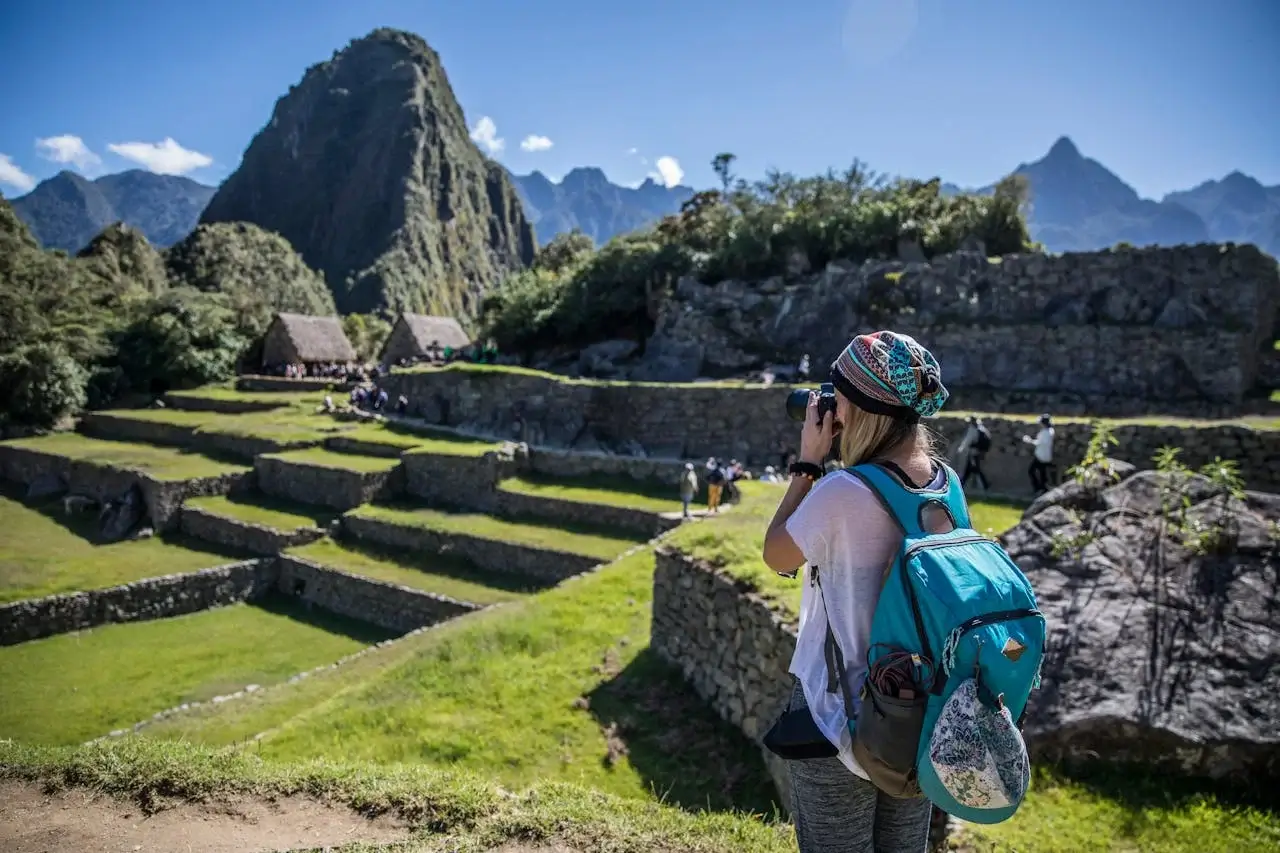
Circuit 2 remains the most balanced and complete single-ticket option for the majority of first-time visitors. You move through the agricultural terraces, the Principal Temple, the Temple of the Three Windows, the Intihuatana stone, residential compounds and the classic viewpoint that appears in nearly every photograph of Machu Picchu.
The pace is civilized. There is time to absorb the engineering genius of the Incas, to notice the precise alignment of stones, and simply to stand in silence as clouds drift across the peaks. Energy expenditure is moderate, leaving the body ready for a refined evening.
This route works especially well for multi-generational groups, serious photographers who need composition time, and anyone who prefers architectural immersion over vertical challenge.
Side-by-Side Comparison
| Aspect | Huayna Picchu (Circuit 3-A) | Classic Citadel (Circuit 2) |
|---|---|---|
| Main Focus | Summit views + lower royal sector | Full interior + classic viewpoint |
| Physical Demand | High (steep, exposed stairs) | Moderate |
| Time Commitment | 3–4 hours total | 2.5–3 hours |
| Classic Postcard Viewpoint | No | Yes |
| Overhead Summit Perspective | Yes | No |
| Daily Capacity | ~350–400 | Higher allocation |
| Best For | Confident hikers seeking adrenaline | Contemplative travelers & photographers |
| Recovery Needed | Significant | Moderate |
Share your fitness level, photography priorities and preferred pace. We will recommend the exact combination that feels right for your group.
Physical Preparation and Fitness Requirements
Huayna Picchu is not extreme mountaineering, yet it is significantly more demanding than a standard citadel walk. Good cardiovascular fitness, strong legs and comfort with heights make a noticeable difference.
Practical preparation tips:
- Include stair climbing or hill walking in the weeks before travel
- Strengthen core and lower-body muscles
- Practice walking on uneven surfaces
- Arrive already acclimatized (see next section)
Travelers with severe vertigo, recent knee or ankle issues, or significant cardiovascular concerns should carefully evaluate whether the climb is appropriate. Our guides always prioritize safety and can suggest alternatives when needed.
The Smart Path to the Mountain: Progressive Acclimatization
The single most effective preparation for Huayna Picchu is progressive acclimatization rather than intense training at sea level.
Jumping straight from an international flight into Cusco (3,400 m) and then attempting a steep climb a few days later remains the fastest way to turn a dream experience into an altitude struggle. The elegant solution begins farther south:
- Arrive in Arequipa (2,325 m). Explore the colonial center, the Santa Catalina Monastery and the city’s celebrated picanterías while your body begins to adapt.
- Continue to the Colca Canyon region for further gentle altitude gain in a wellness-oriented setting of thermal baths and high-end lodges.
- Only then move into the Sacred Valley–Cusco–Machu Picchu corridor.
This southern approach dramatically reduces altitude risk on the day of the climb and keeps energy levels high enough to enjoy both the mountain and the subsequent gastronomy. It also adds two of Peru’s most beautiful and culturally rich regions to the journey.
A well-paced southern itinerary is one of the quiet luxuries we design for every guest who prioritizes both adventure and comfort.
Balancing Adventure with Gastronomy
Huayna Picchu extracts a real physical cost. Continuous steep stairs at altitude, combined with the concentration required on narrow sections, leave most people with tired legs and reduced reserves. Arriving exhausted to a refined multi-course dinner in Cusco diminishes one of the great pleasures of a luxury journey through Peru.
Thoughtful sequencing solves the problem:
- Complete the climb in the early morning window
- Enjoy a light, high-quality lunch at Belmond Sanctuary Lodge
- Return to Cusco on the Hiram Bingham or a private Belmond transfer
- Allow several hours of genuine recovery before dinner at one of Cusco’s most exclusive restaurants
The physical achievement and the culinary reward then become complementary rather than competitive.
Our Private Southern Peru Heritage & Epicurean itineraries coordinate permits, luxury train seats and restaurant reservations so the physical day and the gastronomic evening enhance each other.
Valuable Alternatives When Huayna Picchu Permits Are Sold Out
Even the best planning sometimes meets limited availability. Excellent alternatives exist:
- Huchuy Picchu (Little Peak) – A shorter, less demanding climb on Circuit 3 with rewarding views. Available mainly in high season.
- Machu Picchu Mountain (Route 1-A) – A longer, steadier climb that delivers sweeping panoramas and includes the classic viewpoint.
- Intipunku (Sun Gate) – The traditional arrival point of the Inca Trail, offering a beautiful elevated perspective (high-season availability).
- A second full day inside the citadel on Circuit 2, allowing deeper exploration without the physical demand of a summit.
A skilled private operator can often still secure Huayna Picchu permits through careful monitoring or suggest the strongest alternative based on your priorities.
Best Time of Year and Weather Considerations
The dry season (roughly May to September) offers the most stable weather and clearest views, yet it is also the busiest period. Shoulder months (April, October and early November) frequently provide an excellent balance of good weather and fewer crowds.
Rain can occur at any time of year in the cloud forest environment surrounding Machu Picchu. Layers, a light waterproof shell, and footwear with reliable grip remain essential regardless of season.
Practical Logistics: Tickets, Trains and Guides
- Tickets are sold exclusively through the official Ministry of Culture platform. They are personal and non-transferable.
- Mountain tickets cost more than standard circuit tickets and sell out first.
- Entry times are strictly enforced with only a short grace period.
- The train journey itself forms part of the experience; the Hiram Bingham and Belmond services offer a refined transition between the mountain and Cusco.
- A private guide turns the visit into a coherent story rather than a series of checkpoints.
Cultural and Historical Context
Machu Picchu was never merely a fortress. Built in the mid-15th century under Pachacuti, it served as a royal estate, ceremonial center and place of astronomical observation. The precision of its stonework and the sophisticated water systems reveal a civilization that understood landscape as living architecture.
Huayna Picchu itself held ceremonial importance. Terraces and a small temple complex near the summit suggest ritual use. Climbing it today is not only a physical act; it is a way of approaching the same elevated perspective the Incas once sought.
When we walk these paths with care and respect for the current regulations, we participate in the ongoing conservation of a UNESCO World Heritage Site.
Sustainability and Responsible Visiting
The stricter circuit system exists to protect a fragile masterpiece. Choosing private, low-impact experiences, respecting capacity limits, and supporting local communities through carefully selected partners all contribute to the long-term health of the sanctuary.
At Andean Travel Experience we design journeys that honor both the traveler and the place.
Sample Framework for a Luxury Southern Itinerary
A well-balanced private journey might look like this:
- Days in Arequipa for initial acclimatization and cultural immersion
- Time in the Colca region for further altitude adaptation and landscape
- Sacred Valley exploration and rest
- One or two carefully sequenced days at Machu Picchu (classic circuit + Huayna Picchu or chosen alternative)
- Return to Cusco for recovery and refined dining
- Optional extension to Lake Titicaca or the Amazon
Every itinerary is built around the specific interests, fitness level and preferred pace of the travelers.
Frequently Asked Questions
Is Huayna Picchu suitable for children?
Age restrictions usually apply. We evaluate each family situation individually.
Can I do both the classic circuit and Huayna Picchu on the same day?
Under the current system this is generally not possible on a single ticket. Two separate entries on consecutive days is the reliable solution.
How far in advance should I book?
For Huayna Picchu in high season, four to six months is wise. Standard circuits also benefit from early booking.
What if I have mild vertigo?
What if I have mild vertigo?
Many travelers with mild sensitivity manage the climb successfully with care and a good guide. We discuss this openly during planning.
Choose the Experience That Matches Your Rhythm
The true luxury of visiting Machu Picchu in 2026 is not selecting the “better” option. It is choosing the experience that aligns with how you wish to feel.
Some travelers find their deepest connection standing on the classic terraces as morning light moves across the stones. Others discover it on the steep stairs of Huayna Picchu, looking down on the citadel as the Incas once did. Many discover that both belong in the same carefully designed journey.
What never changes is the need for precise logistics, private expertise and thoughtful recovery. When these elements are handled with care, the Andes reveal themselves without friction.
At Andean Travel Experience we specialize in private, tailor-made journeys that balance adrenaline and refinement, history and flavor, challenge and rest. Whether you seek the vertical thrill of Huayna Picchu, the contemplative beauty of the classic citadel, or a seamless combination of both, our travel designers are ready to orchestrate every detail.
Request your bespoke itinerary blueprint today.
Share your preferred travel dates, group size, fitness level and the balance of adventure and luxury you desire. We will respond with a personalized proposal that turns the classic Huayna Picchu versus Machu Picchu dilemma into a perfectly calibrated experience.
Your journey through the heart of the Inca world begins with a single conversation. We look forward to designing it with you.