Long before Machu Picchu became a global icon, the Incas were already communicating power, identity, and spirituality through textiles. In the Andean world, clothing was never merely functional it was language, status, and history woven into every thread.
For travelers exploring Peru beyond the surface, Inca clothing offers a rare window into one of the most sophisticated civilizations in the Americas. From royal garments crafted with vicuña wool to the vibrant traditional attire still worn in Andean villages today, Inca textiles continue to shape Peru’s cultural landscape.
At Andean Travel Experience, we believe that understanding local traditions elevates travel from sightseeing to true cultural immersion. This guide explores the origins, meanings, and modern legacy of Inca clothing helping you connect more deeply with the places and people you encounter on your journey through Peru.
Planning your trip? Explore our Inca Empire private tour — private, tailor-made and designed by our Cusco-based team.
Why Inca Clothing Matters in Andean Culture
In the Inca Empire, textiles held greater value than gold or silver. Clothing functioned as:
- A marker of social hierarchy
- A record-keeping system in the absence of written language
- A spiritual offering to deities
- A symbol of political power and identity
“To understand Inca clothing is to understand how the Incas saw the world and their place within it.”
Textiles were produced with exceptional skill and strict social regulation. Certain fabrics and designs were reserved exclusively for royalty and nobility, reinforcing order within the empire.
Materials Used in Inca Textiles
The Incas mastered textile production using natural materials sourced across diverse ecosystems:
- Cotton: traded from coastal regions
- Llama wool: widely used for everyday garments
- Alpaca wool: finer, warmer, and highly valued
- Vicuña wool: extremely rare and reserved for royalty
These fibers were spun, dyed, and woven entirely by hand using techniques still practiced in parts of the Andes today.
Types of Inca Cloth
- Chusi: coarse fabric for blankets and sacks
- Ahuasca: medium-quality cloth for daily wear
- Cumpi: the finest textile, reserved for elites
Social Status and Clothing in the Inca Empire
Inca society was highly structured, and clothing immediately signaled a person’s rank.
- Royalty & Nobility: finely woven, richly dyed garments
- Warriors: tunics with symbolic patterns
- Commoners: simple, durable clothing
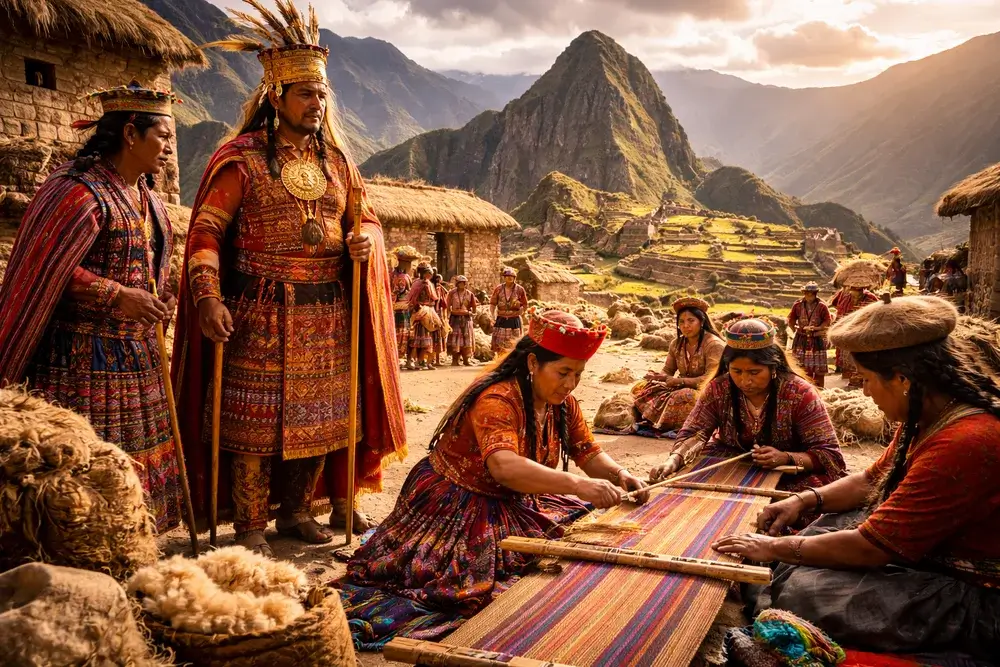
Garments were never cut or tailored they were woven to shape and secured with metal pins called tupus.
The Sapa Inca: Royal Clothing and Power
The Sapa Inca, believed to be the descendant of the Sun God, wore garments that reinforced divine authority.
Royal attire included:
- The llautu (ceremonial headdress with feathers and gold fringe)
- Tunics adorned with precious stones
- Gold bracelets, earrings, and ceremonial shields
- Only the Acllas (Chosen Women) were permitted to weave clothing for the emperor.
“Royal clothing was not decoration it was political authority made visible.”
Everyday Inca Clothing for Men and Women
Men
- Unku (short tunic)
- Poncho for colder climates
- Sandals made of leather or woven fiber
- Small woven bags for coca leaves and personal items
Women
- Ankle-length tunics secured with a chumpi (belt)
- Mantles fastened with tupu pins
- Hair worn long and uncut, symbolizing identity
→ Traditional Peruvian Clothing
Colors, Symbols, and Textile Meaning
Inca dyes were derived exclusively from natural sources such as plants, minerals, and insects.
Color symbolism included:
- Red: power, blood, conquest
- Black: purity and sacredness
- Purple: fertility and creation
Geometric patterns known as tocapus functioned as visual language, recording identity, lineage, and status.
Traditional Peruvian Clothing Today
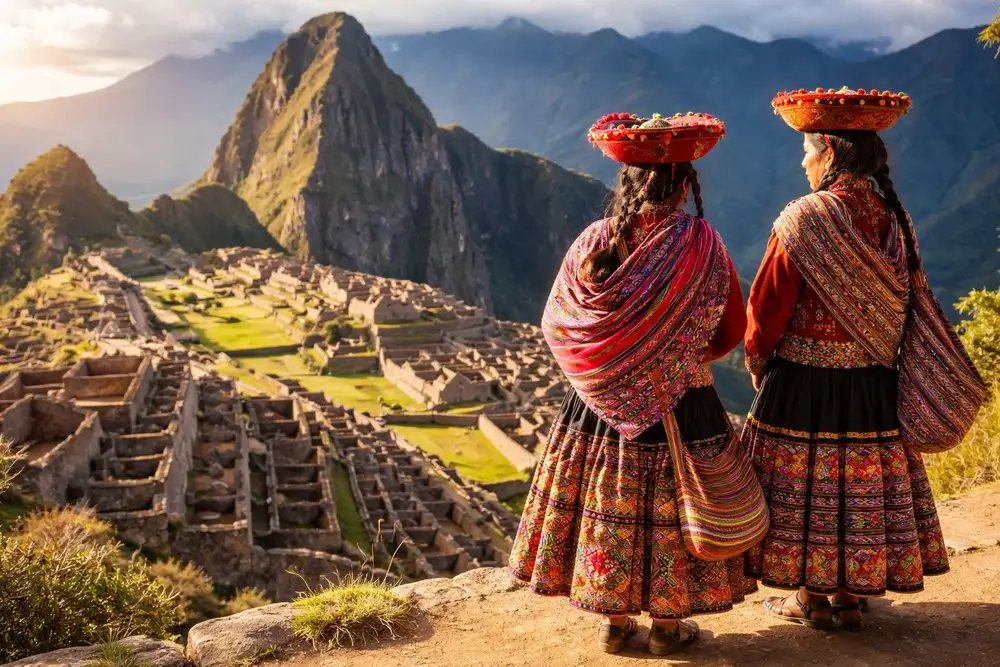
In modern Peru, traditional clothing remains a living expression of Andean identity especially in rural communities.
Traditional Clothing for Women
- Lliclla: woven shawl for warmth and carrying children
- Polleras: layered wool skirts
- Montera: regional hat indicating origin
- Ojotas: traditional sandals
Traditional Clothing for Men
- Poncho: iconic Andean garment
- Chullo: wool hat with earflaps
- Chumpi: woven belt
Each region has distinct colors and patterns, making clothing a form of cultural identification.
Alpaca vs. Acrylic: A Traveler’s Guide to Buying Authentic Textiles
As you travel through the markets of Cusco and the Sacred Valley, you will find thousands of vibrant ponchos, chullos, and scarves for sale. However, many mass-produced items are woven with synthetic acrylic blends imported from factories, rather than genuine, handmade alpaca wool.
To ensure you are supporting local indigenous artisans and purchasing an authentic keepsake, use these four structural tests before you buy:
- The Touch Test: True alpaca fiber feels distinctly cool to the touch when you first pick it up, gradually warming to your body temperature. Synthetic acrylic blends feel warm or neutral immediately.
- The Weight & Drape: Alpaca wool is noticeably heavy for its size due to the dense structure of the fiber. If a large poncho feels as light as a standard fleece jacket, it is likely synthetic.
- The "Weaver's Imperfection": Look closely at the geometric borders. Authentic hand-loomed textiles will feature tiny, natural variations in the tension or thread layout. Perfect, identical symmetry across hundreds of identical items points to an industrial machine loom.
- The Price Reality: Pure alpaca fiber requires weeks of intensive washing, spinning, hand-dyeing, and backstrap-loom weaving. If a vendor offers you a "100% Baby Alpaca" blanket for less than 150 PEN (approx. $40 USD), it is almost certainly synthetic acrylic.
Where Travelers Can Experience Authentic Andean Textiles
Travelers can encounter traditional clothing and weaving practices in destinations such as:
Sacred Valley villages
Responsible Travel and Textile Preservation
Many Andean communities rely on textile production for cultural continuity and economic sustainability. Responsible travel supports:
- Artisan-led workshops
- Fair compensation for weavers
- Preservation of ancestral techniques
At Andean Travel Experience, we prioritize experiences that connect travelers directly with local communities ethically and respectfully.
Where to Experience Peru's Living Textile Heritage
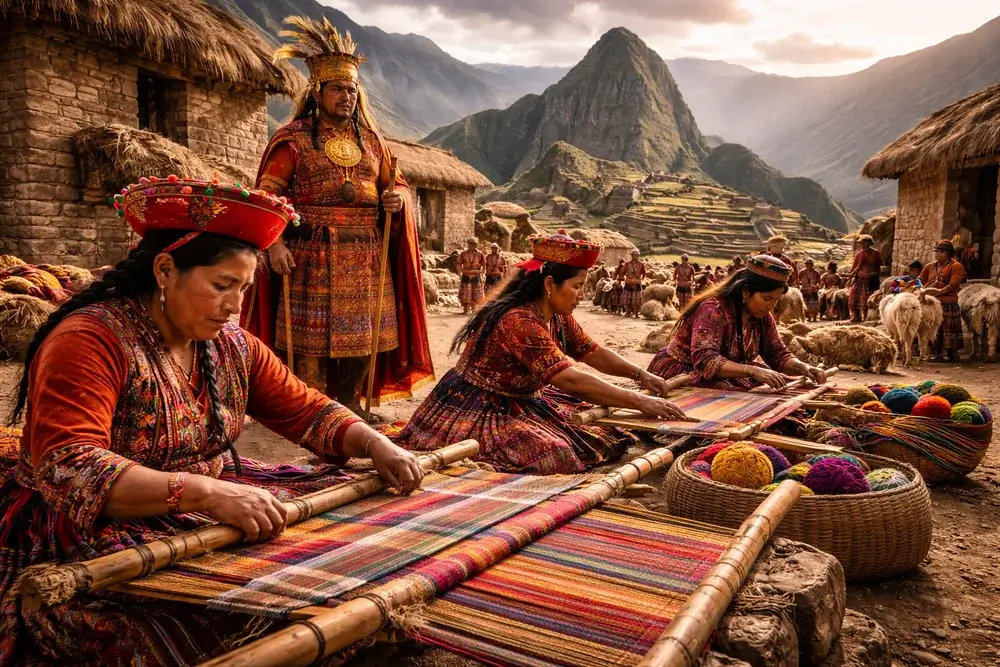
To truly appreciate the artistry of Andean clothing, you must witness the processing of raw fiber into masterfully woven garments. We recommend modifying your Peru itinerary to include stops at these three historic textile hubs:
Chinchero (The Capital of Weaving)
Perched high in the Sacred Valley, Chinchero is world-renowned for its traditional women’s cooperatives. Here, master weavers still utilize saqta (a native root that acts as a natural shampoo) to cleanse raw alpaca wool before spinning it. Visitors can join interactive demonstrations showcasing how plants, minerals, and the cochineal insect create deep crimsons, emeralds, and blues on traditional backstrap looms.
Pisac Artisan Market
While famous for its sprawling Sunday displays, the daily market in Pisac hosts dozens of authentic rural weavers who travel from high-altitude communities like Amaru and Chiwuan. It is an exceptional cross-section for finding highly detailed, regional chumpis (identity belts) and llicllas (mantles).
Taquile Island (Lake Titicaca)
Recognized globally by UNESCO for its textile art, Taquile Island holds a unique distinction: here, the weaving and knitting are traditionally performed by men. The island's iconic knit caps (chullos) serve as a dynamic visual language the specific color combinations and knit patterns instantly signal a man’s civil, economic, and marital status to the rest of the community.
FAQs About Inca Clothing and Peruvian Textiles
What made Inca textiles so valuable?
Their complexity, symbolism, and the time required to produce them made textiles more valuable than precious metals.
Are traditional Andean clothes still worn today?
Yes, especially in rural areas and during festivals.
Can travelers buy authentic Andean textiles?
Yes, when purchased directly from artisans or community cooperatives.
In Peru, history is not confined to museums it lives in the hands of artisans, the colors of woven cloth, and the traditions passed down through generations. Discover the world of the Incas not just by walking their ancient paths, but by understanding the culture woven into every thread.
Let Andean Travel Experience design a bespoke journey that connects you with authentic Andean communities, master weavers, and cultural landscapes that few travelers ever truly experience.
Start planning your personalized Peru journey today
Explore private Inca Trail experiences, cultural immersions in the Sacred Valley, and luxury journeys crafted around meaning, comfort, and authenticity.