
Some destinations preserve the past behind museum walls. Others allow you to walk directly into it.
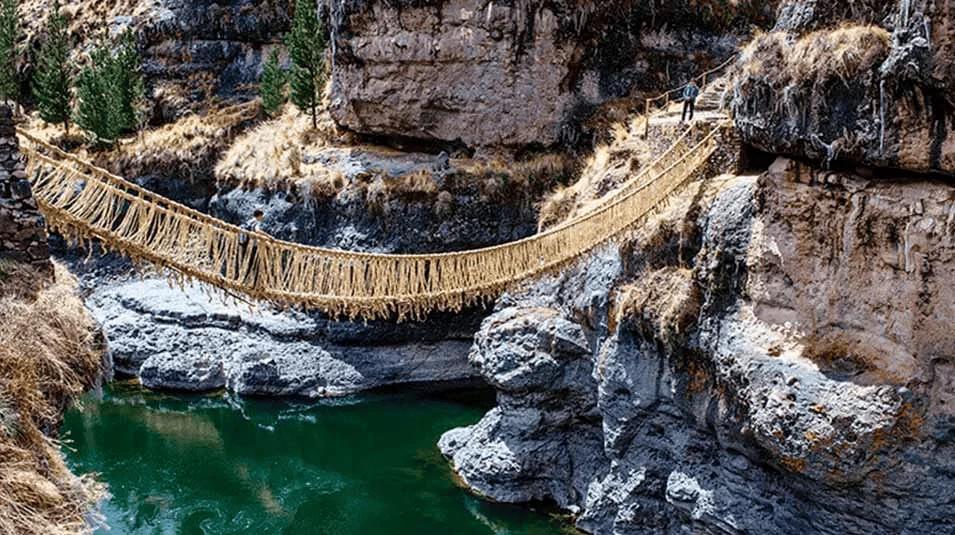
Hidden high above the Apurímac River in the southern Andes, Q'eswachaka is not simply an ancient bridge it is a living tradition. Every year, four Quechua communities come together to dismantle and rebuild this remarkable suspension bridge entirely by hand, following techniques passed down since the Inca Empire.
Unlike archaeological monuments frozen in time, Q'eswachaka continues to serve as a symbol of community, resilience, and ancestral knowledge. Recognized by UNESCO for its annual renewal tradition, it offers one of Peru's most authentic cultural experiences far from the crowds and deeply connected to the country's living heritage.
For travelers seeking meaningful luxury rather than conventional sightseeing, crossing Q'eswachaka becomes much more than an excursion. It becomes participation in a story that has endured for centuries.
Looking for authentic cultural journeys beyond the classic routes? Explore our private Southern Peru itineraries designed around meaningful local experiences.
Planning your trip? Explore our Inca heritage private tour — private, tailor-made and designed by our Cusco-based team.
What Is Q'eswachaka?
More Than a Bridge A Living Cultural Tradition
Q'eswachaka is the last remaining handwoven Inca rope bridge still rebuilt every year according to ancestral techniques.
Located in the province of Canas, south of Cusco, the bridge stretches approximately 28 meters (92 feet) across the dramatic Apurímac River canyon at an altitude of around 3,700 meters (12,100 feet) above sea level.
While many Inca suspension bridges disappeared centuries ago, Q'eswachaka survived because local communities never abandoned the tradition of rebuilding it annually.
Today, the annual renewal ceremony remains an extraordinary example of living cultural heritage rather than simply historical preservation.
Quick Facts
| Information | Details |
|---|---|
| Location | Quehue District, Canas Province, Cusco Region |
| Elevation | Approximately 3,700 m (12,100 ft) |
| Length | About 28 meters |
| Material | Handwoven q'oya grass |
| Rebuilt | Every June |
| Cultural Recognition | UNESCO Representative List of the Intangible Cultural Heritage of Humanity (2013) |
Interested in discovering Peru's living traditions? Browse our cultural journeys through the Andes.
The History Behind Peru's Last Inca Rope Bridge
An Ancient Network That Connected an Empire
During the height of the Inca Empire, an extensive road system known as the Qhapaq Ñan connected mountains, valleys, forests, and deserts across western South America.
Suspension bridges made from braided plant fibers were essential engineering solutions that allowed people, armies, traders, and messengers to cross deep river canyons safely.
While stone roads have survived remarkably well, almost all of these organic bridges disappeared over time because natural fibers deteriorate with use and weather.
Q'eswachaka survived because local communities continued rebuilding it every year as their ancestors had done for generations.
Rather than preserving an ancient bridge, they preserve an ancient tradition.
This distinction makes Q'eswachaka unique in the world.
Learn more about Peru's extraordinary Inca heritage by exploring our Sacred Valley and Cusco travel guides.
Engineering the Impossible with Grass
The Remarkable Science Behind Inca Engineering
One of the most fascinating aspects of Q'eswachaka is that it contains no metal, nails, bolts, or concrete.
Instead, everything relies on natural engineering principles.
The process begins with q'oya, a tough high-altitude grass harvested from the Andean puna.
Families work together to:
- Harvest fresh q'oya grass
- Twist individual fibers into thin cords
- Braid those cords into larger ropes
- Combine massive ropes that form the bridge's foundation
- Secure the structure to traditional stone anchors on each side of the canyon
The result is a surprisingly strong suspension bridge capable of supporting dozens of people.
Modern engineers continue to study the bridge as an outstanding example of sustainable infrastructure built entirely from renewable materials.
Travel with expert local guides who reveal the engineering achievements hidden throughout the Inca world.
The Four-Day Renewal Ceremony
When an Entire Community Becomes One
Every June, Q'eswachaka is completely rebuilt during a four-day communal celebration.
The tradition is maintained by four Quechua communities:
- Huinchiri
- Chaupibanda
- Choccayhua
- Ccollana Quehue
Each community contributes labor, materials, and knowledge passed from one generation to the next.
Day 1: Harvesting the Grass
Families collect fresh q'oya grass and begin twisting thousands of individual fibers into rope.
Day 2: Braiding the Main Cables
Smaller ropes are braided together to create enormous structural cables capable of supporting the bridge.
Day 3: Building the Bridge
The previous bridge is removed, and master bridge builders carefully weave the new structure over the Apurímac River.
Day 4: Celebration
Music, dancing, traditional food, and ceremonies celebrate another successful renewal, reinforcing both cultural identity and community cooperation.
This ritual was inscribed on UNESCO's Representative List of the Intangible Cultural Heritage of Humanity in 2013.
Experience Peru through traditions that are still alive—not recreated for tourism.
How to Visit Q'eswachaka
A Scenic Journey Through Southern Cusco
Most travelers visit Q'eswachaka on a full-day excursion from Cusco.
The drive passes through spectacular Andean scenery, traditional villages, and four beautiful highland lakes:
- Pomacanchi
- Acopia
- Asnaqocha
- Pampamarca
These landscapes remain largely untouched by mass tourism, making the journey itself one of the highlights.
Travel Information
| From Cusco | Approximately 3.5–4 hours each way |
|---|---|
| Best Transport | Private vehicle |
| Difficulty | Easy to Moderate |
| Walking Required | Short walks near the bridge |
| Best Season | May–October |
A private journey allows greater flexibility for photography, cultural interaction, and exploration of nearby communities.
Discover private experiences that reveal the quieter side of the Peruvian Andes.
Best Time to Visit Q'eswachaka
Experience Every Season Differently
| Month | Experience |
|---|---|
| May | Dry season begins with clear mountain views |
| June | Annual bridge renewal ceremony |
| July–August | Excellent weather and vibrant landscapes |
| September | Pleasant temperatures with fewer visitors |
| October | End of the dry season before summer rains |
If your goal is witnessing the annual rebuilding, plan your visit during early June, when the ceremonial reconstruction takes place.
Need help choosing the ideal travel season? Our travel designers can create the perfect itinerary based on your interests.
Responsible Travel at Q'eswachaka
Supporting Living Heritage
Visiting Q'eswachaka responsibly helps preserve one of Peru's most remarkable cultural traditions.
Respectful travelers can contribute by:
- Hiring knowledgeable local guides
- Purchasing authentic community-made handicrafts
- Asking permission before photographing residents
- Respecting ceremonial spaces
- Avoiding litter and minimizing environmental impact
Responsible tourism supports local livelihoods while encouraging younger generations to continue preserving this extraordinary tradition.
Travel thoughtfully with experiences designed to create meaningful connections between visitors and local communities.
Combining Q'eswachaka with Southern Peru
Build a Journey Beyond the Ordinary
Rather than visiting Q'eswachaka as an isolated excursion, many travelers include it within a broader exploration of southern Peru.
An expertly designed itinerary may include:
- Historic Cusco
- The Sacred Valley
- Q'eswachaka
- Raqchi Archaeological Site
- The Four Andean Lakes
- Colca Canyon
- Arequipa
- Lake Titicaca
This route combines archaeology, living traditions, dramatic landscapes, gastronomy, and exceptional cultural encounters into one unforgettable journey.
For travelers seeking slower, deeper exploration, it represents one of Peru's most rewarding itineraries.
Discover our curated Southern Peru journeys designed for travelers who value authenticity, comfort, and meaningful experiences.
Frequently Asked Questions About Q'eswachaka
Is it safe to cross Q'eswachaka?
Yes. The bridge is rebuilt every year following time-tested engineering techniques and is carefully inspected before being opened for visitors.
Where is Q'eswachaka located?
It is located in the Quehue District of Canas Province, approximately four hours south of Cusco.
Why is Q'eswachaka famous?
It is the last surviving Inca rope bridge still rebuilt annually using traditional techniques preserved by local Quechua communities.
When is the bridge rebuilt?
Every year during the annual renewal ceremony held in June.
Can anyone cross the bridge?
Yes. Visitors are generally allowed to cross, although access may be temporarily restricted during maintenance or ceremonial rebuilding.
Is Q'eswachaka suitable for families?
Yes. The visit is appropriate for families, provided travelers are comfortable with high-altitude conditions.
How high is Q'eswachaka?
The bridge sits approximately 3,700 meters (12,100 feet) above sea level.
Do I need a guide?
While independent visits are possible, traveling with an experienced guide greatly enriches the experience by providing historical, cultural, and engineering context.
Final Thoughts: A Bridge That Connects More Than Two Cliffs
Q'eswachaka is far more than an impressive feat of engineering.
It is a powerful reminder that some of humanity's greatest achievements are not preserved in stone but in people.
Each year, as fresh ropes replace old ones and ancestral knowledge passes to another generation, the bridge continues to unite communities, traditions, and travelers from around the world.
For those seeking authentic luxury, meaningful cultural encounters, and experiences beyond Peru's iconic landmarks, Q'eswachaka offers a rare opportunity to witness living history in its purest form.
Plan Your Private Journey with Andean Travel Experience
At Andean Travel Experience, we believe that extraordinary journeys begin with genuine cultural connections.
Our tailor-made private itineraries combine Peru's legendary destinations with lesser-known treasures like Q'eswachaka, creating immersive experiences guided by local experts and designed around your interests.
Whether you're dreaming of exploring Cusco, the Sacred Valley, Colca Canyon, Arequipa, or Peru's living traditions, we'll craft a seamless journey that balances comfort, authenticity, and discovery.
Contact our travel specialists today and let us design your unforgettable luxury adventure through the heart of Peru.