
Traveling through Peru is not only about breathtaking landscapes and ancient ruins it is also about connecting with the people and traditions that shape the Andes today.
One of the most meaningful ways to experience this connection is through Quechua, the ancestral language spoken by millions of people across the Andes. Long before the arrival of Spanish, this language flourished throughout the vast territories of the Inca civilization. Today, it remains a vibrant part of everyday life in regions such as Cusco, Puno, Ayacucho, and Apurímac.
For travelers exploring markets, mountain villages, and cultural festivals, learning a few basic Quechua phrases can open doors to authentic interactions and warm smiles.
Even simple greetings or words of gratitude can create memorable moments with locals, transforming a visit into a truly immersive cultural experience.
“Language is one of the most powerful bridges between travelers and local communities.”
In this guide, you will discover essential Quechua phrases every traveler should know, from greetings and numbers to useful expressions for markets, restaurants, and daily conversations.
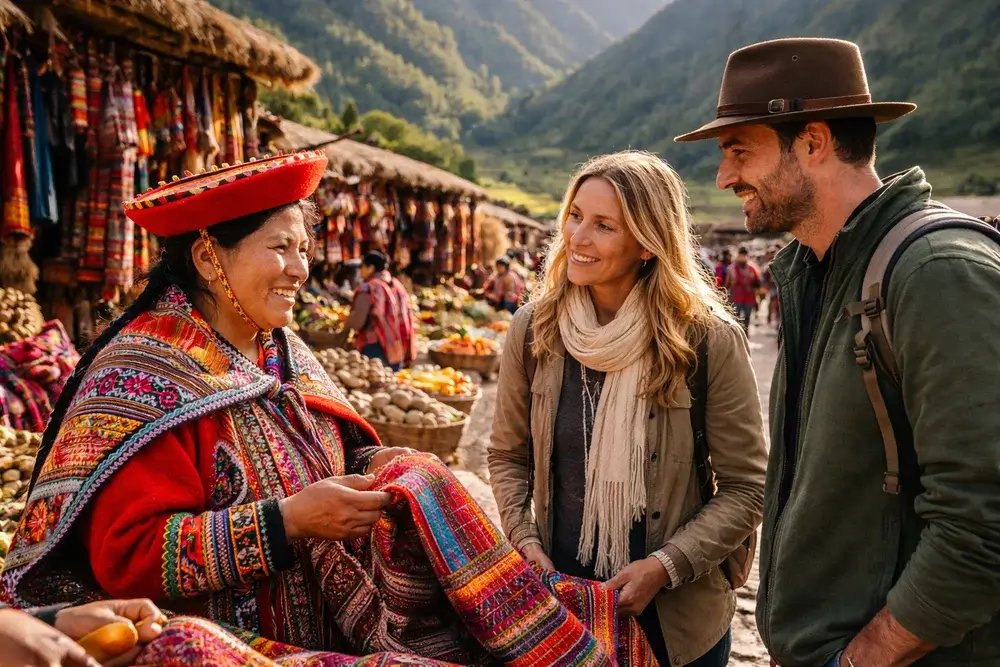
Why Learning Quechua Phrases Enriches Your Journey in Peru
Peru is home to extraordinary cultural diversity, and language plays a central role in this identity. While Spanish is the country’s most widely spoken language, Quechua remains one of Peru’s official languages and continues to be used daily in many Andean communities.
Learning a few phrases can:
• Show respect for local traditions
• Create genuine connections with people
• Enhance cultural understanding
• Make visits to markets and villages more engaging
For many travelers, even attempting to speak Quechua becomes a highlight of their journey.
A Brief Introduction to the Quechua Language
Quechua is widely recognized as the language historically associated with the Inca civilization, though linguistic experts note that it existed in the Andes before the Inca Empire expanded.
Today, Quechua is spoken in several South American countries, including:
Because the language is spoken across vast regions, different dialects exist, and vocabulary or pronunciation may vary slightly between areas.
Despite these variations, many core words and phrases remain widely recognizable.
Essential Quechua Phrases
Greetings are often the easiest and most appreciated phrases travelers can learn.
Basic Greetings
- Imaynallan = General greeting used throughout the day.
- ¿Imaynallan kashanki? = How are you?
- Allillanmi = I’m fine.
- ¿Iman sutiyki? = What is your name?
- Sutiymi… = My name is…
- Tupananchiskama = Farewell (Until we meet again)
Travelers who greet locals in Quechua are often met with enthusiastic smiles and curiosity.
Useful Quechua Phrases for Markets and Shopping
Markets are vibrant cultural spaces where Quechua phrases can be especially helpful.
- ¿Hayq'an? = How much does it cost?
- Añay = Thank you.
In artisan markets across the Andes, using these phrases can make interactions more friendly and engaging.
Asking for Directions in Quechua
These phrases can help travelers navigate towns and villages.
- ¿Maypin kashani? = Where am I?
- ¿Maymantan kanki? = Where are you from?
- Haku = Let’s go.
- Hamuy = Come here.
Quechua Phrases for Food and Dining
Peru is globally recognized for its gastronomy, and food conversations are common when traveling.
- ¿Ima mihunacha kashan? = What is there to eat?
- ¿Iman kashan uhanapaq? = What do you have to drink?
- ¿Ch’akipaq imachan kashan? = What do you have to quench my thirst?
These phrases can be especially useful when visiting local markets or traditional restaurants.
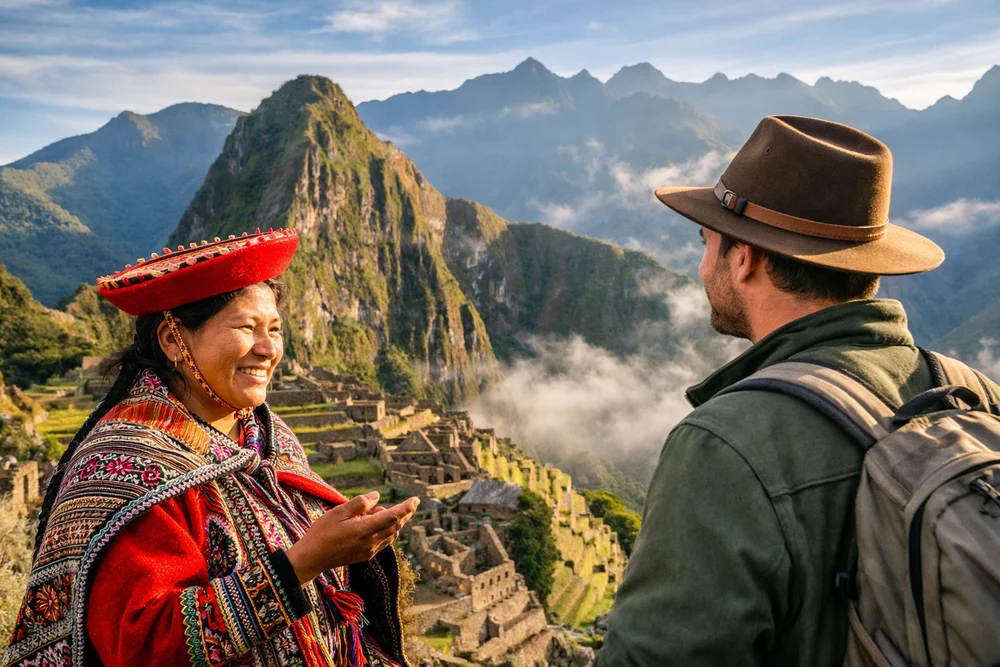
Numbers in Quechua
Learning numbers can be useful when shopping or discussing prices.
1 – Huk
2 – Iskay
3 – Kinsa
4 – Tawa
5 – Pisqa
6 – Soqta
7 – Qanchis
8 – Pusaq
9 – Esqon
10 – Chunka
Words of Friendship and Affection in Quechua
In Andean culture, friendship and community are deeply valued. Interestingly, the words used for “brother” and “sister” can change depending on who is speaking.
- Brother to brother = Wayqey
- Sister to sister = Ñanay
- Brother to sister = Panay
- Sister to brother = Turay
These words reflect the strong sense of family and community found in Andean society.
Romantic and Flirting Phrases in Quechua
Quechua is also widely used in traditional songs and poetry about love.
- ¿Sapallaykiraqchu kanki? = Are you single?
- Munaycha kanki = You are beautiful.
- Munakuyki / Kuyakuyki = I love you.
Where You Will Hear Quechua During Your Trip
Travelers exploring the Andes will hear Quechua in many places:
• Local markets
• Traditional festivals
• Rural villages
• Community tourism experiences
• Traditional music and celebrations
Cities such as Cusco, Puno, Ayacucho, and Apurímac are particularly known for their strong Quechua-speaking communities.
Tips for Pronouncing Quechua Words
For travelers learning basic phrases, these simple tips may help:
• Pronounce vowels clearly (a, e, i, o, u)
• Many words are phonetic and spoken as written
• Listening to locals is the best way to learn natural pronunciation
Practicing slowly and respectfully is always appreciated.
FAQs About Quechua
Is Quechua still spoken today?
Yes. Quechua continues to be spoken by millions of people in several South American countries, especially in Peru and Bolivia.
Do travelers need to speak Quechua when visiting Peru?
No. Spanish is widely spoken in cities and tourist destinations. However, learning a few Quechua phrases can enhance cultural interactions.
Where is Quechua most commonly spoken in Peru?
Quechua is especially common in Andean regions such as Cusco, Puno, Ayacucho, and Apurímac.
Is Quechua difficult to learn?
Like any language, learning Quechua takes time, but many travelers find basic phrases easy to remember and rewarding to use.
Language is one of the most powerful ways to connect with a destination. In Peru, Quechua offers a direct link to centuries of Andean history, culture, and community traditions.
By learning just a few phrases, travelers can enrich their journeys, engage more deeply with local communities, and experience Peru beyond its landscapes and landmarks.
The next time you wander through an Andean market or greet someone in a mountain village, try saying “Imaynallan.”
You may be surprised by the warmth and connection that follows.
At Andean Travel Experience, we design private, tailor-made journeys across Peru that immerse travelers in authentic traditions, breathtaking landscapes, and meaningful cultural encounters.