
For centuries, the Nazca Lines have challenged archaeologists, historians, and travelers alike. Etched into the vast desert of southern Peru, these enormous geoglyphs remain one of humanity's most fascinating creations so immense that many can only be fully appreciated from the sky.
Stretching across the arid Nazca Desert, hundreds of geometric designs, animals, plants, and mysterious human figures have survived for nearly two millennia thanks to one of the driest climates on Earth. Today, they continue to inspire wonder, raising questions that still have no definitive answers.
But the Nazca Lines are more than an archaeological mystery. They are part of a sophisticated civilization that mastered one of the world's harshest environments through remarkable engineering, astronomy, and a profound spiritual connection with nature.
Planning your trip? Explore our southern Peru private tour — private, tailor-made and designed by our Cusco-based team.
For discerning travelers, visiting the Nazca Lines is far more than a scenic flight. It is an opportunity to experience one of Peru's greatest cultural treasures through carefully curated journeys that combine history, comfort, authenticity, and exclusive access.
In this comprehensive guide, we'll explore the history behind the geoglyphs, the meaning of their most iconic symbols, the latest archaeological theories, and the finest ways to discover this extraordinary UNESCO World Heritage Site.
Some mysteries are best appreciated from above but truly understood on the ground.
What Are the Nazca Lines?
A masterpiece carved into the desert
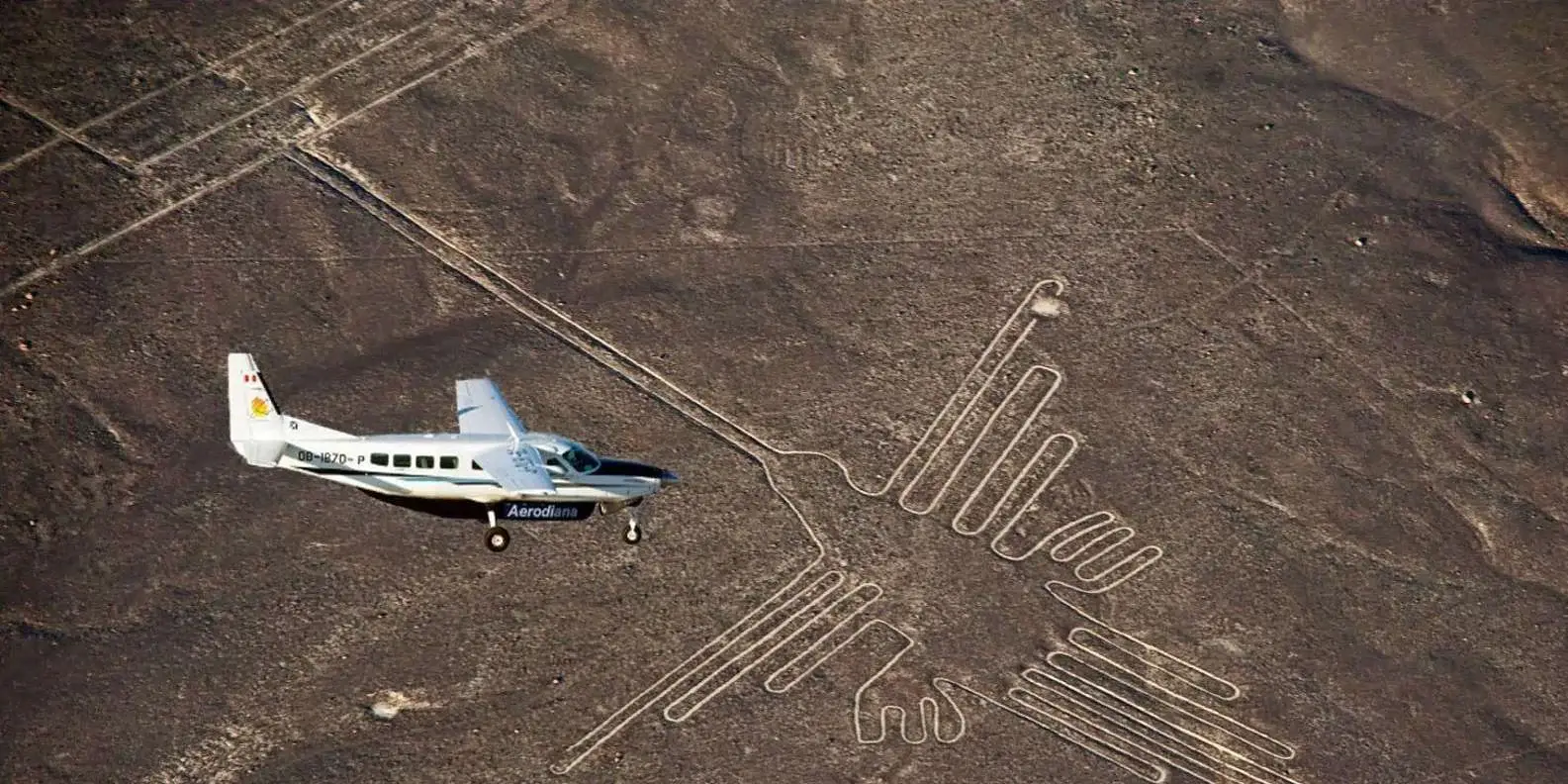
The Nazca Lines are one of the world's largest collections of geoglyphs massive designs created by removing the dark, iron-rich stones covering the desert surface to reveal the lighter-colored soil beneath.
These enormous figures stretch across nearly 450 square kilometers (170 square miles) of the Nazca Pampa, between the cities of Nazca and Palpa in southern Peru. Some individual geoglyphs extend for more than 300 meters (980 feet), while the longest straight lines run for several kilometers.
Archaeologists estimate that the majority of these geoglyphs were created between 200 BC and AD 650 by the Nazca culture, although some of the earliest designs are attributed to the preceding Paracas culture.
The remarkable preservation of the Nazca Lines is largely due to the desert's unique environment:
- Exceptionally low annual rainfall
- Minimal wind erosion
- Stable temperatures throughout the year
- A naturally oxidized layer of dark stones protecting the surface
Together, these conditions have allowed the geoglyphs to remain visible for nearly 2,000 years.
Today, the Nazca Lines are recognized as one of the most important archaeological landscapes in the Americas and continue to captivate researchers seeking to understand their true purpose.
Planning a cultural journey through Peru? The Nazca Lines are a remarkable introduction to the ingenuity of Peru's ancient civilizations before exploring the Sacred Valley and Machu Picchu.
Where Are the Nazca Lines?
Discover Peru's extraordinary desert canvas
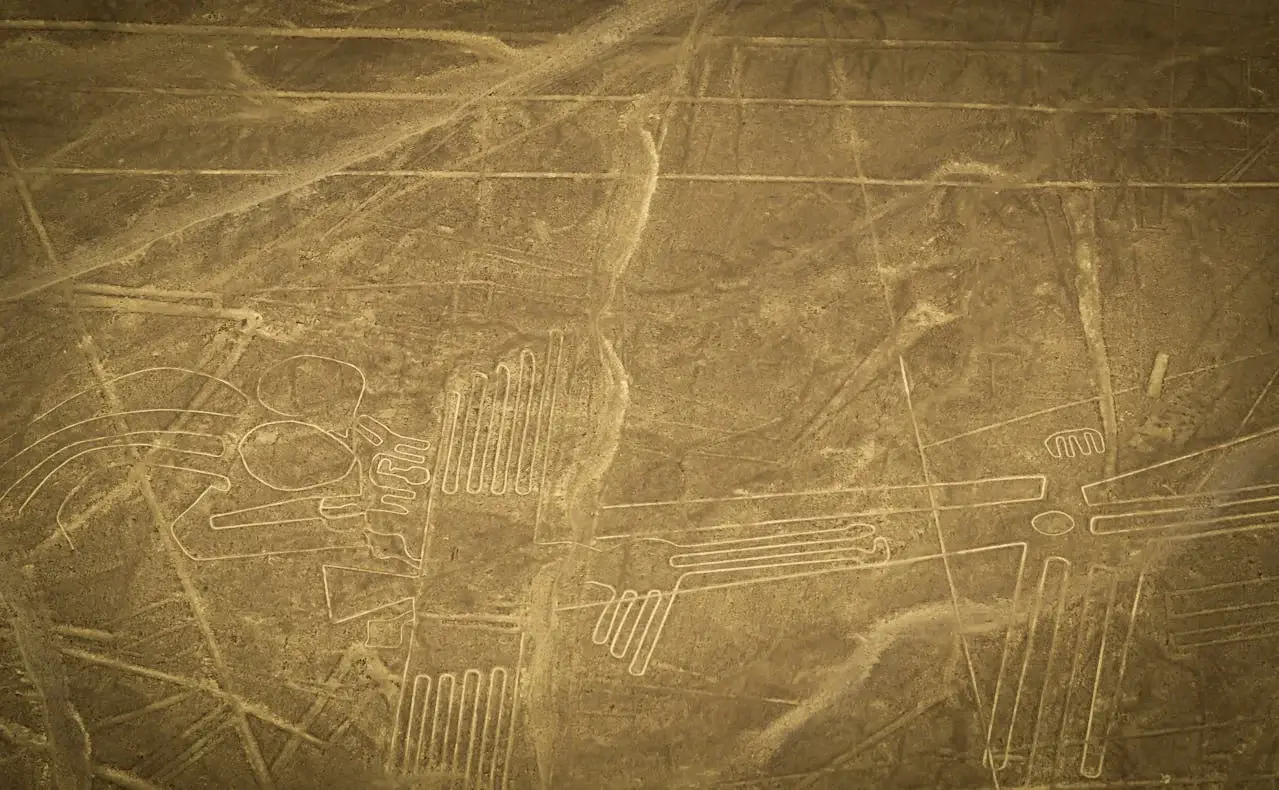
The Nazca Lines are located in the Ica Region of southern Peru, approximately 450 kilometers (280 miles) south of Lima along the Pan-American Highway.
Set between the foothills of the Andes and Peru's Pacific coastline, the Nazca Desert forms one of the driest places on Earth. Its vast, open landscape provided the ideal natural canvas for creating geoglyphs visible only from elevated viewpoints or the sky.
Distance from major destinations
| Destination | Approximate Travel Time |
|---|---|
| Lima | 6–7 hours by road |
| Paracas | 3 hours |
| Huacachina (Ica) | 2.5 hours |
| Arequipa | 9–10 hours by road |
| Cusco | Approximately 1 hour by air to Nazca (charter), or overland via southern Peru routes |
Many luxury travelers incorporate Nazca into a broader journey through southern Peru, combining coastal landscapes with colonial cities, dramatic canyons, and the legendary Inca heartland.
Who Created the Nazca Lines?
The remarkable civilization behind one of history's greatest enigmas
Long before the rise of the Inca Empire, southern Peru was home to one of the Andes' most sophisticated pre-Columbian societies: the Nazca culture.
Flourishing between approximately 100 BC and AD 800, the Nazca people inhabited an exceptionally arid environment where survival depended on ingenuity, cooperation, and a deep understanding of natural cycles.
They are renowned not only for the geoglyphs but also for their:
- Intricately painted polychrome ceramics
- Advanced textile traditions
- Underground hydraulic systems known as puquios
- Monumental ceremonial centers such as Cahuachi
- Sophisticated agricultural practices adapted to desert conditions
Far from being an isolated phenomenon, the Nazca Lines formed part of a broader cultural landscape that reflected the civilization's religious beliefs, environmental knowledge, and social organization.
Recent archaeological research suggests that different generations contributed to the creation of the geoglyphs over several centuries, indicating that they played an enduring role in Nazca ceremonial life rather than being the product of a single event or ruler.
Their achievements continue to challenge modern assumptions about ancient engineering and landscape design, making the Nazca civilization one of Peru's most remarkable cultural legacies.
Want to explore the world of the Nazca beyond the famous lines? Private archaeological excursions reveal ceremonial centers, ancient aqueducts, and lesser-known sites that complete the story of this extraordinary civilization.
How Were the Nazca Lines Made?
Simple techniques, extraordinary precision
One of the greatest surprises for visitors is how relatively simple the construction method actually was.
Rather than carving into rock, the Nazca people carefully removed the top layer of dark volcanic stones covering the desert floor. Beneath this oxidized surface lay a much lighter layer of sand and clay, creating a striking visual contrast.
Archaeologists have discovered wooden stakes at several geoglyph sites, suggesting that the Nazca used surveying techniques to maintain impressive accuracy over long distances. Experimental archaeology has demonstrated that even the largest figures could have been created by organized teams using ropes, stakes, and careful planning without requiring aerial views.
The process generally involved:
- Planning the design with geometric measurements.
- Marking reference points using wooden stakes.
- Removing the dark surface stones.
- Creating clean, continuous outlines.
- Maintaining the figures over time through ceremonial use.
This remarkable precision reflects not only technical skill but also a sophisticated understanding of geometry, spatial planning, and collective labor.
Unlike many ancient monuments built vertically, the Nazca Lines transformed the landscape itself into a monumental work of art one designed to be experienced across the vast desert rather than from within it.
The Most Famous Nazca Lines Images and Their Meanings
While hundreds of straight lines, trapezoids, spirals, and geometric figures cover the Nazca Desert, the enormous animal and human-shaped geoglyphs have become the site's most recognizable icons. Their scale is astonishing many span hundreds of feet and can only be fully appreciated from the air.
Although no written records explain their purpose, archaeologists agree that these figures were created intentionally and held ceremonial significance for the Nazca people. Their exact meanings remain open to interpretation, making the Nazca Lines one of archaeology's greatest mysteries.
Below are the most famous Nazca Lines images and the leading theories behind their symbolism.
Looking for a deeper understanding of Peru's ancient cultures? Our private journeys pair breathtaking flights with expert local guides who bring the stories behind these geoglyphs to life.
The Hummingbird – A Symbol of Renewal and Life
One of the most elegant geoglyphs in the desert
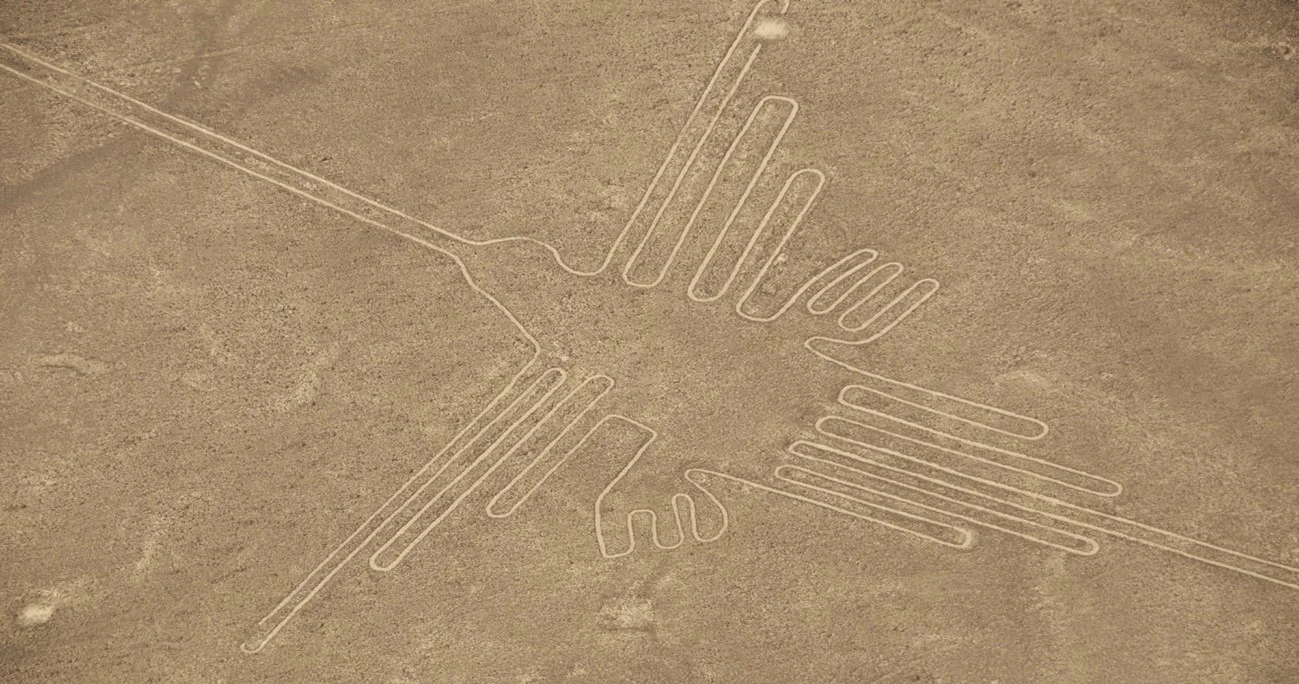
The Hummingbird is perhaps the most photographed figure among the Nazca Lines. Measuring approximately 96 meters (315 feet) long, its perfectly symmetrical wings and elongated beak showcase the extraordinary precision achieved by Nazca engineers.
The hummingbird occupies an important place in Andean cosmology. Although tiny, it is known for its resilience and ability to travel long distances in search of nectar, making it a symbol of vitality and renewal.
Possible meanings
Researchers have proposed that the hummingbird may represent:
- Fertility and the arrival of seasonal rains.
- A connection between humans and the spiritual world.
- Agricultural abundance.
- The movement of celestial bodies associated with seasonal cycles.
Some scholars also suggest that the bird's long beak may symbolically reference sacred plants or flowering species essential to the desert ecosystem.
While no single interpretation has been universally accepted, most archaeologists believe the figure was associated with rituals linked to water and agricultural prosperity.
Travel Tip: Flying over the Nazca Lines during clear morning conditions often provides the sharpest views of the Hummingbird's delicate proportions.
The Monkey – Curved Tails and Cosmic Symbolism
One of the most intriguing designs in Nazca
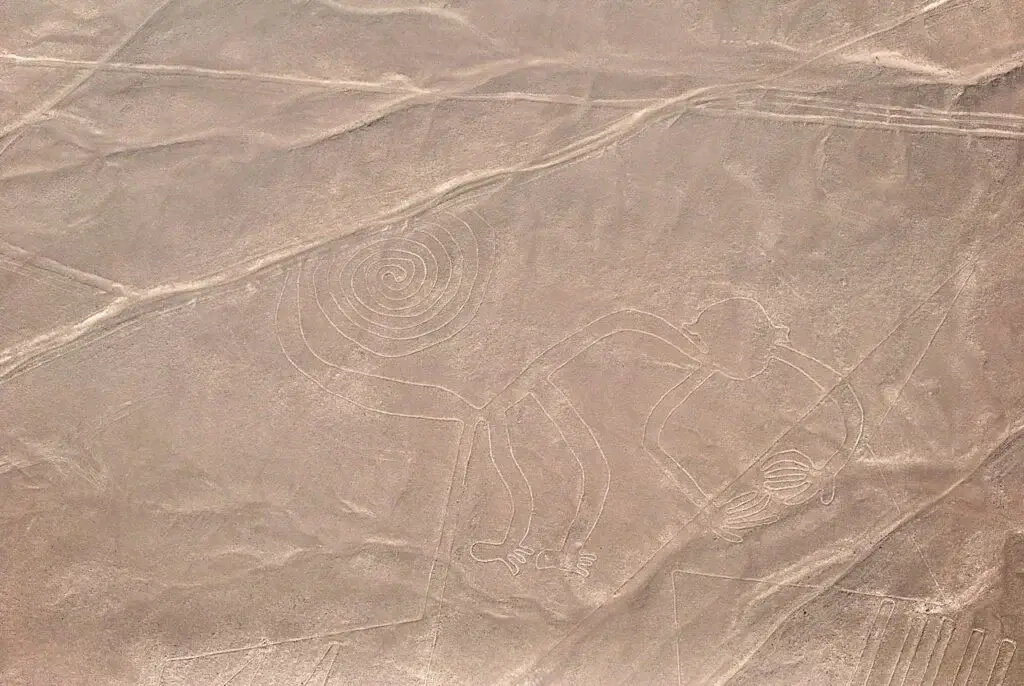
The Monkey is one of the most distinctive geoglyphs due to its enormous spiral tail, expressive hands, and unusual proportions.
Stretching roughly 90 meters (295 feet), the figure immediately stands out because monkeys are not native to the Nazca Desert. Instead, they inhabit Peru's Amazon rainforest, hundreds of kilometers away.
Its presence suggests the Nazca maintained cultural and trade connections with distant regions of the Andes and Amazon.
Archaeological interpretations include:
- Fertility and abundance.
- Rainforest symbolism.
- Spiritual transformation.
- Astronomical observations related to seasonal cycles.
Some researchers have explored whether the spiral tail represents movement, continuity, or cyclical time, concepts frequently found in Andean art.
The Monkey remains one of the strongest examples of how the Nazca worldview extended far beyond the coastal desert.
Luxury Experience: Pair your Nazca adventure with an Amazon extension to discover the incredible biodiversity that may have inspired some of these ancient symbols.
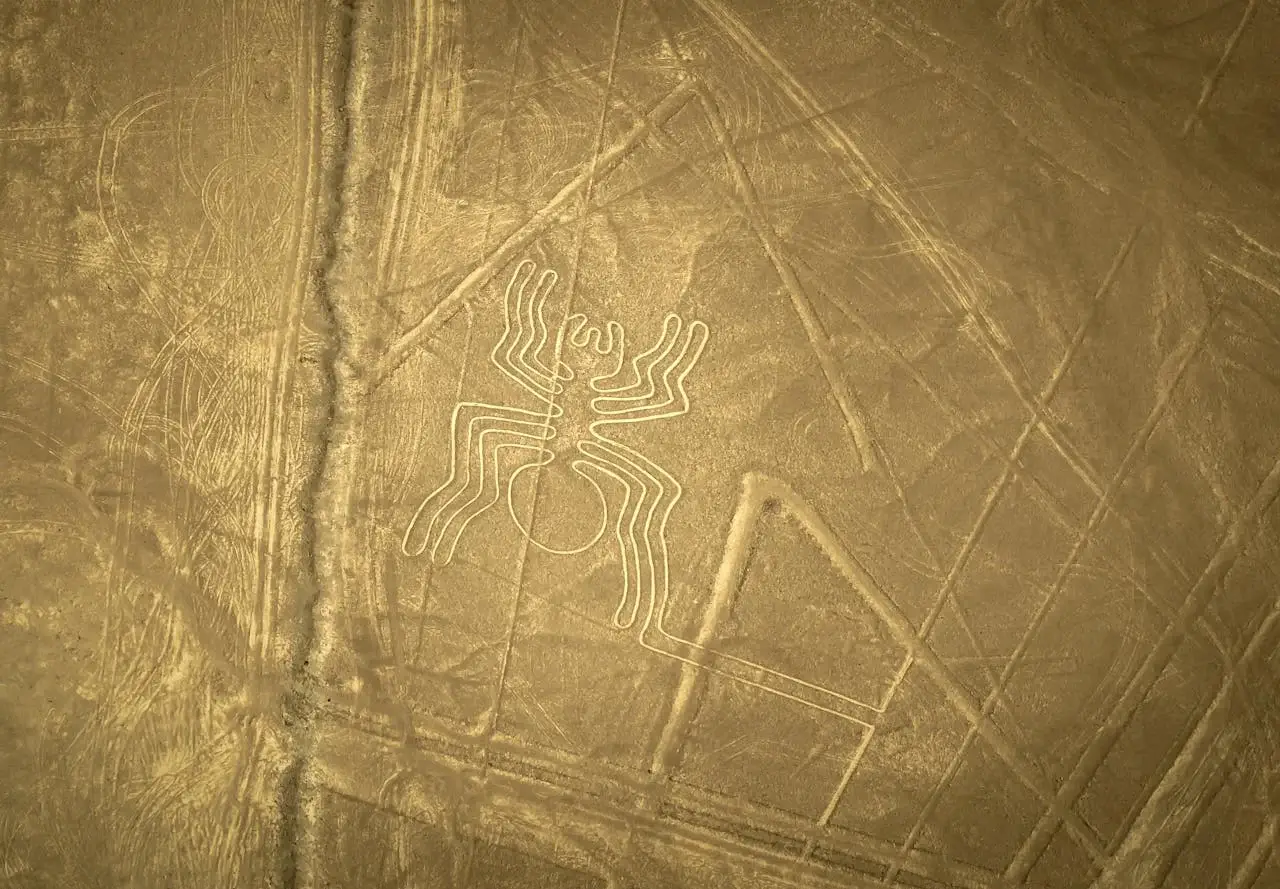
The Spider – Nature, Water, and Survival
A masterpiece of precision
At approximately 46 meters (150 feet) long, the Spider is among the oldest known Nazca figures and one of the most scientifically studied.
German mathematician and archaeologist Maria Reiche, who dedicated much of her life to protecting the Nazca Lines, suggested that some geoglyphs, including the Spider, might have astronomical significance.
Modern archaeologists are more cautious, but they recognize that spiders held symbolic importance throughout ancient Peru.
Possible interpretations include:
- Water and fertility.
- The beginning of seasonal rains.
- Creation and interconnectedness.
- Ritual ceremonies linked to agriculture.
In one remarkable observation, biologists identified similarities between the Nazca Spider and a species native to the Peruvian rainforest, highlighting the Nazca culture's detailed knowledge of the natural world.
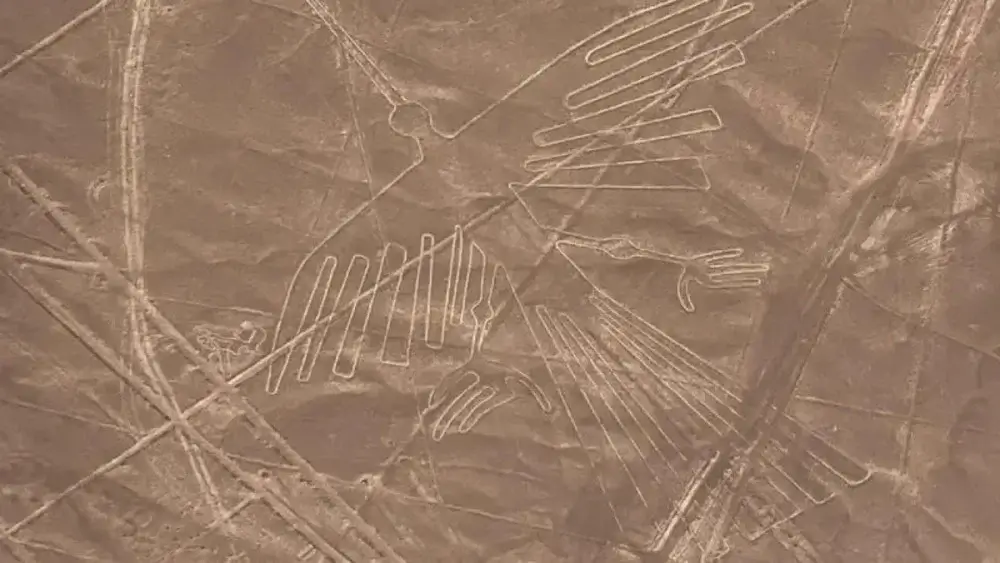
The Condor – Messenger Between Worlds
A sacred bird of the Andes
The Condor stretches approximately 135 meters (443 feet) across the desert, making it one of the largest animal geoglyphs.
Throughout the Andes, the condor has long represented the upper world the realm of the heavens in traditional Andean cosmology.
The bird is associated with:
- Spiritual guidance.
- Communication with the gods.
- Power and protection.
- The cycle of life and death.
Its enormous wings appear almost ready to lift from the desert floor, emphasizing its symbolic role as a bridge between the earthly and spiritual realms.
Even today, the Andean condor remains one of Peru's most revered animals.
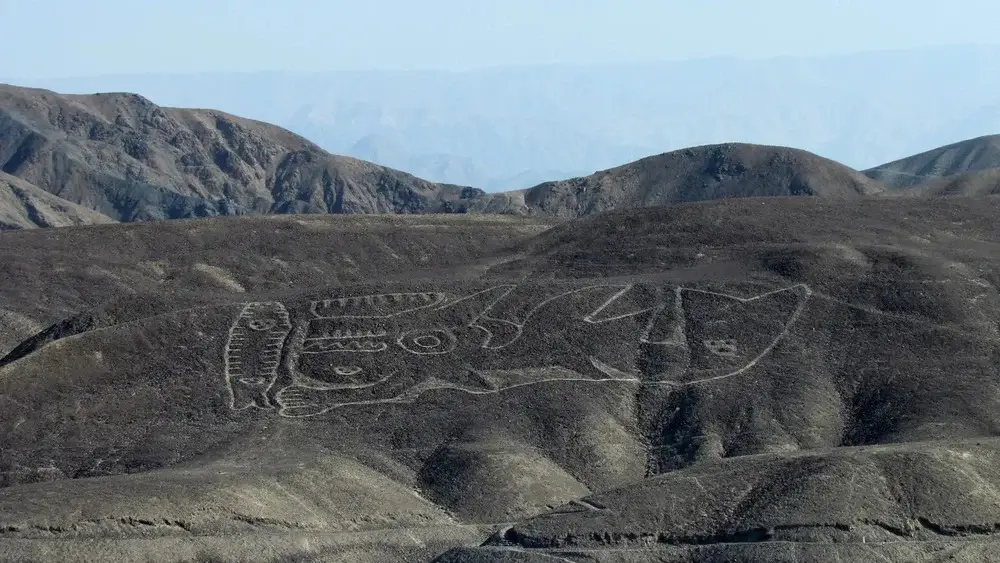
The Whale – A Powerful Ocean Connection
Evidence of Nazca's relationship with the Pacific
Although the Nazca civilization lived inland, the Pacific Ocean played an important role in their economy and worldview.
The Whale geoglyph is believed to be one of the earliest designs in the region.
Possible meanings include:
- Creation myths.
- Oceanic power.
- Fertility.
- The importance of marine resources.
The figure reminds visitors that the Nazca people were connected not only to the desert but also to Peru's rich coastal ecosystems.
Its bold, angular design differs from many of the later animal figures, suggesting it may belong to an earlier artistic tradition.
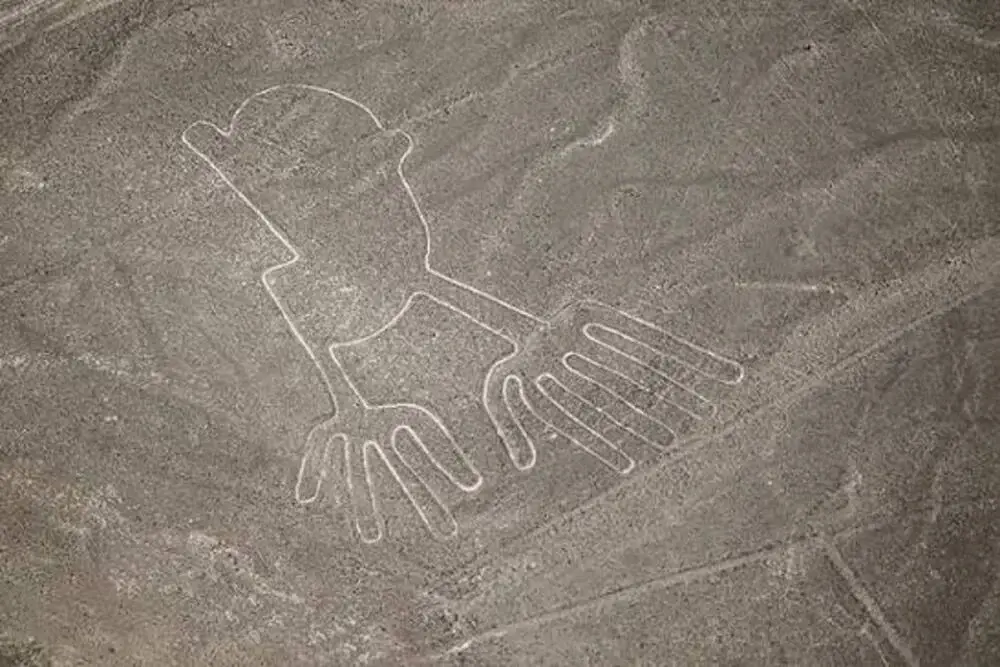
The Hands – Humanity and Duality
One of the easiest figures to observe
Unlike many geoglyphs that require a flight, the Hands can also be viewed from the nearby observation tower.
One fascinating detail is that the figure appears to have nine fingers, leading to decades of speculation.
Scholars have proposed several explanations:
- Symbolic rather than anatomical representation.
- Artistic convention.
- A ceremonial message related to duality.
- A tribute to a specific individual.
Nearby stands another famous figure the Tree forming one of the most visited sections of the archaeological zone.
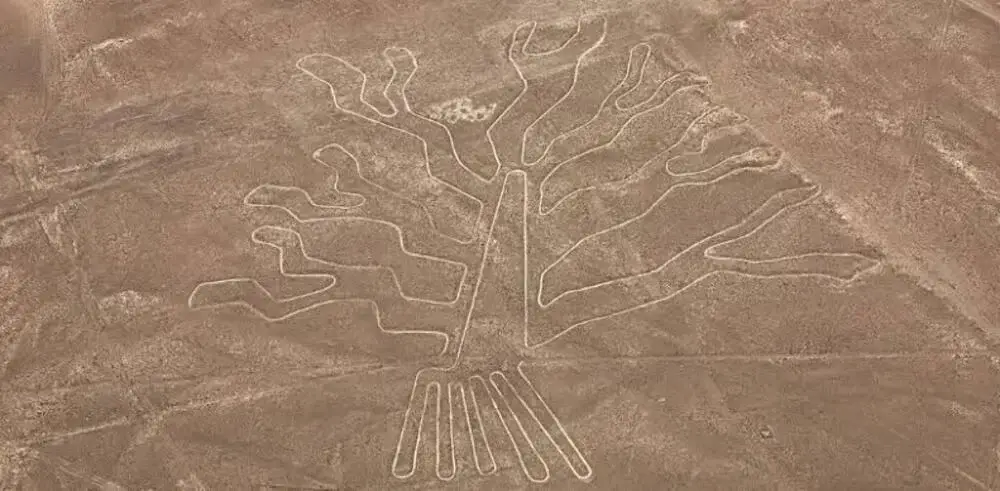
The Tree – Life in an Arid Landscape
A surprising symbol in the desert
Trees were rare and highly valued in the Nazca Desert, making this geoglyph particularly meaningful.
Possible interpretations include:
- The cycle of life.
- Underground water sources.
- Agricultural prosperity.
- Connections between the natural and spiritual worlds.
Some researchers suggest the Tree and Hands were intentionally positioned together to symbolize humanity's dependence on nature.
The contrast between this life-giving symbol and the surrounding desert landscape is especially striking.
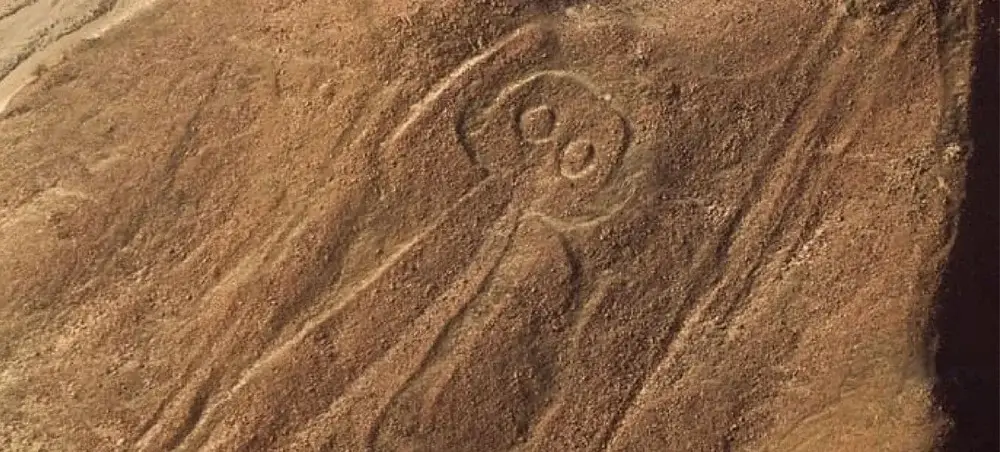
The Astronaut – The Desert's Most Mysterious Figure
Human, shaman, or guardian?
Few geoglyphs have captured the public imagination like the so-called Astronaut.
Standing approximately 32 meters (105 feet) tall on a hillside, this anthropomorphic figure appears to raise one hand while gazing toward the sky.
Despite its popular nickname, there is no archaeological evidence linking the figure to extraterrestrial theories.
Instead, experts suggest it may represent:
- A ceremonial leader.
- A shaman.
- A guardian spirit.
- An ancestral figure participating in rituals.
Its elevated location makes it visible from the surrounding landscape, unlike many of the geoglyphs on the flat desert floor.
The "Astronaut" demonstrates how modern interpretations can differ dramatically from ancient intentions.
Did You Know? The nickname "Astronaut" was coined because of the figure's large, rounded head and raised hand, but archaeologists consider it a symbolic human representation rather than evidence of alien contact.
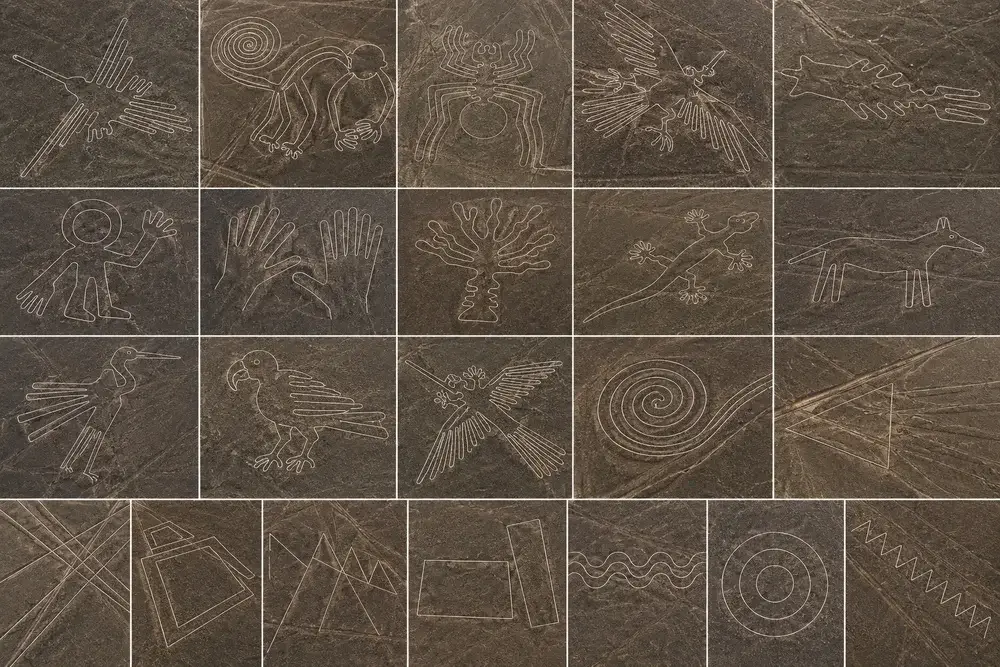
Other Remarkable Nazca Geoglyphs
Beyond the famous icons
The Nazca Desert contains more than 800 straight lines, around 300 geometric figures, and approximately 70 animal and plant geoglyphs, making it one of the largest archaeological landscapes on Earth.
Other fascinating figures include:
- The Dog
- The Heron
- The Pelican
- The Lizard
- The Parrot
- The Frigatebird
- The Flower
- The Killer Whale
- Numerous spirals and trapezoids
Many remain less visited, yet they provide valuable insight into the artistic diversity and ceremonial practices of the Nazca culture.
As new technologies such as drone surveys and artificial intelligence-assisted aerial analysis continue to advance, archaeologists have identified additional geoglyphs in recent years, expanding our understanding of this extraordinary cultural landscape.
What Do the Nazca Lines Really Mean?
The mystery continues
Despite decades of research, there is still no single explanation for the Nazca Lines.
Most archaeologists believe they served multiple ceremonial and social purposes rather than one universal function.
The leading theories include:
- Ceremonial pathways: Many geoglyphs may have been walked during religious processions.
- Water rituals: In one of the world's driest deserts, water was sacred. The lines may have played a role in ceremonies asking for rainfall and fertility.
- Sacred landscape: The geoglyphs could have connected ceremonial centers, mountains, and underground aquifers.
- Astronomical alignments: While some lines align with solar or celestial events, most researchers agree this was likely one aspect of a broader ritual landscape rather than the sole purpose.
- Social cooperation: Creating and maintaining the geoglyphs may have strengthened community identity and collective participation.
Rather than searching for a single answer, modern archaeology increasingly views the Nazca Lines as part of a complex cultural system where religion, environment, engineering, and social organization were deeply intertwined.
Experience the mystery firsthand. Seeing the Nazca Lines from the air offers an unforgettable perspective, but understanding their significance becomes even more meaningful when combined with expert interpretation and visits to the surrounding archaeological sites.
Frequently Asked Questions (FAQs)
How long is a Nazca Lines flight?
Typically 30–60 minutes depending on the route.
Best Time to Visit the Nazca Lines
Nazca has one of the driest climates in the world, making it a year-round destination.
However, conditions vary slightly:
Best months:
- May to October (dry season)
- Clear skies
- Stable flying conditions
- Best visibility
Conditions year-round:
- Minimal rainfall
- High desert temperatures during the day
- Cooler evenings
- Strong sun exposure
Can You See the Nazca Lines Without Flying?
Although aerial views are the most famous way to experience the geoglyphs, there are limited ground-level options available.
Is the Nazca flight safe?
Yes, flights operate under regulated aviation standards with experienced pilots.
Can I get motion sickness?
Some travelers may feel mild discomfort due to banking turns.
What is the altitude of the flight?What is the altitude of the flight?
Generally between 1,500–2,500 feet depending on conditions.
Can I see all the main geoglyphs in one flight?
Yes, most standard routes include the main figures.
The Nazca Lines are far more than mysterious shapes in the desert. They are a testament to the ingenuity, spirituality, and environmental understanding of one of Peru’s most fascinating ancient cultures.
From the pioneering work of Maria Reiche to their recognition as a UNESCO World Heritage Site, and from the delicate balance of conservation to the thrill of aerial exploration, Nazca remains one of the most extraordinary cultural landscapes in the world.
For today’s luxury traveler, the experience is no longer just about seeing it is about understanding, connecting, and traveling responsibly through one of Earth’s most fragile wonders.
Discover the Nazca Lines through a fully curated luxury experience designed around your interests.
From private overflights to seamless Southern Peru itineraries connecting Paracas, Arequipa, Cusco, and Machu Picchu, we design journeys that transform archaeology into emotion and travel into meaning.
Contact our Travel Designers to create your bespoke Peru experience.